Pakistan Faisalabad, Textile Plastic Waste, Anti-Clogging Plastic granulator Success Case

Background: Mr. Muhammad Aslam, a 45-year-old with a primary school education, has spent 18 years in the textile industry in Faisalabad—Pakistan’s “Textile City,” known for its massive textile manufacturing sector. His 1,000-square-meter small factory employs 14 workers, producing textile packaging materials. In recent years, the cost of new plastic particles has risen by 42%, putting significant pressure on his profit margins. To reduce costs, Mr. Aslam decided to invest in a Plastic granulator to recycle waste textile plastic packaging (woven bags, plastic film) from his own factory and local textile mills. Faisalabad’s textile industry generates over 10 tons of plastic waste daily, providing him with a stable, low-cost raw material supply. However, the textile plastic waste contains cotton threads, soil, and fabric scraps, making processing challenging—so a reliable, anti-clogging Plastic granulator was essential for his business’s survival. An anti-clogging equipment was the only way to handle the impurity-rich textile waste.
The Challenge
Mr. Aslam faced two major challenges that threatened his ability to recycle textile plastic waste profitably. First, the waste textile plastic packaging had high impurity content (up to 11%), including cotton threads, soil, and fabric scraps, which caused frequent clogging of the traditional Plastic granulator he tested earlier. The equipment shut down 5-6 times a day, reducing daily operation time to just 6 hours and causing costly delays. Second, the woven bags and plastic film used in textile packaging were tough and difficult to crush, leading to low processing efficiency (260kg/h) and uneven particle quality, with a qualification rate of only 73%. Additionally, Mr. Aslam had no professional mechanical knowledge, so he needed an easy-to-operatePlastic granulator with reliable after-sales service. His factory is located near a residential area, so noise pollution was also a concern—traditional equipment exceeded 86dB, leading to frequent resident complaints and the risk of fines. He needed equipment that was both anti-clogging and low-noise.
The Solution
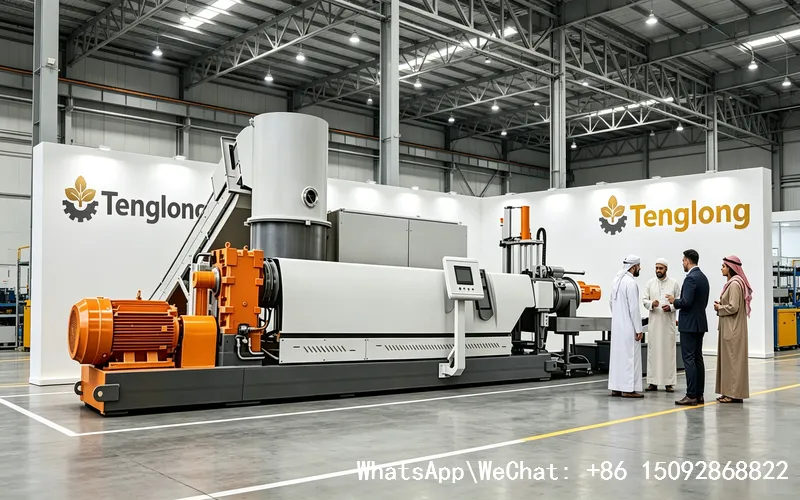
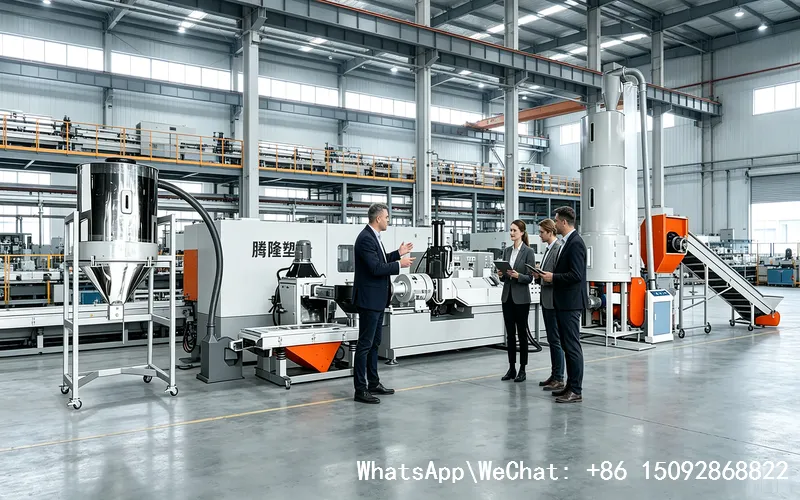
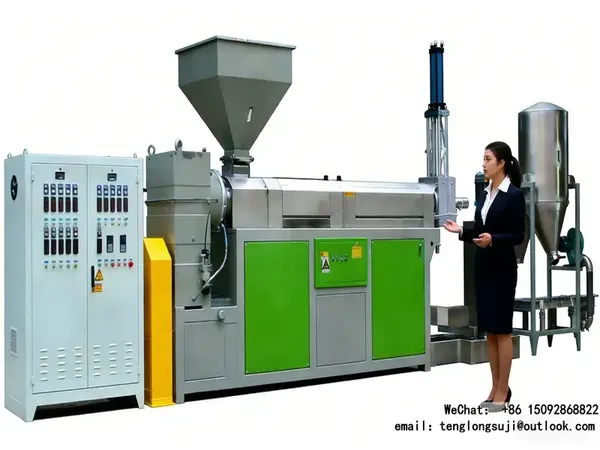
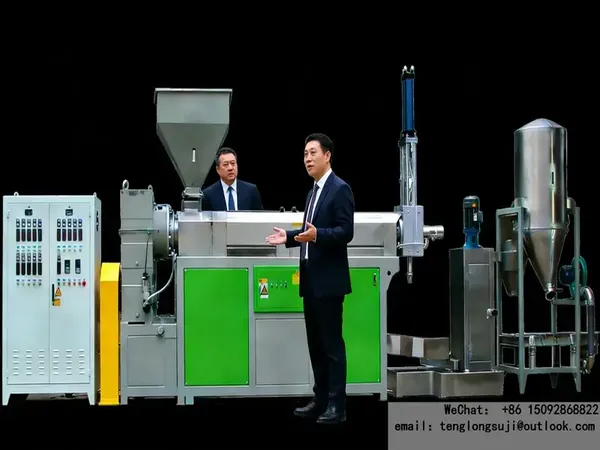
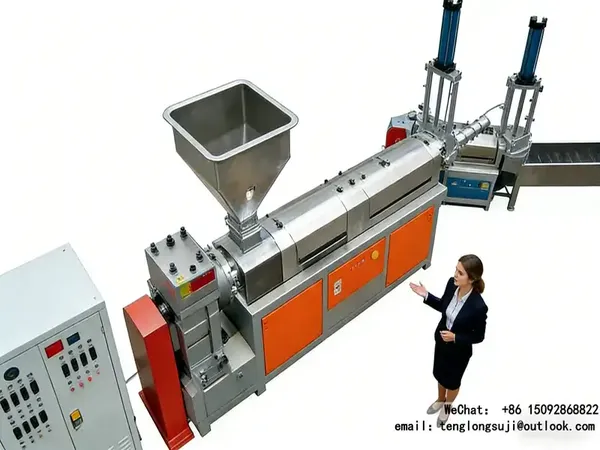
We provided Mr. Aslam with a TL-310 anti-clogging Plastic granulator, customized for Faisalabad’s textile plastic waste and suitable for factory environments near residential areas—tailored specifically for Pakistan’s textile industry. The specific configuration of this equipment includes:
- Special feeding hopper with a multi-layer filter screen, designed to remove large impurities (cotton threads, fabric scraps) before processing, preventing clogging and reducing downtime.
- Specialized anti-clogging screw with a spiral design, capable of processing textile plastic waste with up to 13% impurity content without shutdowns.
- High-power crushing system (24KW) that easily crushes tough woven bags and plastic film, boosting processing efficiency to 570kg/h.
- Multi-layer noise reduction system (noise cover + shock-absorbing pads), reducing operating noise to below 67dB—complying with local noise standards and eliminating resident complaints.
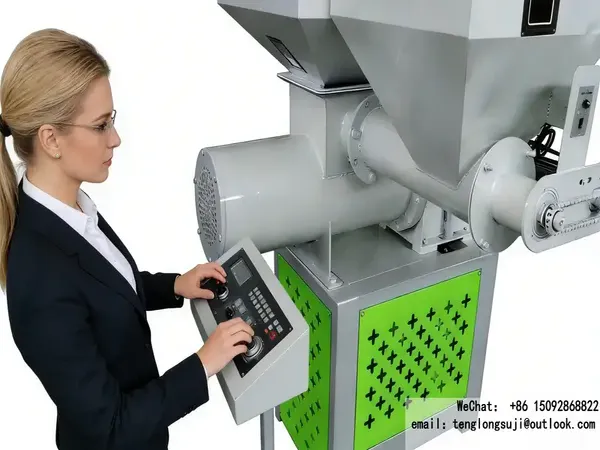
- PLC full-automatic control with a simple interface, allowing workers to master operation in just 1 day of training, plus 24/7 online technical support and on-site maintenance within 48 hours in Faisalabad.
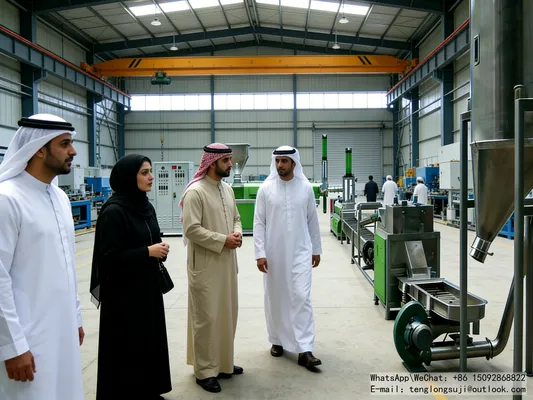
Plastic Granulator
The Results
After 4 months of operation, the Plastic granulator completely solved Mr. Aslam’s challenges and transformed his business. Equipment clogging was eliminated entirely, and daily operation time increased from 6 hours to 12 hours. Processing efficiency surged from 260kg/h to 570kg/h—a 119% improvement—allowing him to process 6.8 tons of textile plastic waste daily. The product qualification rate rose to 98%, with the recycled particles suitable for direct use in textile packaging production, reducing raw material costs by 47% (saving 85,000 PKR monthly). The low-noise design stopped resident complaints, ensuring the factory operated normally without interruptions. Mr. Aslam also expanded his raw material sources to 3 local textile mills, increasing his monthly income by 68% (from 1.3 lakh PKR to 2.18 lakh PKR). “This equipment is easy to operate and clog-free—it has helped me save a lot of money and avoid downtime,” Mr. Aslam said. His factory’s cost savings allowed him to hire 5 more workers, contributing to local employment in Faisalabad’s textile sector. The Plastic granulator was the perfect solution for his textile waste processing needs.
FAQ
Q1: Can this Plastic granulator process textile plastic waste with high impurity content? A1: Yes, the filter screen and anti-clogging screw can handle waste with up to 13% impurity content without clogging.
Q2: Is the equipment easy to operate for workers without professional mechanical knowledge? A2: Yes, the PLC full-automatic control with a simple interface allows quick mastery through short training.
If your factory processes textile plastic waste in Faisalabad, have you faced clogging issues? How did you resolve them? Leave your comment below!