Practical Case of Mass Production and Quality Improvement: Medium-sized Foam Recycling Factory Put into Operation180-type EPS Pelletizing Machine for Hot-melt and Cold-pressed Block Production
Most small and medium-sized EPS foam recycling and processing factories initially adopt ordinary single-stage foam pelletizing machines to meet basic pelletizing needs. However, with the improvement of industry quality requirements and intensification of market low-price involution, the shortcomings of ordinary equipment are fully exposed: processing hot-melt blocks is prone to carbonization and blackening, processing cold-pressed blocks leads to uneven plasticization and loose pellets, frequent shutdown for screen replacement causes insufficient capacity, screws are easy to wear and accumulate carbon with high operation and maintenance costs, and finished pellets can only be sold at low prices, continuously compressing factory profit margins. A medium-sized factory in Henan specializing in the recycling and regeneration of EPS foam hot-melt blocks and cold-pressed blocks has completely solved production pain points and achieved triple improvements in capacity, quality and profit by newly launching the high-configured 180-type EPS pelletizing machine, becoming a benchmark for refined foam recycling production in the local area.
The customer mainly engages in waste foam recycling, compression and processing, with long-term mass production of EPS hot-melt block and cold-pressed block pelletizing. Before renovation, the factory used traditional single-stage foam pelletizing equipment with prominent production problems. Firstly, poor plasticization effect: single-stage extrusion cannot adapt to the characteristics of compressed foam materials, resulting in loose pellets, low transparency, occasional unplasticized materials and bubbles, making it impossible to connect with high-end purchasers and only able to sell at low prices. Secondly, cumbersome screen replacement: each screen replacement requires shutdown and disassembly, which not only delays production but also generates a large amount of waste, seriously compressing daily effective production time. Finally, poor wear resistance of equipment accessories: processing dust and impurity-containing foam materials easily causes screw carbon deposition and scratch, requiring monthly shutdown maintenance and part replacement with high labor and accessory costs.
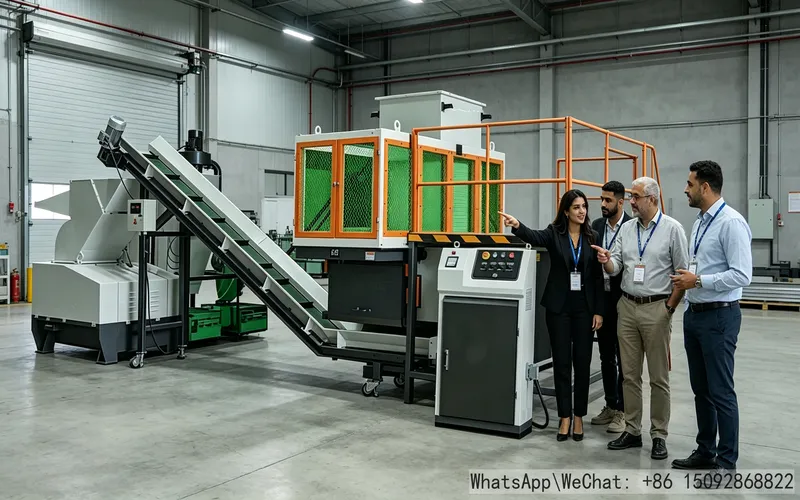
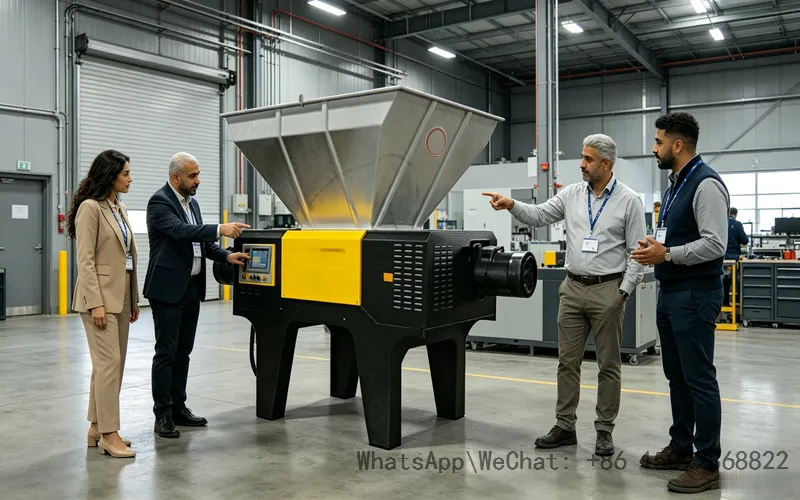
To get rid of low-price competition, improve finished product quality and expand stable production capacity, the customer finally selected our complete high-configured 180-type EPS pelletizing machine two-stage extrusion production line after on-site comparison and capacity measurement of multiple models, completely replacing old single-stage equipment. The improvement effect was immediate after commissioning, completely reversing the production dilemma.
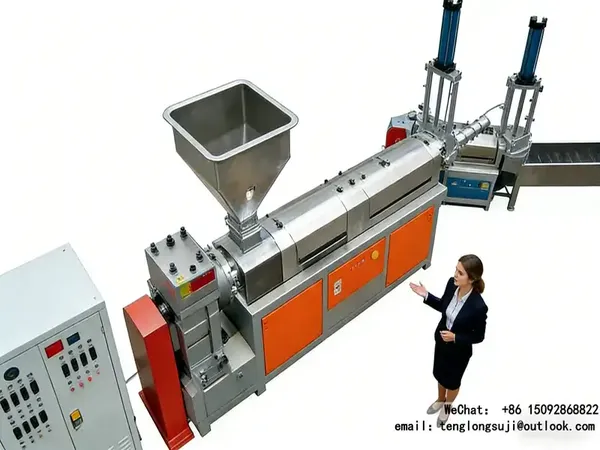
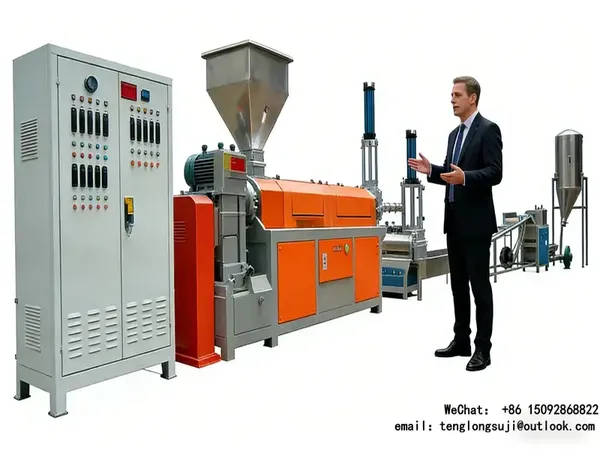
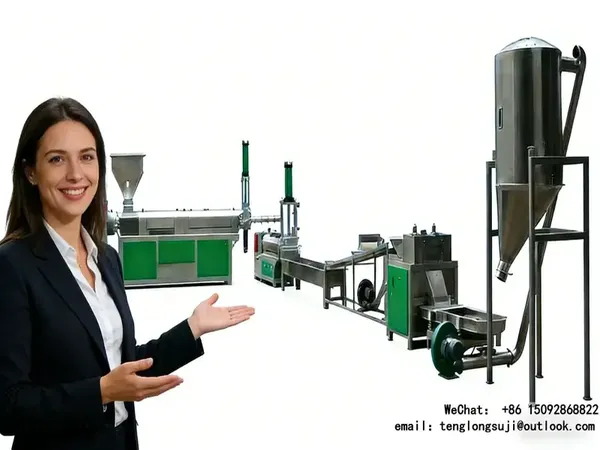
In the core production link, the two-stage extrusion process of the 180-type EPS pelletizing machine thoroughly solves the core problem of poor foam plasticization. The 75KW high-power output of the 180-type main machine matched with the 315-type low-noise reducer ensures stable operation. The 180×3000mm high-frequency wear-resistant screw completes primary melting and extrusion of foam materials, and the 80KW electromagnetic heating + dual heating ring precise temperature control avoids high-temperature carbonization of hot-melt blocks and insufficient plasticization of cold-pressed blocks. Materials initially processed by the main machine are sent to the 165-type auxiliary machine for secondary refined plasticization. The 30KW auxiliary machine delivers reasonable power matching, and the 165mm refined screw realizes more thorough material melting and denser texture, producing flat and uniform strips and fundamentally improving pellet compactness and transparency.
The hydraulic non-stop screen changing system solves the customer’s biggest capacity loss problem. The 350 large-diameter mesh provides sufficient filtering area to efficiently intercept foam dust, impurities and scorched materials. The 4KW hydraulic pump station supplies stable pressure for alternating screen changing of left and right meshes without shutdown or strip breakage, greatly improving production continuity. The effective equipment operating rate increased from the original 75% to more than 95%, with significantly increased daily capacity and greatly reduced waste generation, continuously lowering the production cost per ton.
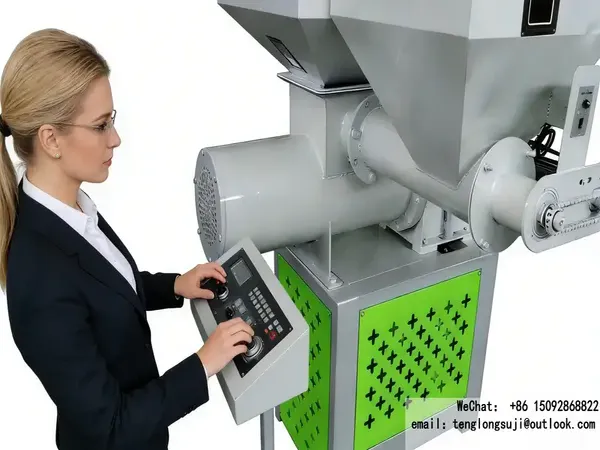
The full-line automatic supporting system makes production more worry-free and finished products higher-quality. The 600×600 forced variable-frequency feeder completely solves the bridging and blockage problems of lightweight foam materials with stable uniform feeding. The 4-meter extended stainless steel water tank ensures sufficient cooling and shaping of strips to eliminate adhesion and deformation. The variable-frequency alloy pelletizer produces uniform and regular pellets without debris or burrs. The rear bin fan realizes automatic dust removal and air drying, delivering dry and uniformly-shaped finished pellets. The national standard variable-frequency electric control is easy to operate, requiring only one worker to supervise the whole line, greatly reducing labor costs.
The customer’s production person in charge feedback: After upgrading to the 180-type EPS pelletizing machine, the factory completely got rid of the dilemmas of excessive defective pellets, frequent shutdown maintenance and low-price sales. The currently produced hot-melt and cold-pressed pellets are transparent, compact, free of black spots and impurities, fully meeting mid-to-high-end market standards, with a price increase of about 300 yuan per ton. The production capacity is stable and sufficient with simple and worry-free operation and maintenance, and the equipment investment can be recovered in a short term. The factory plans to expand the scale of waste foam recycling and processing and undertake more high-end customized orders relying on this stable production line.
This case fully verifies that for the special production of EPS hot-melt blocks and cold-pressed blocks, the core advantages of the 180-type EPS pelletizing machine including two-stage extrusion, non-stop mass production, wear resistance and energy saving fully meet the large-scale and refined production needs of medium-sized foam recycling factories, serving as a high-quality equipment for the foam recycling industry to improve quality, reduce costs, increase profits and break through dilemmas.
Call to Action
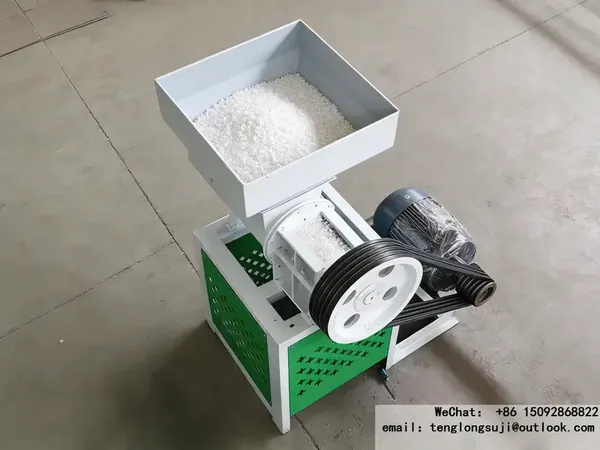
Welcome to consult for the same 180-type EPS pelletizing machine production upgrade plan, exclusive commissioning process for hot-melt/cold-pressed blocks, free equipment quotation and landing service!
WhatsApp/WeChat: +86 15092868822 | Email: [email protected]