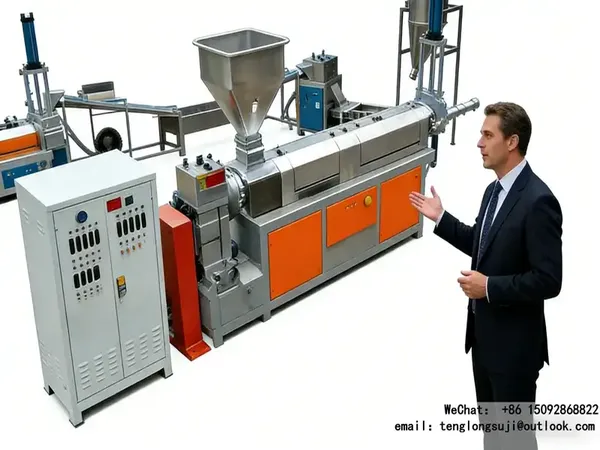
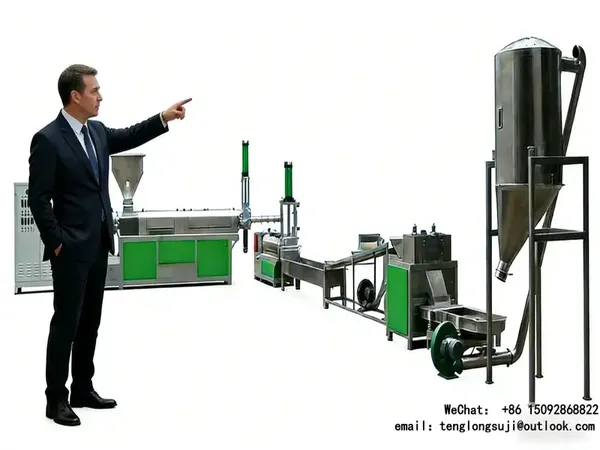
Can’t Control the Temperature of Your Woven Bag Granulator? Here’s How to Choose the Right Heating and Cooling System
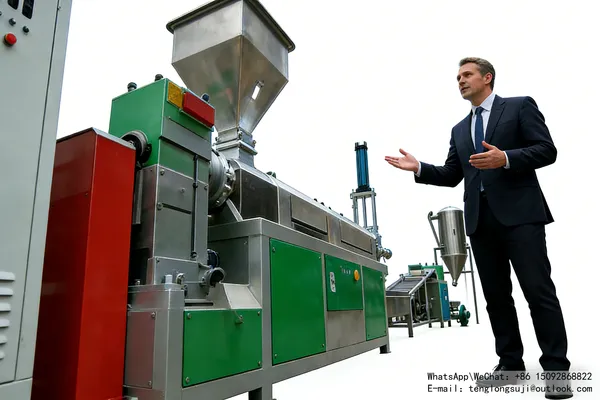
Veterans in woven bag recycling granulation all know a core truth: the success of granulation depends entirely on temperature control. You’ve invested heavily in a woven bag granulator with a new screw and sufficient motor power, yet the final granules are either yellow, black-spotted, or pitted—making them nearly unsellable at a reasonable price. What’s the issue? In most cases, the heating and cooling systems of your woven bag granulator are not properly coordinated.
For a woven bag granulator, the core purpose of heating is to fully melt waste woven bags, while cooling is to quickly shape the molten material. If either system fails, the granules will be substandard. Today, we’ll cut to the chase: from a practical woven bag granulation perspective, we’ll break down the essentials of woven bag granulator heating and cooling systems, helping you choose the right setup, avoid common pitfalls, and consistently produce high-quality granules.
- Heating System: It’s Not Just About Heat—It’s About Precision
Many new woven bag granulation operators make a critical mistake: they assume higher temperatures mean faster melting and higher output. This is extremely risky. For a woven bag granulator, the key to heating is never “how hot” it gets, but “how accurately” it can be controlled.
Consequences of Excessive Temperature:
- Waste woven bags carbonize, resulting in dark, dull granules that downstream buyers will reject outright—wasting all your upfront investment;
- Overheated molten material emits pungent odors, which will definitely fail environmental inspections—leading to fines at best, or production shutdowns for rectification at worst;
- Carbonized impurities quickly clog filter screens. What used to require a screen change every 2 hours may now need replacement every hour, seriously slowing down woven bag granulatorproductivity and increasing labor costs.
Consequences of Insufficient Temperature:
- Incomplete plasticization of waste woven bags leads to white cores and bubbles inside granules, resulting in substandard appearance and lower selling prices;
- Uneven discharge, with strips that vary in thickness, making subsequent pelletizing difficult and generating a large amount of waste granules;
- Screw load spikes, causing motor current to surge. Long-term operation under this stress can burn out the motor, increasing woven bag granulatormaintenance costs.
Since both excessive and insufficient temperatures cause problems, what counts as “precise” heating for a woven bag granulator? The answer lies in two non-negotiable factors that directly determine granule quality and production efficiency.
1.1 Zone Temperature Control: One Temperature per Zone for Optimal Woven Bag Granulation
Different parts of a woven bag granulator serve different functions and require different temperatures. A high-quality woven bag granulator features at least 3-4 independent heating zones on its barrel, each with separate temperature control. This ensures uniform plasticization of waste woven bags and prevents local overheating or incomplete melting. Specific temperature guidelines are as follows:
| Zone | Function | Temperature Range (for PP woven bags) |
| Feeding Zone | Preheat and soften waste woven bags to prevent clogging | 160-180℃ |
| Compression Zone | Fully melt and plasticize waste woven bags | 200-220℃ |
| Homogenization Zone | Maintain molten material fluidity for smooth extrusion | 190-200℃ |
| Die Head Zone | Ensure smooth molten material discharge and prevent die clogging | 180-200℃ |
Here’s a simple, practical way to test your woven bag granulator’s zone temperature control: Use an infrared thermometer to measure the actual temperature of each heating zone on the barrel, then compare it to the instrument’s display. If the temperature difference exceeds 10℃, your temperature control is faulty and must be adjusted immediately—otherwise, granule quality will suffer.
1.2 Electromagnetic Heating vs. Resistance Heating: Which Is Better for Woven Bag Granulation?
Older woven bag granulators typically use resistance heating coils—a iron ring wrapped in resistance wire. While affordable upfront, they have significant long-term drawbacks and are no longer suitable for modern woven bag granulation needs. Their key limitations include:
- Low thermal efficiency (only ~60%), wasting 40% of electrical energy as residual heat. This keeps woven bag granulatorenergy costs high, resulting in substantial monthly electricity bills;
- Slow heating speed, requiring long wait times to reach the set temperature when starting up or changing materials—seriously delaying production;
- Poor temperature stability. Once a deviation occurs, it’s hard to correct quickly, often leading to overheated, blackened waste woven bags and defective granules.
Modern mainstream woven bag granulators come standard with electromagnetic heating. Similar to household induction cookers, it heats the woven bag granulator’s barrel directly (no external baking), offering clear advantages over resistance heating:
- High thermal efficiency (over 95%), reducing woven bag granulatorelectricity consumption by 30-40% for the same output. Over time, this translates to significant cost savings and lower production expenses;
- Rapid heating, reaching the set temperature in 3-5 minutes after startup. No more long waits when changing materials, boosting production efficiency;
- Precise temperature control with minimal fluctuations, fundamentally preventing waste woven bag carbonization and incomplete plasticization—ensuring consistent granule quality.
A reliablewoven bag granulator should always include electromagnetic heating as standard. If your woven bag granulator still uses old resistance heating coils, we recommend upgrading promptly. For typical woven bag granulation production volumes, the upgrade cost is usually recouped within 6 months, with long-term savings that far outweigh the initial investment.
- Cooling System: The Key to Granule Quality and Marketability
Most woven bag granulation operators focus heavily on theirwoven bag granulator’s heating system but overlook cooling as a “secondary” step. In reality, cooling is the deciding factor in granule appearance and marketability—after all, molten woven bag material must be cooled to set its shape. Even the best heating system will fail if cooling is inadequate.
When material is extruded from the woven bag granulator’s die head, it resembles soft noodles—needing rapid cooling and shaping before pelletizing. Poor cooling leads to deformed, stuck-together granules, or even internal stress that causes cracking after a few days of storage. These defective granules are hard to sell, making all your effort a waste.
2.1 Water Cooling vs. Air Cooling: Which Is Right for Your Woven Bag Granulation?
There are two main cooling methods for woven bag granulators, each with its own ideal use cases. Choosing the right one for your operation will save labor, boost efficiency, and avoid costly rework:
Water Cooling:
- Advantages: Fast cooling speed and high efficiency, ideal for large-scale woven bag granulatorproduction and conventional waste (e.g., PP woven bags);
- Disadvantages: High water consumption. Granules retain small amounts of moisture after discharge, requiring an extra drying step;
- Best for: Hot regions (e.g., Southeast Asia), granulation plants using PP/PE woven bags as raw materials, and those prioritizing high output.
Air Cooling:
- Advantages: No water required, no wastewater discharge (meeting strict environmental standards). Granules are dry and ready for immediate packaging, eliminating the need for drying;
- Disadvantages: Slower cooling speed than water cooling, better suited for small-scale woven bag granulatorproduction;
- Best for: Regions with strict environmental regulations (e.g., Europe, the U.S.), granulation of heat-sensitive waste (e.g., PET woven bags), or operations requiring fully dry granules.
How to choose in practice? It boils down to your raw materials and local environmental rules. If you primarily process PP woven bags with high output, water cooling is more convenient and aligns perfectly with woven bag granulator high-yield needs. For high-end recycled granules, dryness requirements, or strict environmental inspections, air cooling is better—it saves water and avoids compliance risks.
2.2 Three Common Cooling Problems (with Practical Fixes)
Many woven bag granulation operators struggle with cooling issues, but most stem from improper operation. Below are three common problems, along with easy-to-implement solutions—no need for a maintenance technician, saving you time and money:
Problem 1: Granules stick together and can’t be packaged
Cause: Insufficient cooling. Strips are still soft when exiting the water, causing them to stick together on contact.
Solution: Extend the water tank length or lower the cooling water temperature, allowing woven bag granulator extruded strips to soak longer—ensuring full shaping before pelletizing.
Problem 2: Irregular granule shape (one end large, one end small) and poor appearance
Cause: Uneven cooling. Strips enter the water at the wrong angle, with some surfaces not touching the cooling water—leading to inconsistent shaping.
Solution: Adjust the guide wheel position in the woven bag granulator’s cooling water tank, fully submerging the strips. This ensures uniform cooling time and intensity for consistent granule shape.
Problem 3: Granules crack after a few days of storage, making them unsellable
Cause: Too rapid cooling. The granule surface shrinks quickly, trapping internal stress that causes cracking over time.
Solution: Slightly increase the cooling water temperature (e.g., from 15℃ to 25℃), slowing the cooling process ofwoven bag granulator extruded strips. This reduces internal stress and prevents cracking.
III. Heating and Cooling: A Coordinated Team—Both Are Indispensable
For a woven bag granulator, discussing heating or cooling in isolation is meaningless. These two systems are “golden partners” in granulation—they must work in perfect harmony to consistently produce high-quality granules and maximize efficiency.
What does good coordination look like? Here are two real-world woven bag granulation scenarios to illustrate:
Scenario 1: Changing Woven Bag Raw Materials
Switching from PP to PE woven bag granulation. PP requires higher heating temperatures, while PE needs lower temperatures. A high-quality woven bag granulator automatically adjusts heating parameters when raw materials change, with the cooling system adapting synchronously—no manual valve adjustments needed. This saves time, reduces errors, and prevents granule waste from mismatched parameters.
Scenario 2: Increasing Production Speed and Output
If you want to boost woven bag granulator output from 800kg/h to 1000kg/h, heating speed must increase accordingly—raising material temperature. The cooling system must keep pace, removing excess heat promptly. Without this balance, granules will be soft, deformed, and substandard—undermining your productivity goals.
Here’s a quick way to check if your woven bag granulator’s heating and cooling are coordinated: During normal production, touch the cut granules at the discharge port. A warm (not hot) feel is ideal. If granules are hot, cooling is insufficient; if cold, cooling is excessive—both require immediate parameter adjustments.
- Daily Maintenance: 3 Simple Habits to Save Big on Repairs
The woven bag granulator’s heating and cooling systems are easy to overlook when working well—but a breakdown can halt production and cost thousands in repairs. Spending just 10 minutes daily on maintenance can prevent most issues, saving you significant time and money in the long run.
- Check the Thermocouple Monthly
The thermocouple is the woven bag granulator’s core temperature-measuring probe. A damaged thermocouple causes temperature失控, leading to yellow or black granules. To check: Use an infrared thermometer to measure the barrel, then compare it to the instrument’s display. If the deviation exceeds 5℃, replace the thermocouple (only ~$10-$20)—far cheaper than repairing equipment or reworking defective granules.
- Clean the Water Circulation System Quarterly
For water-cooled woven bag granulators, scaling is common—especially in hard water areas. Scale buildup in pipes reduces water flow, lowers cooling efficiency, increases woven bag granulator load, and shortens equipment life.
Cleaning is simple: Add descaling agent (available at pharmacies or hardware stores) to the cooling tank, run the woven bag granulator’s cooling system for a few hours, drain the water, and rinse with clean water. This removes scale completely and restores cooling performance.
- Empty Material Before Shutting Down
Many operators turn off the woven bag granulator immediately after work, leaving molten material in the barrel. By the next startup, this residual material will have charred and carbonized—contaminating new material with black spots and ruining entire batches.
Correct procedure: Stop feeding 5-10 minutes before shutdown, let thewoven bag granulator’s screw expel all remaining material (until discharge from the die head thins), then turn off the power. This prevents material residue, charring, and costly granule waste.
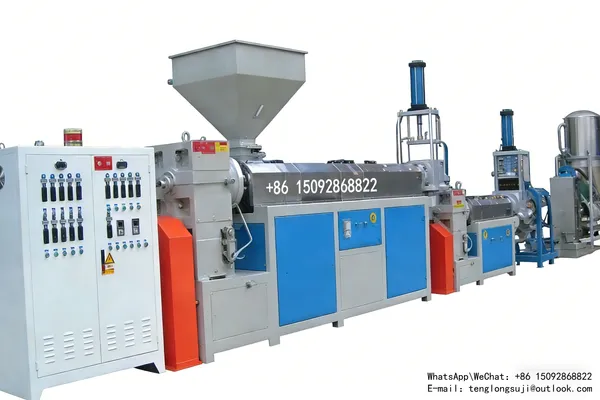
- Summary: 3 Must-Have Indicators for Choosing a Woven Bag Granulator’s Heating & Cooling System
If you’re in the market for a woven bag granulator, remember these three non-negotiable indicators to avoid pitfalls, choose the right equipment, and minimize mistakes:
- Electromagnetic Heating + Zone Temperature Control: Both are essential. This is the foundation for woven bag granulatorenergy savings and consistent granule quality—critical for successful woven bag granulation;
- Cooling Method Matched to Your Needs: Choose water cooling for high output and conventional PP/PE woven bags; air cooling for strict environmental rules, heat-sensitive materials, or high-end granules;
- Easy Maintenance: Opt for a woven bag granulatorwith easily replaceable thermocouples, accessible water circuits, and detachable fans. Avoid overly complex designs—simple maintenance reduces downtime and costs.
With 20 years of experience in the woven bag granulation industry, we’ve delivered thousands of woven bag granulators worldwide. Each unit’s heating and cooling system is custom-tuned to the customer’s specific needs—including raw material type, local climate, and electricity costs—ensuring optimal performance, stable productivity, and high-quality granules.
If you’re struggling to control your existing woven bag granulator’s temperature, or need guidance on matching a heating/cooling system to your operation, add us on WeChat to share your details: What type of woven bag waste do you process? What woven bag granulator model are you using? What specific issues are you facing?
WhatsApp / WeChat: +86 15092868822
We’ll send you a free copy of our “Woven Bag Granulator Heating & Cooling Temperature Chart” and “Common Fault Troubleshooting Guide”—3 pages of practical advice to solve most woven bag granulator temperature control issues. This will help you resume normal production quickly, reduce losses, and boost profits.