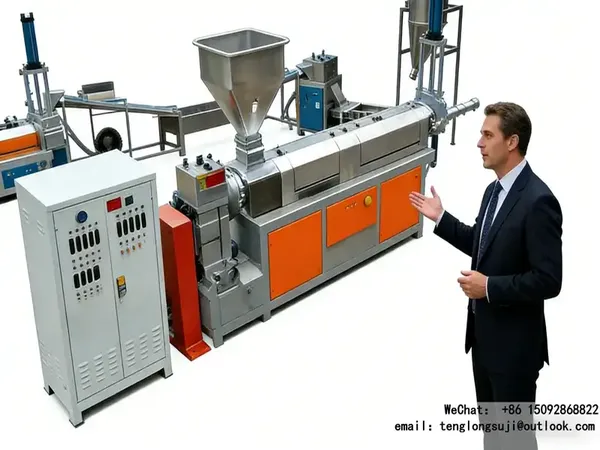
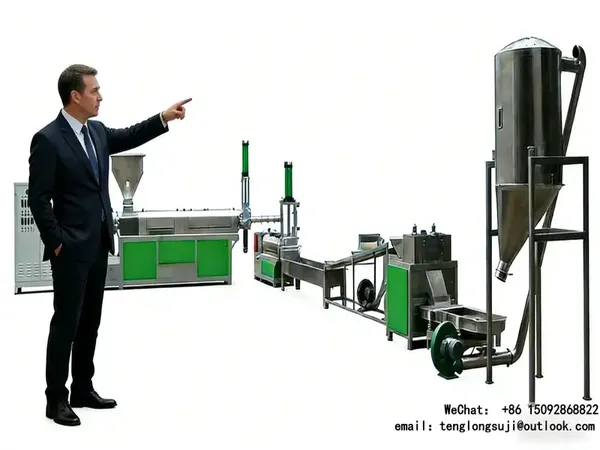
Big Bag Shredder: Guide to Cost Optimization and ROI Improvement for Small Recycling Enterprises
For small recycling enterprise owners, the core pain points when handling Big Bag waste are high equipment investment, high energy consumption, and complex operation, which lead to prolonged investment payback periods and even affect corporate cash flow. With the global recycled plastic market continuing to heat up, it is expected that the global recycled plastic market size will reach 51.203 billion US dollars in 2026, with a compound annual growth rate of 9.9%. As an important segment of plastic recycling, Big Bag recycling, choosing a cost-effective Big Bag Shredder has become the key for small enterprises to break through the profit bottleneck. This article will provide consultative selection guidance for small recycling enterprise owners from three core dimensions: cost control, usability optimization, and ROI calculation, helping enterprises achieve maximum benefits with minimum investment.
- Core Pain Points and Solutions for Small Enterprises Choosing Big Bag Shredder
Small recycling enterprises generally face three major pain points when purchasing Big Bag Shredder: high initial investment pressure, high operational energy consumption, and high operational threshold. Combined with 15 years of industry experience, we found that most small enterprises fall into the misunderstanding of “buying low-end equipment for cheap”, which ultimately leads to high equipment failure rates and soaring maintenance costs, and even prolongs the investment payback period. A truly cost-effective choice should follow the principle of “reasonable initial investment + long-term low operating costs”, and the core of Big Bag Shredder selection is to balance “one-time investment” and “long-term returns”.
1.1 Pain Point 1: High Initial Investment Pressure – Select Equipment Matching Production Capacity to Avoid Over-investment
The daily Big Bag processing volume of small enterprises is usually 5-20 tons. If a Big Bag Shredder with excessive capacity is selected, it will lead to high equipment idleness rate and waste of initial investment; if equipment with insufficient capacity is selected, a bottleneck will occur, affecting recycling efficiency. The following is a comparison of initial investment and applicable scenarios of Big Bag Shredder with different capacities to help enterprises make precise selection:
| Big Bag Shredder Capacity | Initial Investment (USD) | Applicable Daily Processing Volume | Enterprise Scale Fit | Initial Investment Payback Forecast |
| 5-10 Tons/Day | 18000-25000 | 5-10 Tons | Miniature Recycling Enterprise (5-10 employees) | 8-10 Months |
| 10-20 Tons/Day | 25000-35000 | 10-20 Tons | Small Recycling Enterprise (10-20 employees) | 10-12 Months |
| 20-30 Tons/Day | 35000-50000 | 20-30 Tons | Medium-sized Recycling Enterprise (more than 20 employees) | 12-15 Months |
Note: The investment payback forecast is calculated based on a daily processing volume of 10 tons of Big Bags and a profit of 50 US dollars per ton, excluding operating costs such as equipment maintenance and energy consumption. The actual payback period needs to be adjusted according to the specific operating conditions of the enterprise.
1.2 Pain Point 2: High Operational Energy Consumption – Choose Energy-saving Equipment to Reduce Long-term Costs
In the operating costs of small enterprises, energy consumption accounts for 30%-40%. Therefore, the energy consumption performance of Big Bag Shredder directly determines the long-term profitability of the enterprise. The motor power of traditional Big Bag Shredder is usually 30-50kW, running 8 hours a day, with an electricity cost of about 120-200 US dollars per day; while the energy-saving Big Bag Shredder can reduce the motor power to 20-30kW through optimized motor design and Siemens PLC automatic control system, with a daily electricity cost of only 80-120 US dollars, saving about 14,000-29,000 US dollars in electricity bills per year.
In addition, the energy-saving Big Bag Shredder also has a “load adaptation” function, which can automatically adjust the speed according to the thickness and hardness of the Big Bag, avoiding no-load energy consumption and further reducing operating costs. For small enterprises, choosing energy-saving equipment can shorten the investment payback period by 1-2 months.
1.3 Pain Point 3: High Operational Threshold – Simplify Operation Design to Reduce Labor Costs
Small enterprises generally face the problems of labor shortage and rising labor costs. If the Big Bag Shredder is complex to operate and requires professional and technical personnel, it will further increase the enterprise’s costs. A high-quality Big Bag Shredder should have intelligent operation functions such as “one-key start, automatic feeding, and fault alarm”. Operators can get started after 1-2 days of training without professional technical background.
At the same time, the equipment should be equipped with an automatic reverse sensor, which can effectively prevent material blockage and equipment overload, reduce fault shutdown time, and lower maintenance costs and the frequency of manual intervention. For example, after a small recycling enterprise adopted an intelligent Big Bag Shredder, the number of operators was reduced from 2 to 1, saving 3,000 US dollars in labor costs per month and further improving ROI.
- Accurate ROI Calculation Method for Big Bag Shredder (Exclusive for Small Enterprises)
For small recycling enterprise owners, accurately calculating ROI is the core of judging the investment value of equipment. Combined with industry experience, we have summarized a simple and easy-to-understand ROI calculation formula to help enterprises quickly judge investment feasibility:
ROI = (Annual Net Profit ÷ Initial Investment) × 100%; Investment Payback Period = Initial Investment ÷ Monthly Net Profit
Among them, Annual Net Profit = (Big Bag Processing Volume × Profit per Ton) – Annual Operating Costs (Energy Consumption + Labor + Maintenance + Consumables)
2.1 Calculation Example (Taking a Small Enterprise with a Daily Processing Volume of 10 Tons of Big Bags as an Example)
- Initial Investment: Choose a Big Bag Shredder with a capacity of 10-20 tons/day, investment of 30,000 US dollars
- Big Bag Processing Volume: Operate 300 days a year, 10 tons per day, annual processing volume of 3,000 tons
- Profit per Ton: The price of crushed materials after Big Bag recycling is about 150 US dollars/ton, the raw material cost is about 100 US dollars/ton, and the profit per ton is 50 US dollars
- Annual Operating Costs: Energy Consumption (100 US dollars/day × 300 days = 30,000 US dollars) + Labor (3,000 US dollars/month × 12 months = 36,000 US dollars) + Maintenance (5,000 US dollars/year) + Consumables (3,000 US dollars/year) = 74,000 US dollars
- Annual Net Profit: (3,000 tons × 50 US dollars/ton) – 74,000 US dollars = 76,000 US dollars
- ROI: (76,000 ÷ 30,000) × 100% ≈ 253%; Investment Payback Period: 30,000 ÷ (76,000 ÷ 12) ≈ 4.7 months
Note: The above calculation is based on current market prices. The actual profit will be affected by fluctuations in raw material prices and crushed material prices. It is recommended that enterprises adjust the calculation parameters according to local market conditions.
III. 3 Key Skills for Small Enterprises to Purchase Big Bag Shredder (Pitfall Avoidance Guide)
- Priority to “Modular Design” Equipment: The modular design of Big Bag Shredder can flexibly upgrade accessories (such as increasing the feed port and replacing high-power motors) according to the enterprise’s production capacity growth, avoiding equipment obsolescence in the later stage and reducing secondary investment costs.
- Focus on Equipment Durability to Reduce Maintenance Costs: Choose equipment with blades made of high-hardness alloy material and the body made of Q235 steel plate. The service life of the blades can reach 1-2 years, the body is not easy to deform, and maintenance costs can be saved by 2,000-5,000 US dollars per year. At the same time, priority should be given to equipment equipped with hard-tooth surface reducers, which operate more safely and stably.
- Choose Manufacturers with Comprehensive After-sales Service: Small enterprises lack professional maintenance teams, and the after-sales response speed of manufacturers directly affects the equipment shutdown time. It is recommended to choose manufacturers with an after-sales response time ≤ 24 hours and free on-site maintenance services to avoid production interruption due to equipment failure and reduce losses.
- FAQ: Common Questions of Small Enterprises About Big Bag Shredder
Q1: If small enterprises have insufficient initial funds, can they choose second-hand Big Bag Shredder?
It is not recommended to choose second-hand equipment first. The core components (such as motors and blades) of second-hand Big Bag Shredder are already worn, with high failure rate and high maintenance cost, which will instead increase the operational burden. If funds are insufficient, you can choose the installment payment plan provided by the manufacturer, with a down payment of 30%-50% and the remaining amount repaid in 6-12 months, which not only reduces the initial financial pressure but also obtains new equipment and comprehensive after-sales service.
Q2: What are the main factors affecting the energy consumption of Big Bag Shredder?
It is mainly affected by three factors: first, the motor power, the higher the power, the higher the energy consumption; second, the material characteristics, the thicker and harder the Big Bag, the higher the energy consumption; third, the equipment design, energy-saving equipment can reduce energy consumption by 15%-30% through optimized motors and load adaptation technology.
Q3: Is the daily maintenance of Big Bag Shredder complex? How much maintenance cost is needed?
Daily maintenance is very simple, mainly including: cleaning up debris at the feed port every day, checking the wear of blades every week, and adding lubricating oil to motors and bearings every month. The monthly maintenance cost is about 200-300 US dollars, and the annual maintenance cost is about 2,400-3,600 US dollars, which is much lower than the maintenance cost of traditional equipment.
- Summary and Call to Action
For small recycling enterprises, the core of Big Bag Shredder selection is not “the cheaper the better”, but “matching production capacity, energy saving and consumption reduction, and simple operation”. Only by choosing equipment that meets the actual needs of the enterprise can we minimize costs, improve ROI, and gain a foothold in the fiercely competitive recycled plastic market. With the EU New Packaging Regulation (EU) 2025/40 taking effect on August 12, 2026, the market demand for Big Bag recycling will further expand. Deploying efficient Big Bag Shredder in advance is the key for enterprises to seize market opportunities.
Download our “Big Bag Shredder Selection Manual for Small Enterprises” now to get exclusive selection plans and ROI calculation tools; contact us to get free on-site process evaluation and quotation, and let the professional team customize the most cost-effective Big Bag Shredder solution for you to help your enterprise achieve profit growth.