Tehran Plastic Recycling: One Factory Owner Solved Her Bottleneck Problem. Here’s How.
Meet Leila. She Runs a Recycling Factory in Tehran.
Leila is 38. She has a degree in environmental engineering. Five years ago, she started a plastic recycling factory in Tehran. It’s about 1,600 square meters—mid-sized.
Her business is simple: collect waste plastic bottles from supermarkets, apartments, and office buildings around the city, and turn them into clean recycled granules.
Tehran is a big city. Nine million people live there. The retail business never stops. Every month, the city generates over 450 tons of plastic bottle waste.
That’s a lot of material. And recently, Iran started pushing harder on recycling. The government’s “National Circular Economy Plan 2030” offers subsidies for green industries. Leila wanted to grow her business.
But her old plastic granulator couldn’t keep up.
She saw our machine at the Tehran International Plastic Industry Exhibition. Then she called us.
The Real Problems: Not Just Old Equipment
Here’s what was actually hurting her factory.
Problem one: too slow.
Her old granulator ran at 220 kg per hour. But she was getting 280 kg of bottles every day. The math didn’t work. Every day, she fell behind.
Problem two: humidity caused bubbles.
Tehran gets humid in winter. Average humidity hits 65% . Plastic bottles arriving at her factory often had over 12% water content.
When those wet bottles went through her old machine, the recycled granules came out with tiny air bubbles. High-end packaging factories refused to buy them. She had to cut prices by 18% just to move the product.
Problem three: electricity was eating her profit.
The old machine used 8.0 kWh per kg. Tehran’s electricity costs $0.08 per kWh. Run the numbers—that’s a serious monthly bill.
And then there was the noise. Tehran’s environmental rules say equipment has to stay below 70dB. Her old granulator failed that.
The hidden problem: no local service.
Most machine suppliers don’t have techs in Tehran. If something broke, she could wait days. Production stops. Money burns.
She didn’t just want a machine. She wanted someone who could show up when something went wrong.
What We Did: A Machine Built for Tehran’s Conditions
We didn’t just send her a catalog. We looked at her setup, her climate, her daily pain points. Then we built a solution.
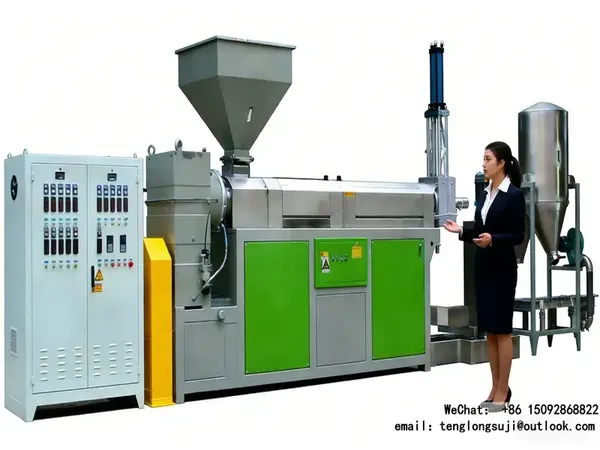
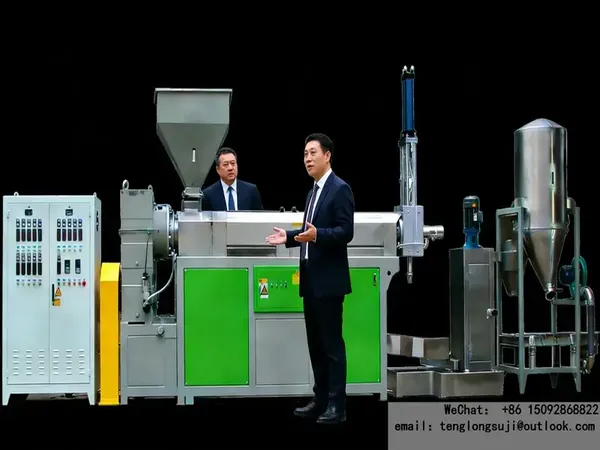
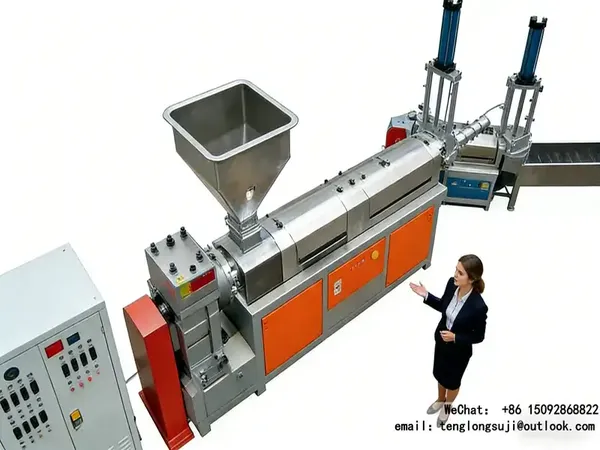
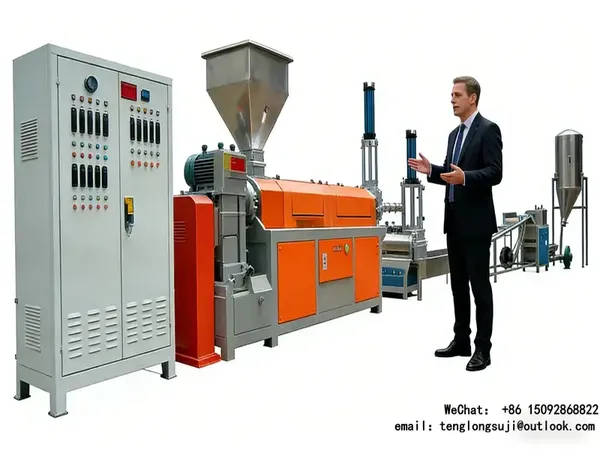
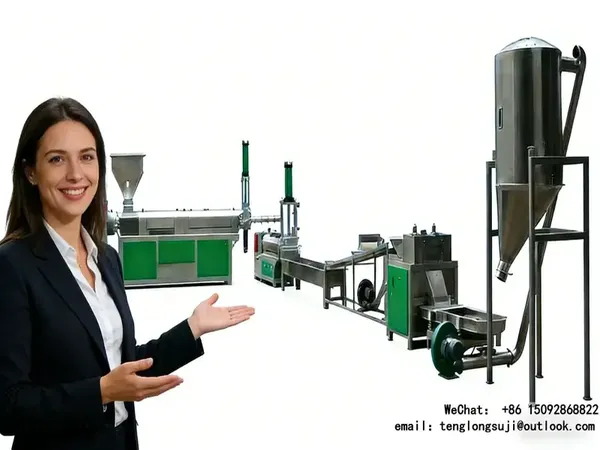
The TL-210 plastic granulator came with these specs:
32:1 screw L/D ratio – Better plasticizing. No more uneven particles.
Dual vacuum exhaust – Pulls moisture out. Finished granules come out at less than 1.2% water content. Bubbles gone.
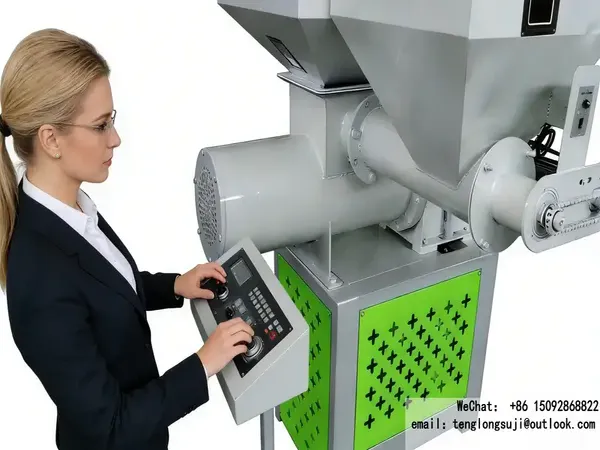
PLC auto control – Less manual work. Fewer operator mistakes.
55KW energy-saving motor + heat recovery – Less power draw. Runs at ≤67dB , so it passes Tehran’s noise rule.
Local service in Tehran – A technician can be there in 4 hours. Plus free training for three of her operators.
The process is a closed loop: sorting → washing → crushing → drying → granulating → cooling → screening → finished product.
Nothing fancy. Just solid engineering.
What Happened After 4 Months
The machine ran for four months without a major failure. Here’s what changed.
| Metric | Old Machine | TL-210 | Change |
| Output per hour | 220 kg | 500 kg | up 127% |
| Energy use | 8.0 kWh/kg | 6.3 kWh/kg | down 21% |
| Monthly electricity cos | $1,408 | $1,088 | saves $320 |
| Product quality | bubbles | bubble‑free | can sell to high‑end buyers |
| Selling price | 18% below market | 16% above old price | big swing |
She’s now selling to packaging factories that wouldn’t even talk to her before. And because the machine meets Tehran’s green standards, her factory qualified for extra government subsidies.
Here’s what Leila told us:
“This machine is efficient, energy‑saving, and reliable. It solved all my pain points and helped me win high‑end clients.”
That’s not marketing copy. That’s what she said.
Questions People Actually Ask
Q: Can this thing handle wet bottles? Tehran gets humid.
A: Yes. The dual vacuum system pulls water content down to 1.2% or less. No bubbles. We’ve tested it.
Q: How long before I have to replace the screw?
A: The alloy steel screw lasts over 6 years with normal maintenance. And yes, we sell replacements.
Q: What if it breaks down? Can you really get someone here in a few hours?
A: We have a service team in Tehran. For Leila’s factory, average response time has been under 4 hours.
Q: Is it loud?
A: No. 67dB. Tehran’s limit is 70dB. Passes without a problem.
Running a recycling factory in Tehran? Dealt with slow machines, high power bills, or bubble problems? Drop a comment or reach out. We read every one.