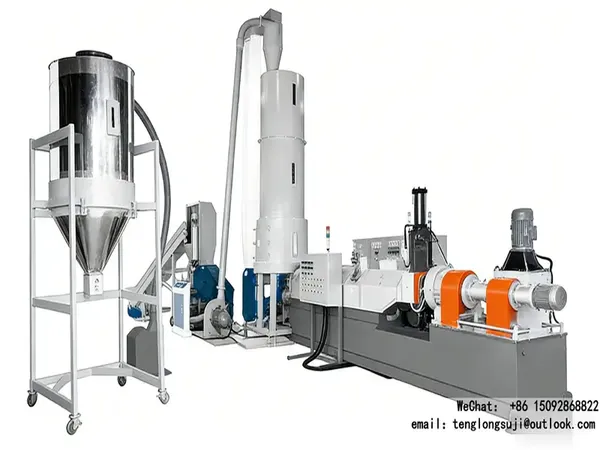
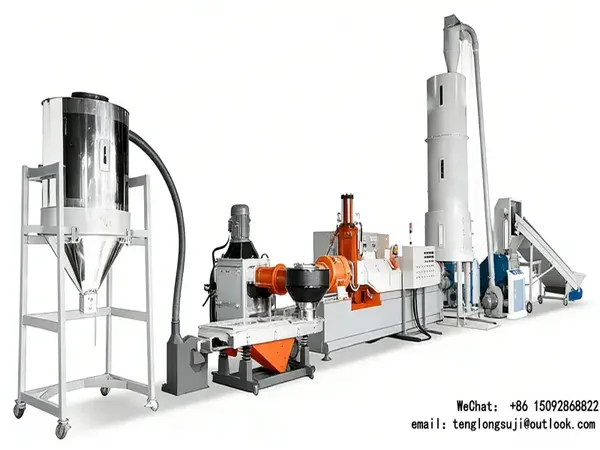
Laos Pakse, PET Bottle & HDPE Container Waste High-Efficiency plastic pelletizing machine Successful Case
Background: Mr. Boun, a 41-year-old high school graduate with 9 years of plastic recycling experience, operates a medium-sized recycling factory in Pakse’s Champasak District. As the capital of Champasak Province and a major agricultural and trade hub, Pakse generates 450 tons of PET bottle and HDPE container waste monthly from markets, farms, and local factories. Mr. Boun launched his business in 2016 after working at a plastic recycling plant in Thailand, focusing on producing high-efficiency recycled granules to supply Pakse’s growing agricultural packaging industry. However, his outdated plastic pelletizing machine was inefficient and unable to handle mixed PET/HDPE waste, limiting his business growth. He needed a high-efficiency pelletizing machine that could process mixed waste and boost his output.
The Challenge
Mr. Boun faced three critical inefficiencies in his operations. First, his old industrial plastic pelletizing machine could not process mixed PET/HDPE waste, requiring manual separation—adding 3 workers and 3 hours of labor daily. Second, the old machine ’s low-efficiency motor and outdated design resulted in a low output of 200 kg/h, unable to meet the growing demand from his clients. Third, its poor heat distribution caused 11% of granules to have uneven melting, reducing product quality and forcing him to sell at 2,400 LAK/kg. Unlike other suppliers, we offered a plastic pelletizing machine that can handle mixed PET/HDPE waste and includes local after-sales support—critical for his high-demand operations.
The Solution
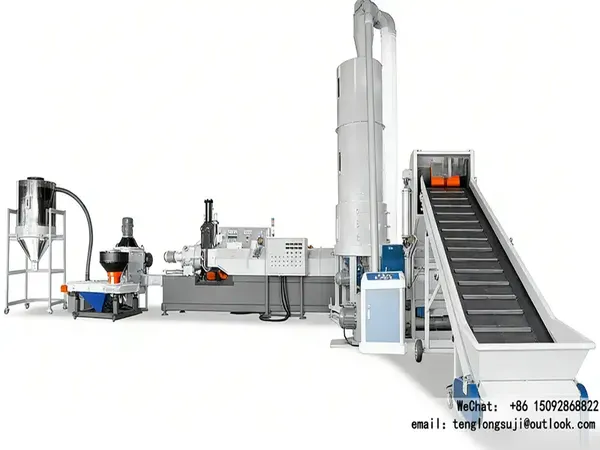
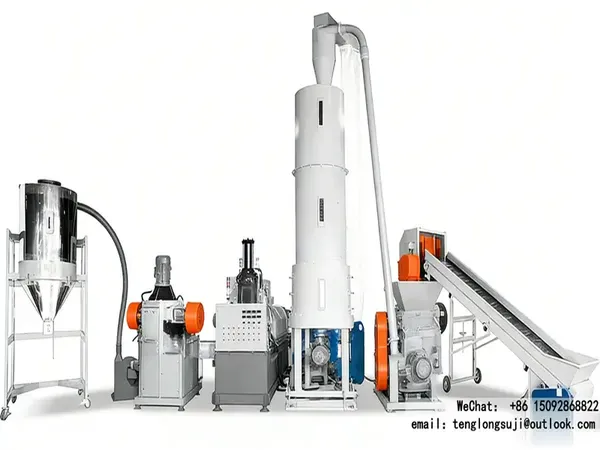
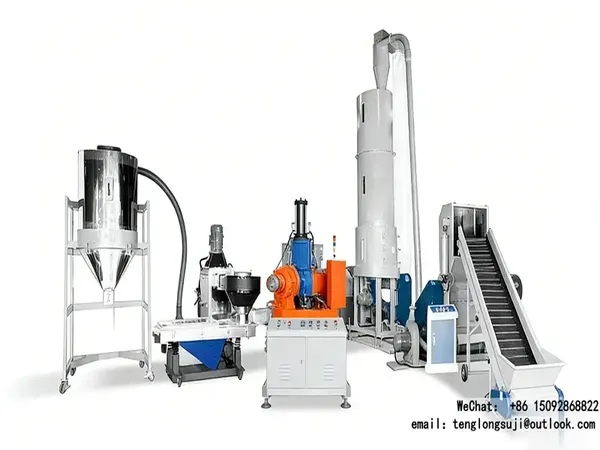
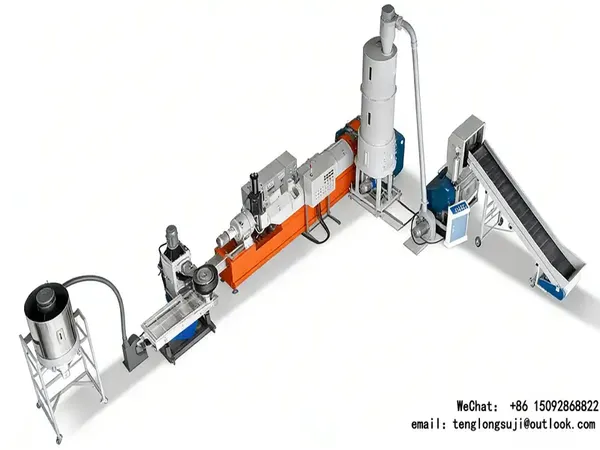
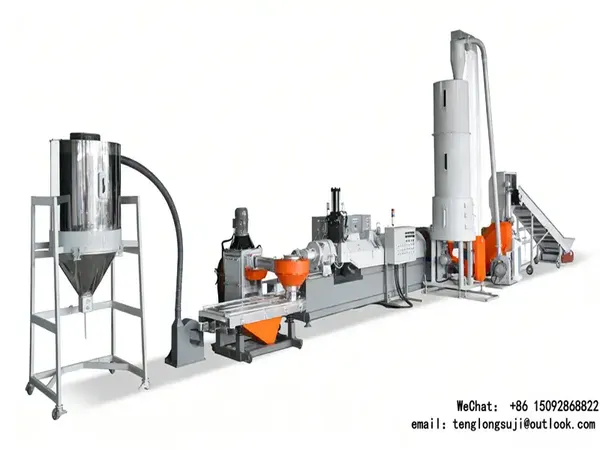
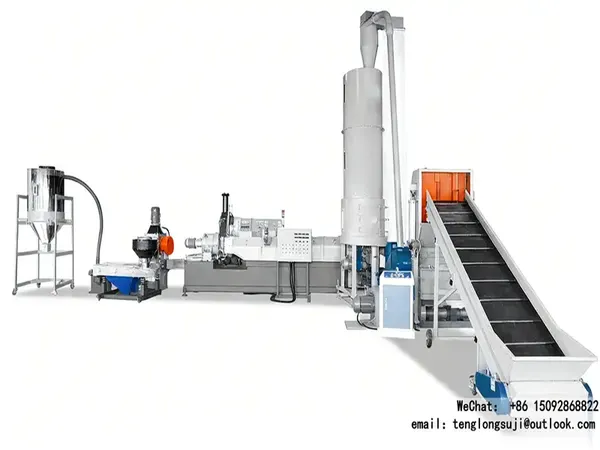
We customized a TL-160 plastic pelletizing machine tailored to Pakse’s mixed PET/HDPE waste and Mr. Boun’s efficiency needs. This high-efficiency plastic machine was designed to solve his mixed waste and output issues, with key features including:
- A dual-screw design with adjustable speed, allowing efficient processing of mixed PET and HDPE waste without manual separation—significantly saving labor costs for theplastic machine.
- A high-efficiency motor with optimized heat distribution, ensuring uniform melting and reducing uneven granules to just 1%—improving product quality from the plastic pelletizing .
- An automatic feeding and sorting system, separating PET and HDPE during feeding and boosting the plastic pelletizing machine ’s output to 450 kg/h.
- A hydraulic screen changer with a 110-mesh dual-layer filter, removing 99.6% of impurities and ensuring high-quality granules from the machine .
- Local after-sales support in Pakse, with a spare parts warehouse and 24/7 technical assistance, minimizing unplanned downtime to under 1 hour per month for the plastic pelletizing machine .
Our pre-sales team conducted on-site inspections, provided a detailed efficiency improvement plan for the plastic machine , and trained Mr. Boun’s 5 staff members on equipment operation and maintenance of thepelletizing machine .
The Results
After 3 months of operation, the plastic pelletizing machine delivered impressive efficiency gains: 1. Daily output increased from 4.8 tons to 10.8 tons (a 125% increase), with the plastic pelletizing’s hourly capacity rising from 200 kg/h to 450 kg/h. 2. Manual separation was eliminated, cutting 3 workers and reducing labor costs by 50% (saving 16,500,000 LAK monthly) for the plastic machine operation. 3. Uneven granules were reduced to 1%, allowing Mr. Boun to sell at 3,900 LAK/kg (up from 2,400 LAK/kg), increasing his monthly profit by 162,000,000 LAK with the machine . 4. Maintenance costs for the plastic pelletizing machine fell by 52%, saving 46,800,000 LAK per year. 5. He secured contracts with 3 Pakse agricultural packaging companies for the granules produced by the machine . “This plastic machine is high-efficiency and versatile; it solved my mixed waste problems and let me meet client demand easily,” said Mr. Boun.
FAQ
Q1: Can this plastic pelletizing process mixed PET and HDPE waste? A1: Yes, the plastic pelletizing machine ’s dual-screw design and automatic sorting system handle mixed waste without the need for manual separation. Q2: How much does it improve output efficiency? A2: The plastic pelletizing’s output increases from 200 kg/h to 450 kg/h, a 125% improvement in daily capacity. Q3: Does it reduce manual labor? A3: Yes, the plastic machine eliminates manual separation, cutting 3 workers and 50% of labor costs.
If you process mixed PET/HDPE waste in Pakse and struggle with inefficiency, share your pain points in the comments for a tailored plastic pelletizing machine solution!