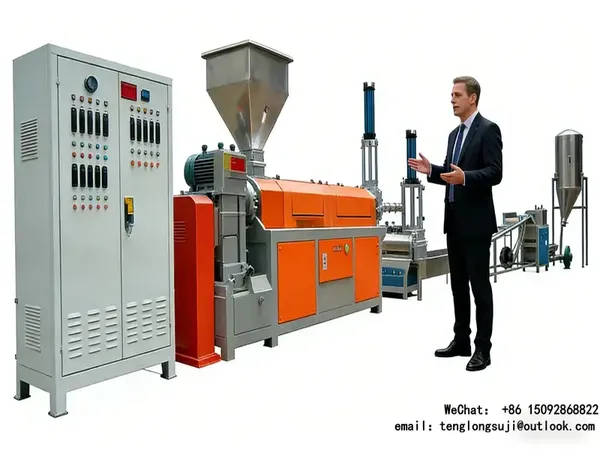
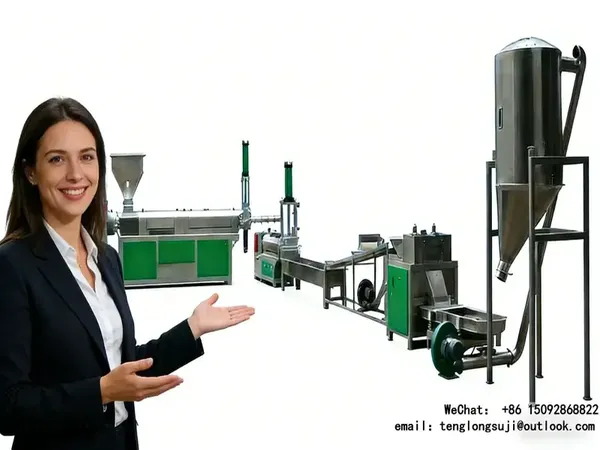
Brazil, São Paulo: Industrial Plastic Scrap High-Efficiency Plastic granulator Success Case
Ricardo is 41. He studied industrial engineering. For the last five years, he’s been running a 1,200-square-meter plastic recycling facility in São Paulo.
His raw material? Industrial plastic scrap. Casings. Pipes. Packaging waste. It comes from São Paulo’s manufacturing hubs—the ones that pump out 30% of Brazil’s industrial GDP.
Every month, São Paulo generates 420 tons of industrial plastic scrap. That’s a lot. And Brazil’s new “Green Industry Policy” (2026) now says 75% of that has to be recycled.
Ricardo saw the opportunity. He had ten years of factory management experience under his belt. He wanted to build a business that solved a real pollution problem while selling high-quality recycled granules.
He compared three local suppliers. He picked us. Why? Our machine fit Brazil’s power grid. And it had the processing power he needed.
The Real Problems: Four Things That Were Killing His Profit
- Too slow.
His old granulator ran at 200 kg per hour. But his daily supply of industrial scrap had hit 380 kg. That meant 25% of the material he collected just sat there. Unprocessed. Unused.
- Impurities ruined the granules.
Industrial plastic scrap comes with metal bits and oil residue. His old machine couldn’t handle it. The plasticization was uneven. 16% of his output got rejected by local manufacturers. That’s almost one in six bags.
- Electricity costs were out of control.
The old machine used 8.5 kWh per kg. São Paulo’s electricity rate is $0.14 USD per kWh. Do the math. His energy bill was 35% higher than it should have been.
- No local service when things broke.
This one hurt the most. His previous machine had a motor failure. The supplier didn’t have a technician in São Paulo. Five days of downtime. Lost revenue: $2,200.
On top of all that, Brazil’s environmental rules are strict. Waste gas emissions have to stay ≤0.08mg/m³. His old granulator didn’t pass. He was looking at $4,800 in potential fines.
He didn’t just need a machine. He needed one that could handle São Paulo’s industrial scrap, pass the emissions test, and come with local support.
What We Did: A Plastic Machine Built for São Paulo’s Industrial Scrap
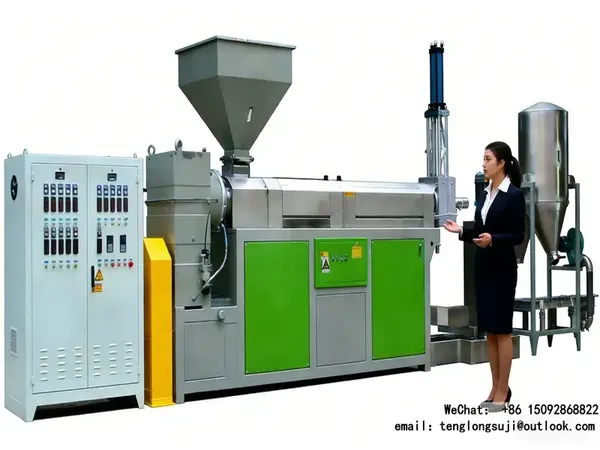
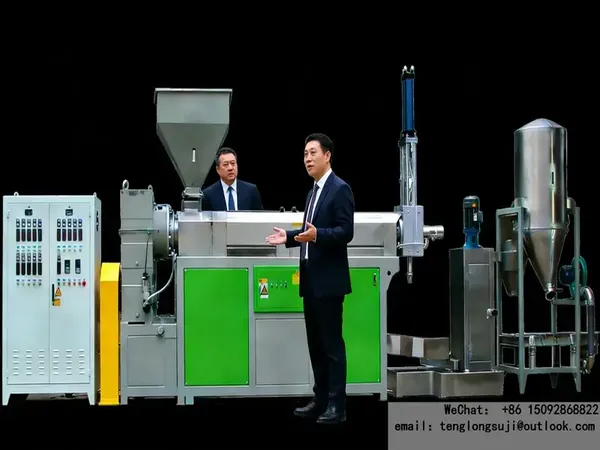
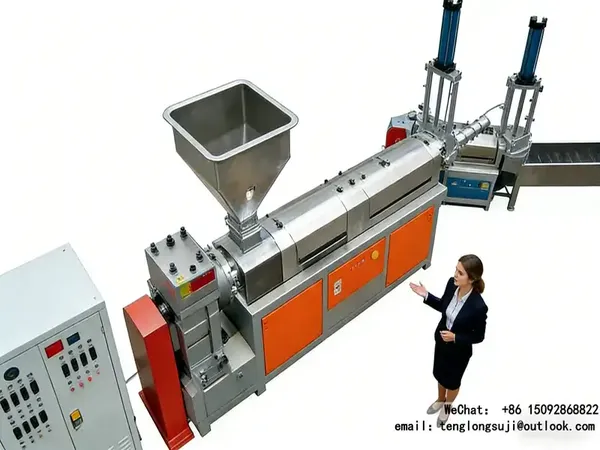
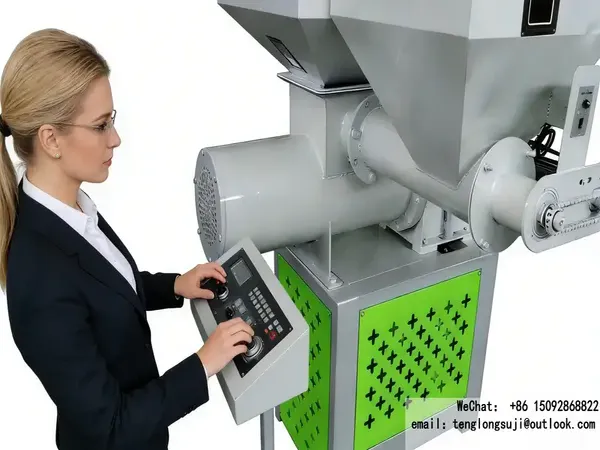
We didn’t sell him a standard unit. We customized the TL-250SP specifically for his operation.
Here’s what went into it:
36:1 L/D ratio screw – High-hardness alloy steel. Dual vacuum exhaust. Uniform plasticization. Oil residue pulled out. Defective rate dropped to below 2% .
55KW energy-saving motor + heat recovery – Pushed output to 510 kg/h. Energy use down to 5.6 kWh per kg. Passes Brazil’s efficiency standards.
Magnetic separation system + reinforced crusher – Pulls out metal impurities before they damage the screw. Added 3 years to the machine’s service life.
Activated carbon waste gas treatment – Emissions down to ≤0.06mg/m³. Well under Brazil’s legal limit.
Local service in São Paulo – Technician on-site within 4 hours. Plus free annual maintenance.
The process is straightforward:
Sorting → impurity removal → washing → drying → crushing → granulating → cooling → screening → finished product
Nothing fancy. Just solid engineering for industrial scrap.
What Happened After 4 Months
The machine ran without major issues. Here’s what changed.
| Metric | Old Machine | TL-250SP | Change |
| Output per hour | 200 kg | 510 kg | +155% |
| Energy use per kg | 8.5 kw/h | 5.6 kw/h | -34% |
| Monthly electricity cost | ~$680 | ~$460 | saves $220 |
| Defective rate | 16% | 1.2% | way less waste |
| Emissions | >0.08mg/m³ | ≤0.06mg/m³ | fully compliant |
The granules are now clean enough for three local industrial manufacturers to accept them. Monthly revenue is up 40% .
And those $4,800 in potential fines? Gone. The machine passes every test.
Here’s what Ricardo told us:
“The plastic granulator is high‑efficiency, reliable, and compliant. It solved my production bottlenecks and helped me expand my client base.”
His facility now processes scrap from 12 local manufacturing plants. That’s real impact.
Questions People Actually Ask
Q: Can this thing handle industrial scrap with metal bits in it?
A: Yes. The magnetic separation system pulls out metal before it reaches the screw. Cleaner output. Less wear on the machine.
Q: Does it pass Brazil’s emissions rules?
A: Yes. The activated carbon system brings emissions down to 0.06mg/m³ . Legal limit is 0.08mg/m³ . You’re safe.
Q: What if it breaks down? Can you really get someone here fast?
A: We have a service team in São Paulo. Average response time for Ricardo’s plant has been under 4 hours.
Q: How much electricity does it save compared to an old machine?
A: About 34% less. For a 1‑ton‑per‑day operation, that’s roughly $220 a month back in your pocket.