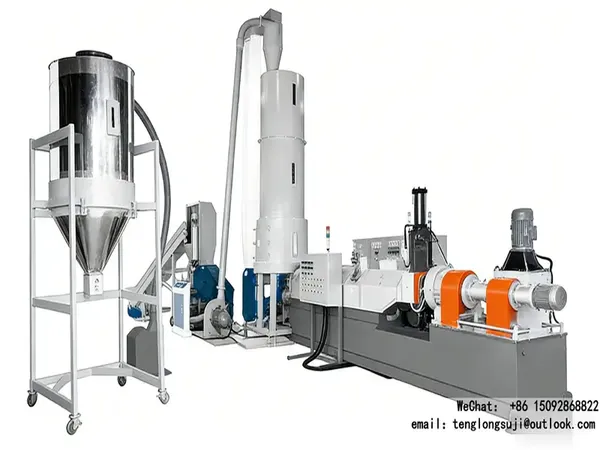
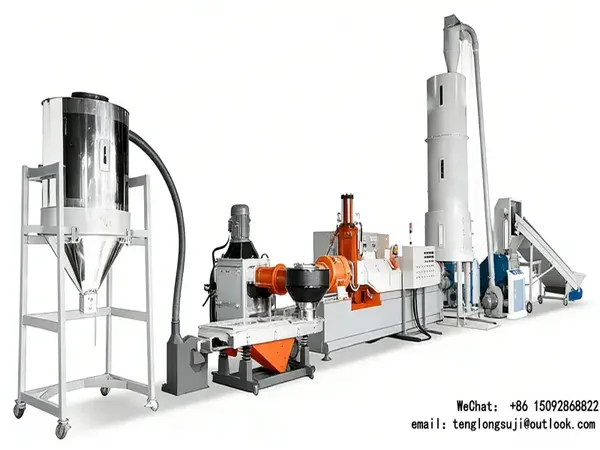
The Brother Who Transformed His Life Through Woven Bag Recycling equipment
My name is Zhang Shouyi, a local of Pidu District, Chengdu. For more than 20 years, fishing has been my greatest passion—Tuo River and Baitiao River are more like my “second home”. In the past, I’d spend every free moment squatting by the riverbank; even if I returned empty-handed, I felt a deep sense of contentment.
But in recent years, my heart has grown increasingly heavy. Discarded woven bags littered the riverbanks and floated in the water, left behind by tourists and villagers. The water turned murky, and the fish population dwindled—witnessing this decline filled me with distress.
Eventually, I had a realization: these waste woven bags polluting the river were not just trash, but a “green fortune” waiting to be harvested. What’s more, since 2020, Sichuan Province has launched a series of entrepreneurship support policies, increasing the quota for entrepreneurial guarantee loans and providing subsidies. It was then that I made a life-changing decision—to hang up my fishing rod and start an environmental protection business.
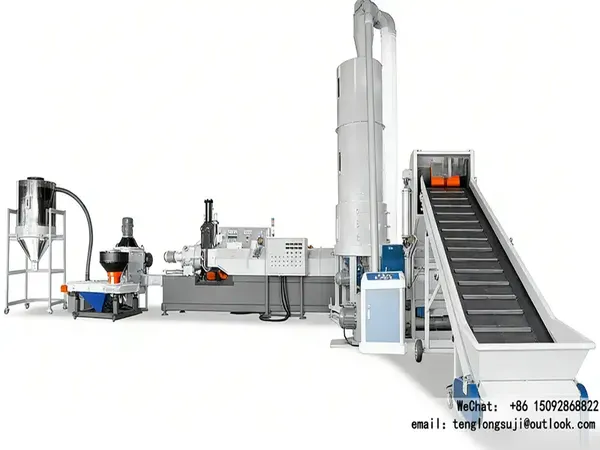
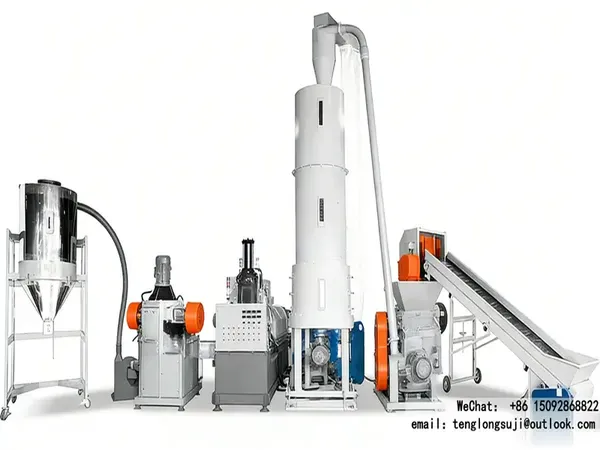
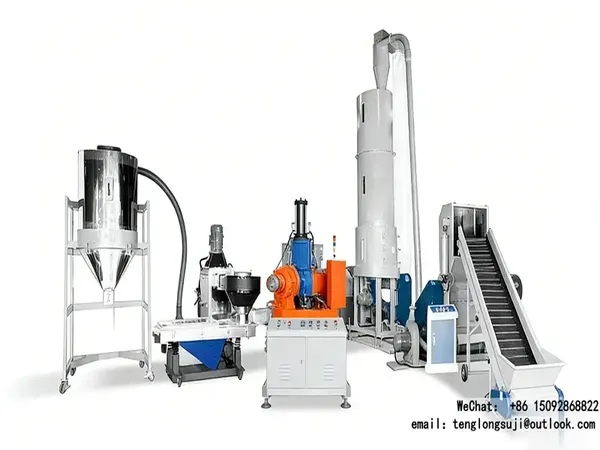
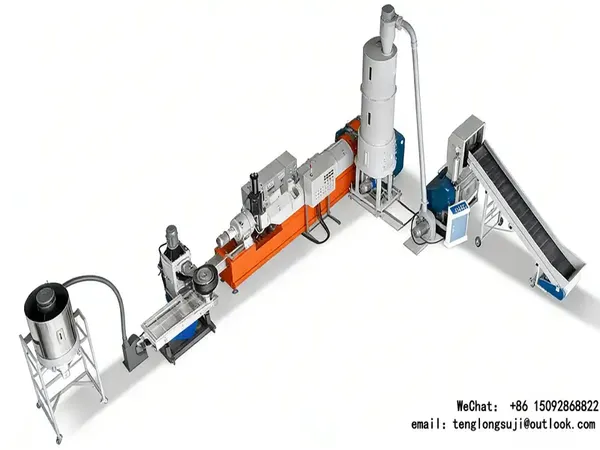
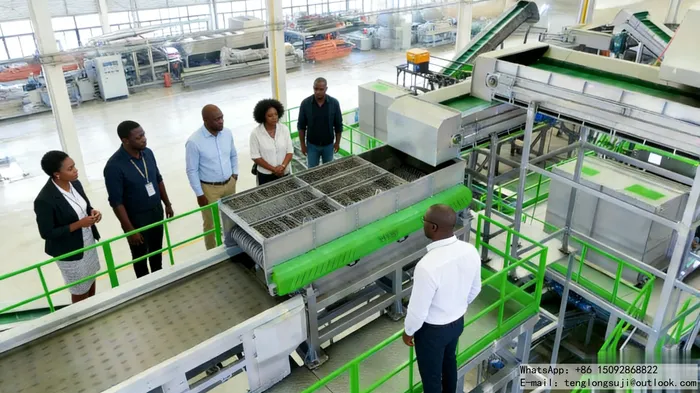
After comparing several equipment options, I finally chose a locally customized automatic woven bag recycling equipment from Pidu District, Chengdu, paired with a set of woven bag recycling and granulation equipment. Why this set? Simply put: it’s eco-friendly, efficient, and space-saving—perfectly matching my needs as a first-time entrepreneur.
Equipped with a PLC intelligent electronic control system, this automatic equipment handles the entire process—from collection and sorting to compression and transportation—completely hands-free. As someone with no technical background, I can easily process 8 to 10 tons of waste woven bags per day, which is several times more efficient than manual labor. I can manage the entire operation alone; when I’m not busy, I still wander along the riverbank. Watching the woven bags disappear and the water grow clearer brings me a sense of achievement far greater than catching a big fish.
The woven bag recycling equipment manufacturer is a local professional in Chengdu. They sent technicians to install and debug the equipment, teaching me how to operate it step by step. Knowing I had no prior experience, they simplified the controls, and I mastered the operation in less than a day. With a 3-year warranty, a single phone call brings them to my door if anything goes wrong—making the whole process extremely hassle-free.
When it comes to quality, the equipment features an all-steel welded body, making it wear-resistant and corrosion-resistant—ideal for Chengdu’s humid climate. It has been running smoothly for nearly a year without any major breakdowns. I can handle daily cleaning and maintenance myself. What’s more, it meets all environmental standards, with dust and noise strictly controlled—no disturbance to nearby residents and no additional pollution. Isn’t this exactly what I set out to do: guard the rivers I love?
The woven bags I collect are first processed by the automatic equipment, then turned into recycled woven bag pellets using the woven bag recycling and granulation equipment, which I sell directly to local plastic processing factories in Chengdu. The sales channel is stable, and I never worry about finding buyers.
Pidu District is rich in waste woven bag resources, with numerous villages, scenic spots, and supermarkets. In addition, the recycling points I set up along the river bring in a steady supply every day. Currently, the recycling price for local waste woven bags ranges from 1,700 to 2,200 yuan per ton, while recycled woven bag pellets sell for 2,800 to 3,300 yuan per ton. After deducting costs, I net over 40,000 yuan a month—far more than I ever earned from fishing.
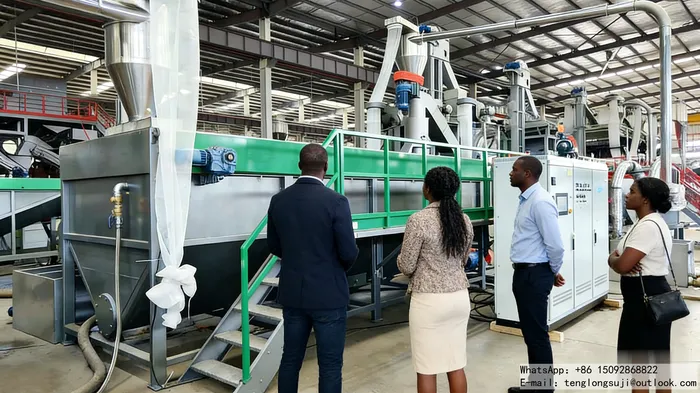
Now, the number of woven bags on the banks of Tuo River and Baitiao River has decreased by more than half, and the water quality has gradually improved. I’ve made money while protecting the fishing environment—it’s a true win-win situation.
I used to think fishing was my only joy in life, but now I realize that environmental entrepreneurship allows me to earn a living while doing something meaningful. To all my fellow anglers out there: have you ever seen rivers ruined by plastic woven bag waste while fishing? Do you think this is a reliable way to protect our fishing grounds? Feel free to share your thoughts in the comments.