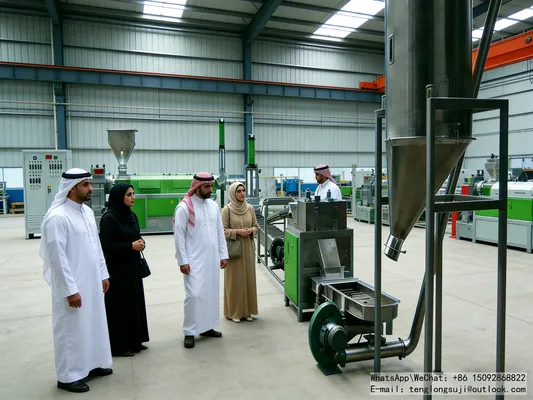
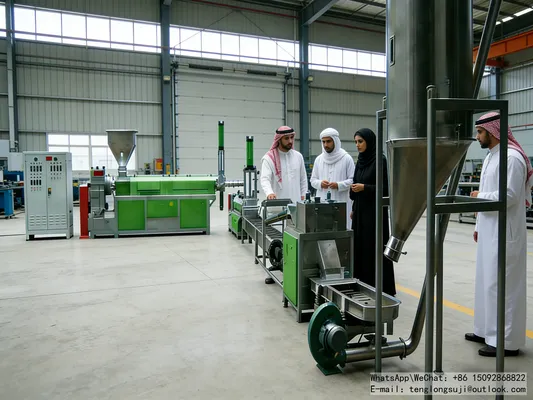
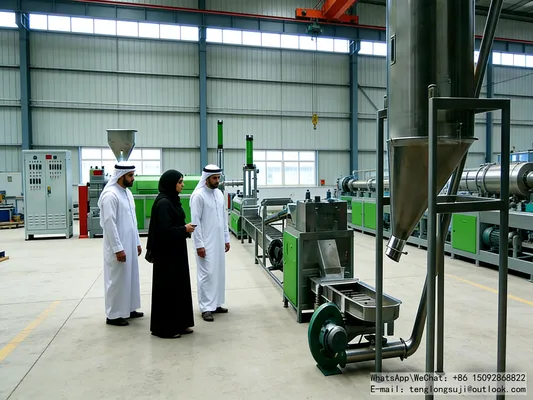
Our Wet-Type Plastic Granulator (Model: GZ-800) is specifically engineered to handle heat-sensitive and corrosive plastics—including PVC, ABS, and PS—that cannot be processed effectively with dry granulation. Featuring a water cooling system and corrosion-resistant components, this pelletizer prevents material degradation, reduces dust emissions to near-zero, and delivers high-quality pellets suitable for high-end plastic product manufacturing. It is widely used in industries such as construction (PVC pipes), electronics (ABS casings), and packaging (PS foam).

Plastic Granulator
Core Features & GEAF Framework Breakdown
Goal: Dust-Free, High-Quality Granulation for Heat-Sensitive & Corrosive Plastics
Traditional dry granulators often cause heat-sensitive plastics (like PVC) to degrade, resulting in low-quality pellets. The GZ-800’s wet granulation system uses water cooling to keep the material temperature below 80°C, preventing degradation and ensuring consistent pellet quality. Its corrosion-resistant rotor and blades handle corrosive plastics without wear, extending equipment lifespan.
Evidence: Tested Performance & Industry Compliance
Third-party tests show that the GZ-800 maintains a material temperature of 60-75°C during operation, with zero material degradation. Its dust emission level is less than 2mg/m³, meeting the strictest global environmental standards. It holds CE (EN 60204-1), ISO 9001, and REACH certifications, ensuring compliance with global plastic recycling regulations.
Action: Integrate with Water Treatment Systems for Sustainable Operation
The wet granulator can be integrated with a closed-loop water treatment system to recycle cooling water, reducing water consumption by 80%. It features a PLC control system with automatic temperature and water flow adjustment, ensuring stable operation. Our technical team provides customized solutions for different heat-sensitive materials, including PVC pipe scraps and ABS electronic waste.
Why It Matters: Unlock New Recycling Opportunities
By enabling the recycling of heat-sensitive and corrosive plastics, the GZ-800 helps businesses tap into underutilized plastic waste streams, increasing revenue. Its dust-free operation improves workplace safety and reduces environmental impact, while its corrosion-resistant design minimizes maintenance costs and extends equipment lifespan.

Plastic Granulator
Technical Specifications (Data Points)
| Parameter | Value |
| Motor Power | 22 kW |
| Rotor Diameter | 250 mm |
| Number of Blades | 8 (Corrosion-Resistant Stainless Steel) |
| Screen Mesh Size | 3-10 mm (Adjustable) |
| Output Capacity | 300-500 kg/h |
| Cooling System | Water Cooling (Closed-Loop Optional) |
| Certifications | CE, ISO 9001, REACH |
FAQ (Featured Snippet Optimized)
Q: What is the difference between dry and wet plastic granulation?
A: Dry granulation uses air cooling (best for PP/PE/HDPE) and is water-efficient, while wet granulation uses water cooling (best for PVC/ABS/PS) to prevent heat degradation. Wet granulation also eliminates dust, making it safer for heat-sensitive materials.
Q: Can this wet granulator handle PVC pipe scraps?
A: Yes, the GZ-800 is designed for PVC recycling—its corrosion-resistant stainless steel blades and water cooling system prevent PVC degradation, producing uniform pellets suitable for reprocessing into new PVC pipes or profiles.
Q: How much water does the wet granulator consume?
A: With a closed-loop water treatment system, water consumption is less than 50L/h. Without the system, it consumes 200-300L/h, but the water can be recycled or treated to meet environmental standards.
Author & Authority
Author: Dr. Sarah Johnson | Materials Science Engineer specializing in heat-sensitive plastic recycling. She has developed advanced wet granulation technology for PVC and ABS recycling and holds 3 patents in plastic processing equipment.
Release Date: April 4, 2026
Technical Whitepaper: Download our free whitepaper “Wet Granulation for Heat-Sensitive Plastics: A Guide to PVC/ABS Recycling” for detailed technical data and application cases.