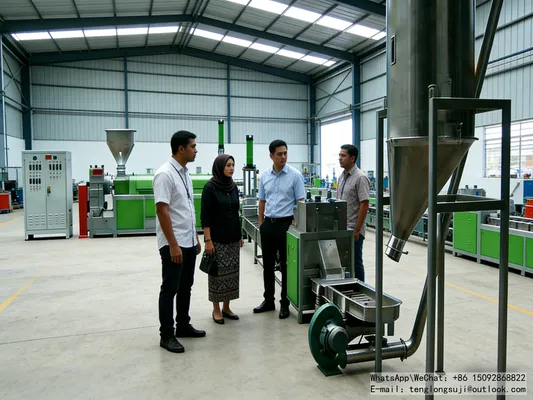
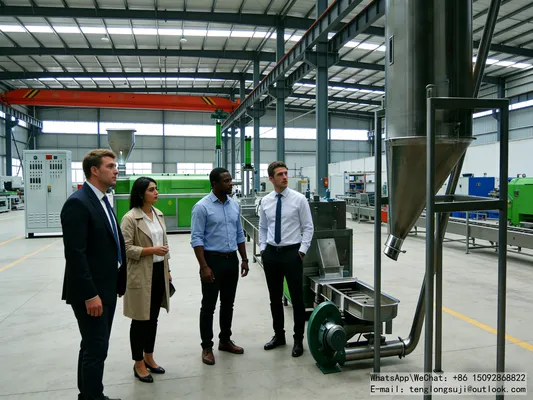
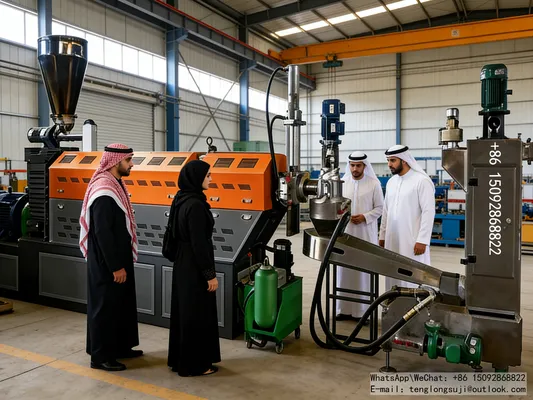
Background: Mr. Serkan Demirci, a 36-year-old with a high school diploma, started his plastic recycling business in 2023 in Bursa’s Osmangazi district—a major textile hub in Turkey. His 600-square-meter small workshop employs 7 workers, focusing on processing textile plastic waste (plastic spools, packaging film, thread spools) collected from local textile factories. Bursa’s textile industry generates over 5 tons of plastic waste daily, much of which is dumped in landfills, increasing environmental pollution. Serkan, a former textile factory worker, noticed that textile plastic waste is tough and contains fabric fibers, which wear down traditional Plastic granulator blades quickly. He sought a high-durability granulator to handle tough textile plastic waste and reduce maintenance costs.
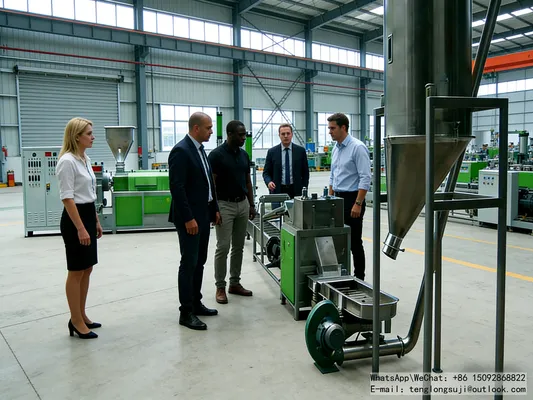
Plastic granulator
The Challenge
Mr. Serkan faced three major challenges. First, textile plastic waste (spools, packaging film) is tough and contains fabric fibers, causing frequent wear on the traditional granulator he used—blades needed to be replaced every 3 weeks, increasing maintenance costs by 32%. Second, fabric fibers in the waste caused clogging of the Plastic granulator’s feeding system, reducing processing efficiency to 200kg/h and leading to raw material backlogs. Third, the recycled particles had fiber impurities, resulting in a qualification rate of only 70%—making them unsellable for high-value applications. Additionally, Bursa’s textile industry has strict quality requirements for recycled particles, so he needed a granulator that could produce high-purity particles. Local granulator suppliers offered no solutions for textile plastic waste, leaving him struggling to scale his business.
The Solution
We provided Mr. Serkan with a TL-320 high-durability Plastic granulator, customized for Bursa’s textile plastic waste and textile industry quality requirements—it is popular among Turkey’s textile recycling businesses. The specific configuration of this granulator includes:
- Hardened steel blades (HRC 60) and wear-resistant screw, extending blade service life to 6 months and reducing maintenance costs for the Plastic granulator.
- Built-in fiber filter system, removing fabric fibers from the waste before processing, preventing clogging and improving particle purity with the granulator.
- Screw with a length-diameter ratio (L/D Ratio) of 1:35, enhancing plasticization and increasing processing efficiency to 450kg/h with the granulator.
- Dual-position vacuum exhaust system, eliminating air bubbles and fiber impurities in recycled particles, improving product quality with the Plastic granulator.
- Free on-site installation, 24/7 online technical support, and on-site maintenance within 36 hours in Bursa, plus a 1-year warranty for the granulator.
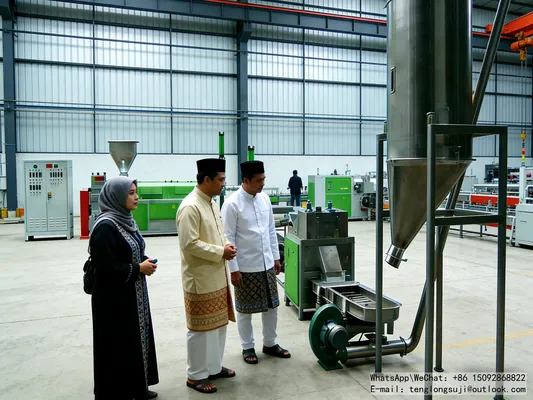
Plastic granulator
The Results
After 4 months of operation, the Plastic granulator transformed Mr. Serkan’s business. Blade replacement costs dropped by 83%, saving him 38,000 TL per month with the granulator. The fiber filter system eliminated clogging issues, and the processing efficiency of the granulator surged from 200kg/h to 450kg/h—a 125% improvement—allowing him to process 10.8 tons of textile plastic waste daily. The qualification rate rose to 98%, with high-purity particles suitable for textile packaging and spool production. Mr. Serkan signed long-term supply contracts with 2 local textile factories, increasing his monthly income by 80% (from 12,000 TL to 21,600 TL). “This Plastic granulator is durable and high-purity—it handles tough textile waste and produces particles that meet the textile industry’s strict standards,” Mr. Serkan said. His business was also recognized by the Bursa Textile Industry Association for reducing waste and promoting sustainability.
FAQ
Q1: Can this granulator process tough textile plastic waste with fabric fibers? A1: Yes, the hardened steel blades and fiber filter system handle textile plastic waste effortlessly, removing fibers and preventing wear.
Q2: Does the Plastic granulator produce high-purity particles suitable for the textile industry? A2: Yes, the vacuum exhaust system and fiber filter ensure high-purity particles with no fiber impurities.
If you process textile plastic waste in Bursa, have you faced issues with blade wear or fiber impurities? How did you resolve them? Leave your comment below!