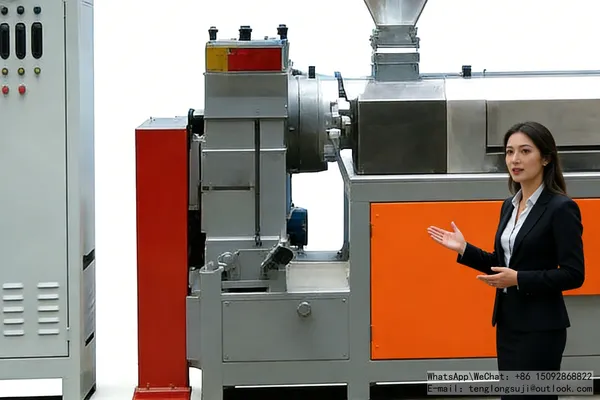
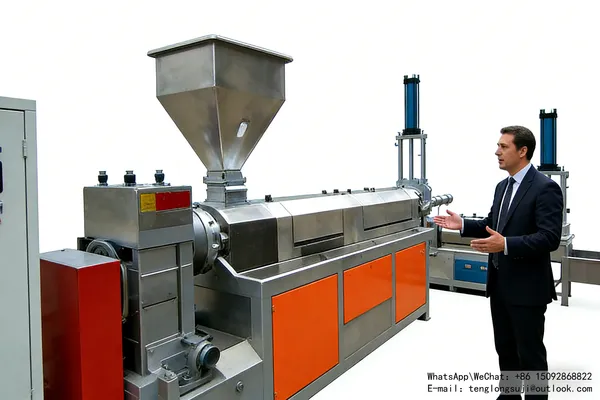
Background: Mr. Suresh Thilakaratne, a 45-year-old with a primary school education, has spent 20 years in the fishing industry in Trincomalee—a major fishing hub on Sri Lanka’s east coast. His 900-square-meter small factory employs 13 workers, producing fishing nets and plastic buoys. In recent years, the cost of new plastic particles has risen by 40%, putting significant pressure on his profits.
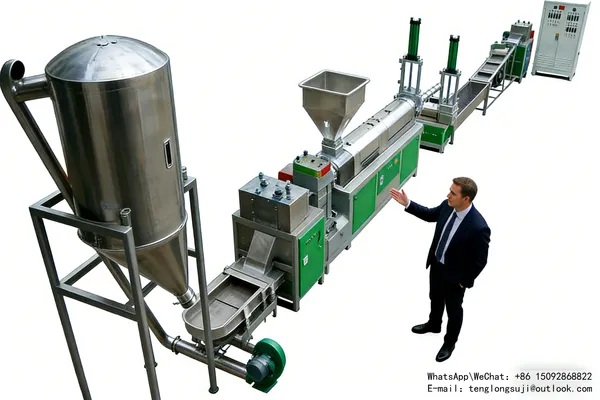
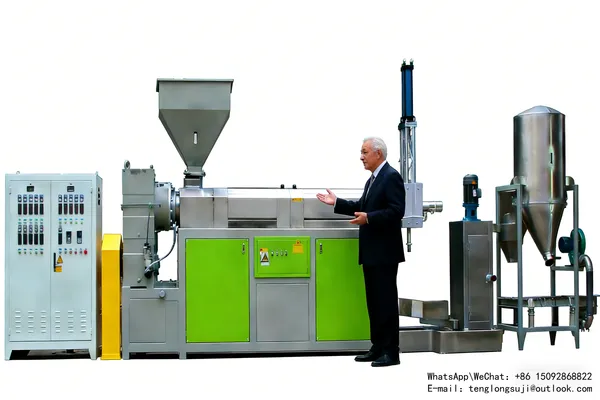
Plastic granulator
The Challenge
Mr. Suresh faced three major challenges. First, fishing plastic waste (nets, buoys) is tough and high in density, requiring high power to crush—traditional Plastic granulator models had a low processing efficiency of 250kg/h, which was unable to keep up with his 6-ton daily raw material collection, leading to backlogs. Second, the waste contains metal hooks and ropes, causing frequent wear on thePlastic granulator’s blades; the blades needed to be replaced every month, increasing maintenance costs by 30%. Third, the recycled particles had uneven size and black spots due to incomplete plasticization, resulting in a qualification rate of only 71%—making them unsuitable for high-quality fishing nets. Additionally, Mr. Suresh had no professional mechanical knowledge, so he needed an easy-to-operate, high-capacity Plastic granulator with reliable after-sales support.
The Solution
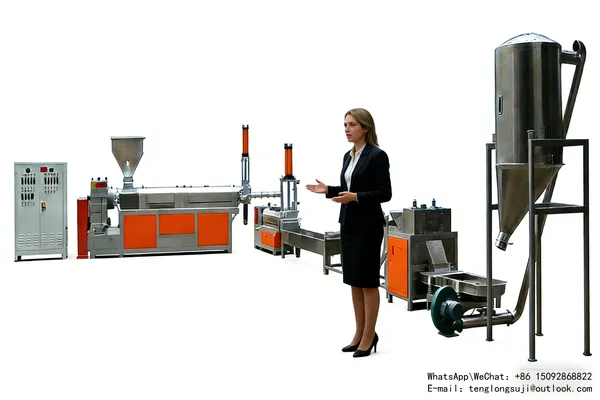
We provided Mr. Suresh with a TL-450 high-capacity Plastic granulator, customized for Trincomalee’s fishing plastic waste and suitable for operators with no mechanical experience—tailored for Sri Lanka’s fishing industry. The specific configuration of this Plastic granulator includes:
- High-power 30KW motor and large-scale screw (L/D Ratio 1:36), boosting processing efficiency to 550kg/h and handling tough fishing plastic waste with ease.
- Hardened steel blades and wear-resistant screw, extending blade service life to 6 months and reducing maintenance costs.
- Built-in metal detector, removing metal hooks and debris before processing, preventing damage to the equipment and improving particle quality.
- Dual-position vacuum exhaust system, eliminating air bubbles and black spots in recycled particles, improving product quality.
- PLC full-automatic control with a simple interface, allowing workers to master operation in 1 day, plus 24/7 online technical support and on-site maintenance within 48 hours in Trincomalee.
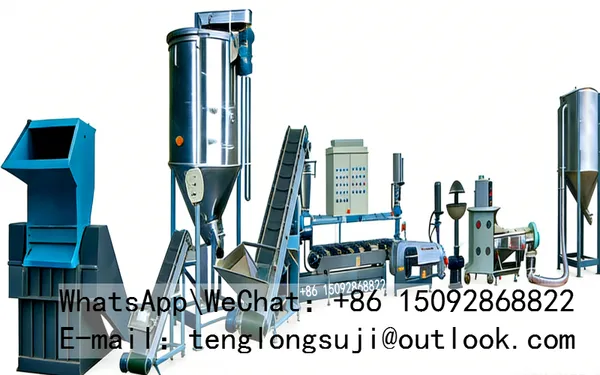
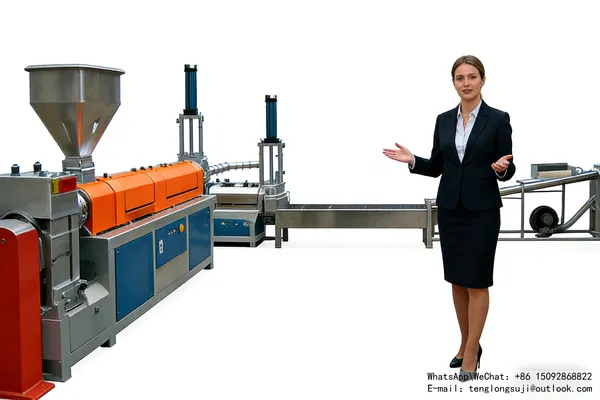
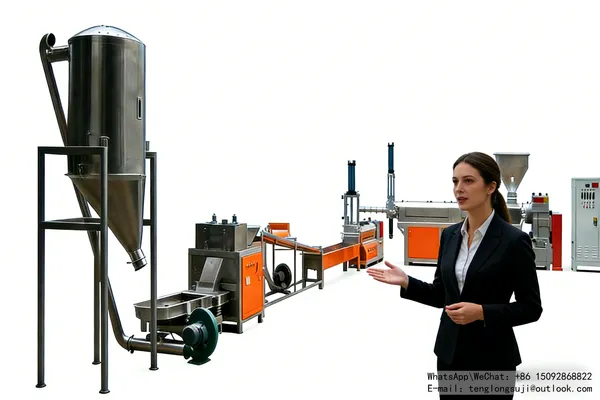
Plastic granulator
The Results
After 4 months of operation, the Plastic granulator transformed Mr. Suresh’s business. The processing efficiency surged from 250kg/h to 550kg/h—a 120% improvement—allowing him to process 6.6 tons of fishing plastic waste daily. Blade replacement costs dropped by 80%, saving him 30,000 LKR per month. The qualification rate rose to 98%, with particles suitable for direct use in fishing net production, reducing raw material costs by 45% (saving 80,000 LKR per month). Mr. Suresh expanded his raw material sources to 5 local fishing villages, increasing his monthly income by 70% (from 1.3 lakh LKR to 2.21 lakh LKR). “This Plastic granulator is high-capacity and easy to operate—it handles tough fishing waste and produces high-quality particles, saving me a lot of money,” Mr. Suresh said. His factory’s cost savings allowed him to hire 4 more workers, contributing to local employment in Trincomalee’s fishing sector.
FAQ
Q1: Can this Plastic granulator process tough fishing plastic waste like nets and buoys? A1: Yes, the high-power motor and hardened blades easily crush tough fishing plastic waste.
Q2: Is the equipment easy to operate for workers without professional mechanical knowledge? A2: Yes, the PLC full-automatic control allows quick mastery through short training.
If your factory processes fishing plastic waste in Trincomalee, have you faced issues with blade wear or processing efficiency? How did you resolve them? Leave your comment below!