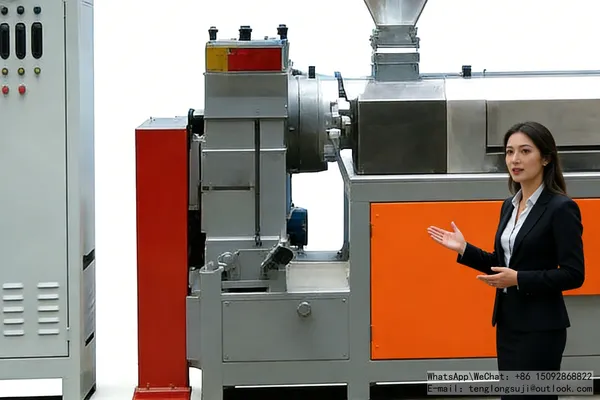
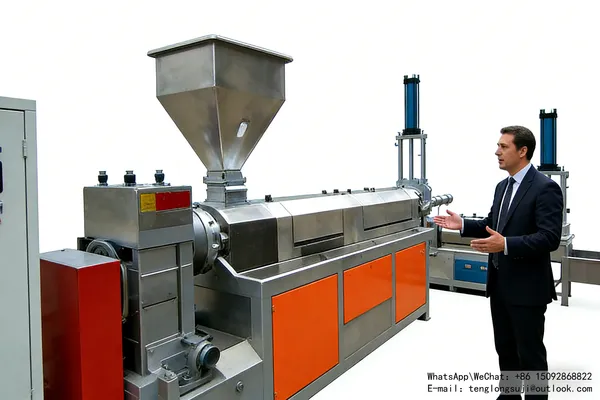
Background: Ms. Nadeesha Silva, a 38-year-old with a bachelor’s degree in business administration, launched her plastic recycling business in 2022 in Kandy’s Nuwara Eliya district—Sri Lanka’s premier tea-growing region. Her 1,500-square-meter medium-sized factory employs 22 workers, focusing on processing tea packaging waste (plastic bags, film wrappers, crates) from local tea estates and factories. Kandy’s tea industry generates over 6 tons of plastic packaging waste daily, much of which is dumped in tea plantations, harming soil quality and tea production. Ms. Nadeesha noticed that local recycling workshops relied on manual sorting, which was inefficient and costly. She invested in a full-automatic Plastic Recycling Machine to achieve one-stop sorting, crushing, and granulating, aligning with Sri Lanka’s “Sustainable Tea” initiative. A full-automatic Plastic Recycling Machine was essential to scale her business and meet the high demand for recycled particles from tea packaging manufacturers.
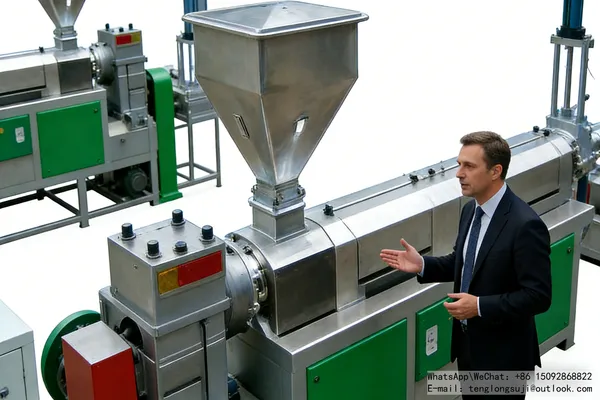
Plastic Recycling Machine
The Challenge
Ms. Nadeesha faced three key challenges. First, tea packaging waste is mixed (including PE, PP, and plastic film) with a high impurity content (tea leaves, dust), requiring extensive manual sorting that accounted for 45% of her labor costs; the sorting accuracy was only 73%, leading to poor particle quality. Second, traditional manual processing had a daily capacity of just 4.8 tons, which was unable to meet her 11-ton daily raw material collection, resulting in backlogs. Third, the plastic film used in tea packaging had high viscosity, causing traditional Recycling Machine models to struggle with plasticization, resulting in uneven particles with a qualification rate of 65%. Additionally, she needed a Plastic Recycling Machine that could comply with Sri Lanka’s environmental standards for wastewater discharge (BOD < 30 mg/L) to avoid penalties. Local Plastic Recycling Machine models lacked automatic sorting, making them impractical for her needs.
The Solution
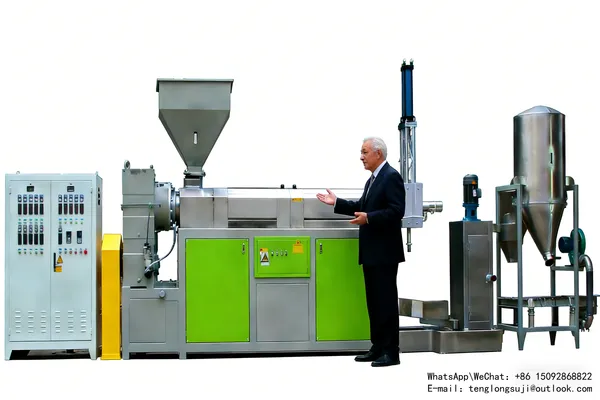
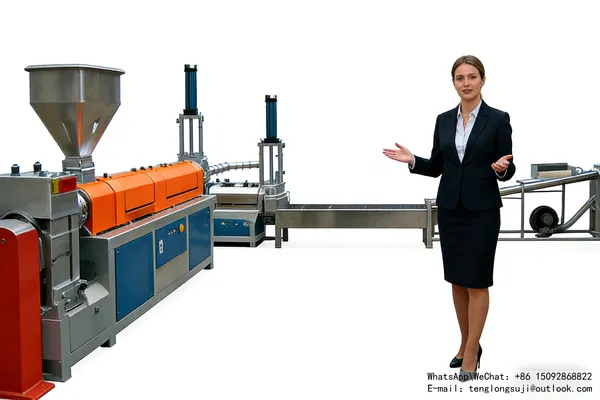
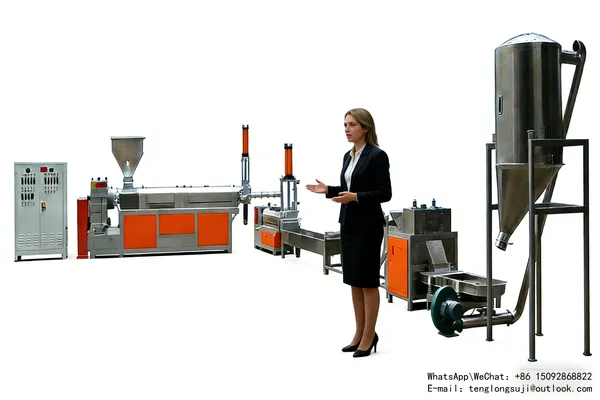
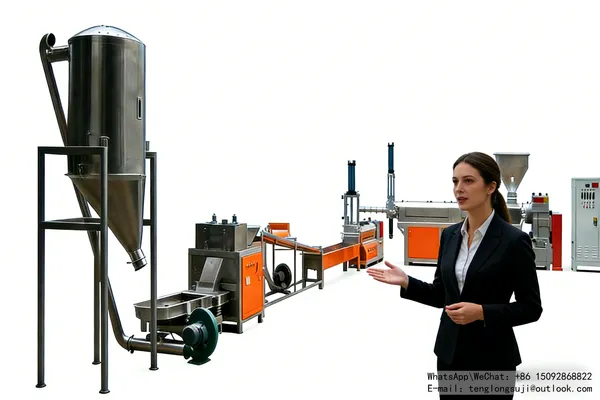
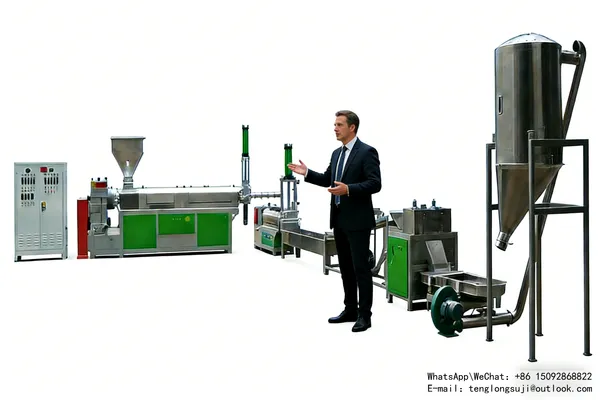
We provided Ms. Nadeesha with a TL-1050 full-automatic Recycling Machine, customized for Kandy’s tea packaging waste and local environmental standards—it is popular among Sri Lanka’s industrial recycling factories. The specific configuration of this Plastic Machine includes:
- Intelligent automatic sorting system with optical sensors and metal detectors, which separates PE, PP, and plastic film, removes tea leaves and dust—reducing manual sorting by 88% and boosting accuracy to 99%.
- Integrated crushing, cleaning, drying, and granulating functions, enabling one-stop processing and saving 30% of workshop space.
- Dual-position vacuum exhaust system and high-temperature heating (up to 280℃), which effectively plasticizes high-viscosity plastic film to improve particle quality.
- Wastewater treatment system that filters and purifies cleaning wastewater, meeting Sri Lanka’s BOD < 25 mg/L discharge standard.
- Free technical training for 10 workers, 1 year of free maintenance, and on-site troubleshooting within 24 hours in Kandy to minimize downtime.
Plastic Recycling Machine
The Results
After 6 months of operation, the Plastic Recycling Machine transformed Ms. Nadeesha’s factory. The daily processing capacity increased from 4.8 tons to 12 tons—a 150% improvement—allowing her to process all collected tea packaging waste. Labor costs dropped by 45%, saving her 90,000 LKR per month, thanks to the automatic sorting function. The qualification rate rose to 97%, with particles suitable for tea packaging production, increasing the selling price by 38% (from 42 LKR/kg to 57.96 LKR/kg). The wastewater treatment system passed environmental inspections, eliminating penalty risks. Ms. Nadeesha signed long-term supply contracts with 3 local tea factories, increasing her monthly income by 120% (from 1.5 lakh LKR to 3.3 lakh LKR). “This Plastic Recycling Machine is fully automatic and high-quality—it handles tea packaging waste effortlessly and produces particles that meet my clients’ needs,” Ms. Nadeesha said. Her factory was also certified as a “Green Recycling Unit” by the Sri Lanka Environmental Protection Agency.
FAQ
Q1: Can this Plastic Recycling Machine separate mixed tea packaging waste? A1: Yes, the intelligent sorting system separates different plastics and removes impurities with 99% accuracy.
Q2: Does the equipment meet Sri Lanka’s wastewater discharge standards? A2: Yes, the wastewater treatment system ensures BOD < 25 mg/L, fully complying with local regulations.
If you process tea packaging waste in Kandy, what’s your biggest challenge—sorting efficiency or plasticization quality? Share your experience below!