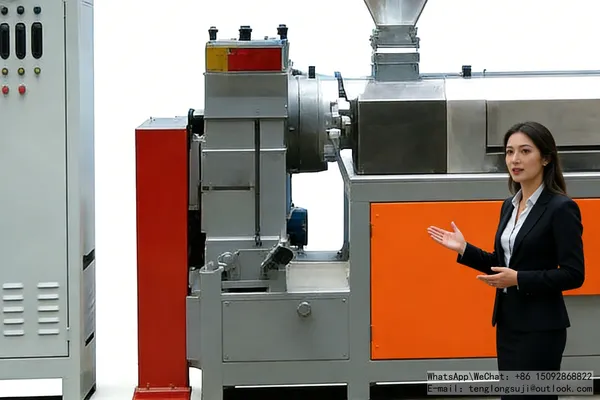
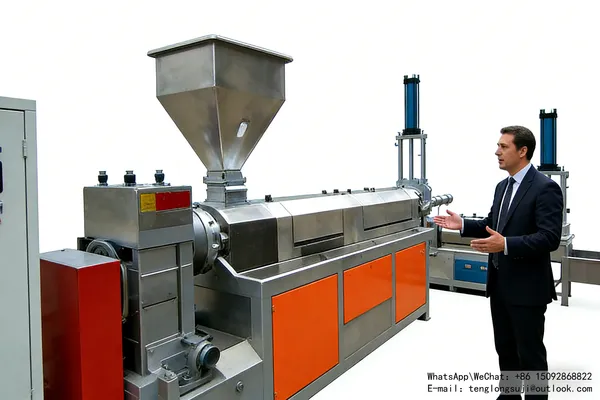
Background: Mr. Dilshan Fernando, a 40-year-old with a diploma in marine engineering, launched his plastic recycling business in 2022 near Colombo Port—Sri Lanka’s largest seaport and a key hub for international trade. His 1,200-square-meter medium-sized factory employs 18 workers, focusing on processing waste plastic containers (drums, crates, bottles) discarded at the port. Colombo Port handles over 5 million tons of cargo annually, generating 7 tons of plastic waste each day—much of this waste is contaminated with saltwater and chemical residues. As a former port engineer, Dilshan witnessed the port’s plastic pollution crisis, which harms coastal ecosystems and violates Sri Lanka’s Marine Pollution Control Act. He invested in a corrosion-resistantPlastic Recycling Machine to process salt-contaminated plastics, aligning with the port’s “Green Port” initiative. A high-quality Recycling Machine was essential to withstand the harsh coastal environment.
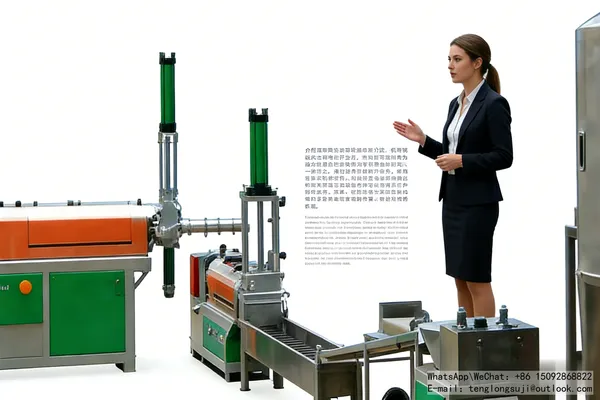
Plastic Recycling Machine
The Challenge
Mr. Dilshan faced three critical challenges. First, the plastic containers from Colombo Port had a high saltwater content (up to 7%), which caused rapid corrosion of the traditional Plastic Recycling Machine he initially tested—screws and feeding hoppers needed to be replaced every 2 months, increasing maintenance costs by 34%. Second, the containers varied in size and material (PE, PP, PET), leading to inefficient sorting and processing; his daily capacity was only 4.2 tons, which was unable to keep up with his 10-ton daily raw material collection. Third, chemical residues on the containers caused foul odors and black spots in recycled particles, reducing their market value and resulting in a qualification rate of just 62%. Additionally, he needed a Plastic Recycling Machine that could comply with Sri Lanka’s strict environmental standards (VOC < 40 mg/m³) to avoid penalties. Local Recycling Machine suppliers could not provide corrosion-resistant solutions, leaving him stuck.
The Solution
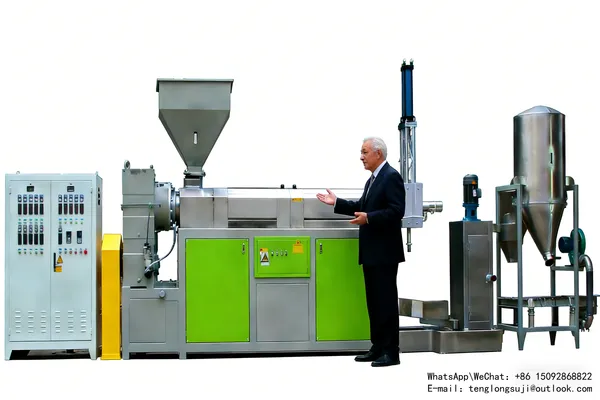
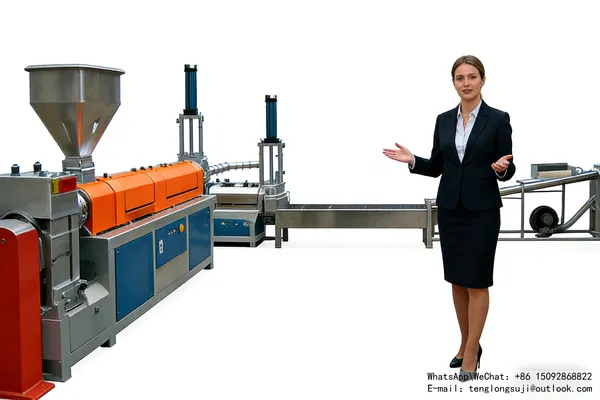
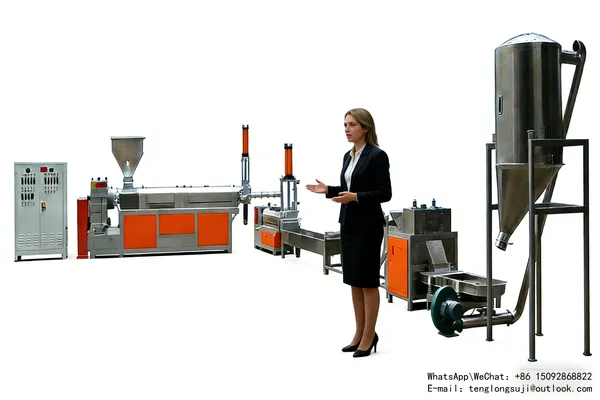
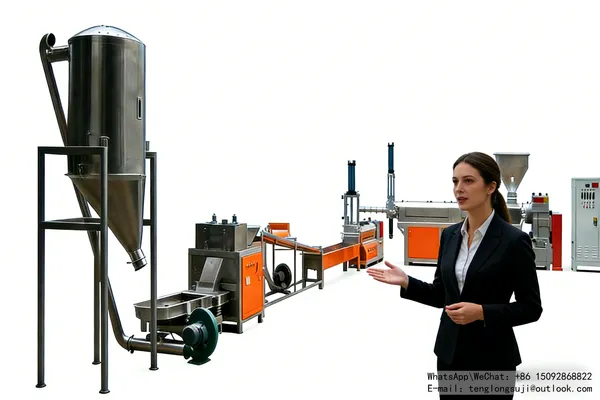
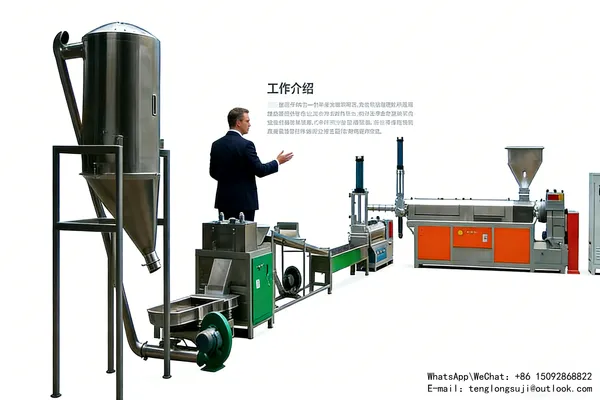
We provided Mr. Dilshan with a TL-850 corrosion-resistant Recycling Machine, customized for Colombo Port’s salt-contaminated plastics and local environmental standards—ideal for Sri Lanka’s coastal recycling projects. The specific configuration of this Plastic Machine includes:
- 316 stainless steel screw and feeding hopper, designed to resist saltwater and chemical corrosion, extending part service life to 10 months and reducing maintenance costs.
- Intelligent sorting system with optical sensors, which automatically separates PE, PP, and PET plastics, reducing manual sorting by 85% and improving processing efficiency.
- Multi-stage cleaning system (alkaline cleaning + high-pressure rinsing), which removes 99% of saltwater and chemical residues, eliminating odors and black spots in recycled particles.
- Waste gas purification system with activated carbon filters, reducing VOC emissions to below 35 mg/m³—fully complying with Sri Lanka’s environmental standards.
- Free on-site installation, 24/7 online technical support, and on-site maintenance within 24 hours in Colombo, plus a 1-year warranty for the Recycling Machine.
Plastic Recycling Machine
The Results
After 5 months of operation, the Plastic Recycling Machine transformed Mr. Dilshan’s business. Corrosion issues were completely eliminated, cutting maintenance costs by 68% (saving 32,000 LKR per month). The daily processing capacity increased from 4.2 tons to 11 tons—a 162% improvement—allowing him to process all collected port plastic waste. The multi-stage cleaning system boosted the qualification rate from 62% to 98%, with particles suitable for high-grade packaging. The selling price of recycled particles increased by 35% (from 45 LKR/kg to 60.75 LKR/kg), boosting his profits. Mr. Dilshan signed a long-term supply contract with a local plastic drum manufacturer, increasing his monthly income by 95% (from 1.2 lakh LKR to 2.34 lakh LKR). “This Recycling Machine is corrosion-resistant and high-quality—it handles port waste effortlessly and produces particles that sell for a premium,” Mr. Dilshan said. His business was also recognized by the Colombo Port Authority for reducing coastal pollution.
FAQ
Q1: Can this Plastic Recycling Machine process saltwater-contaminated plastic containers from Colombo Port? A1: Yes, the 316 stainless steel parts resist corrosion, effectively processing plastics with up to 8% salt content.
Q2: Does the equipment meet Sri Lanka’s environmental standards? A2: Yes, the waste gas purification system reduces VOC emissions to below 35 mg/m³, fully complying with local regulations.
If you process port plastic waste in Colombo, have you faced corrosion or contamination issues with your recycling equipment? Share your solutions below!