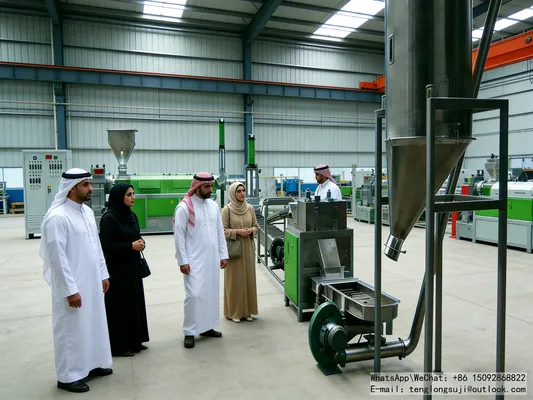
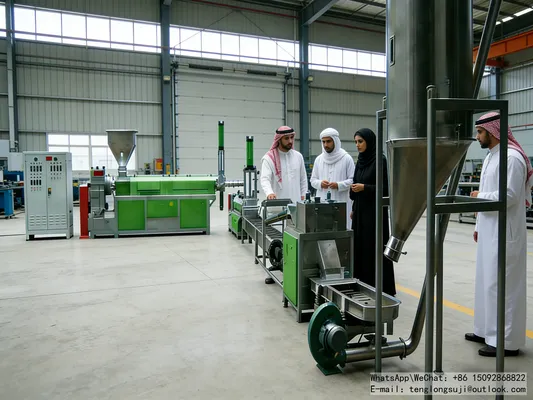
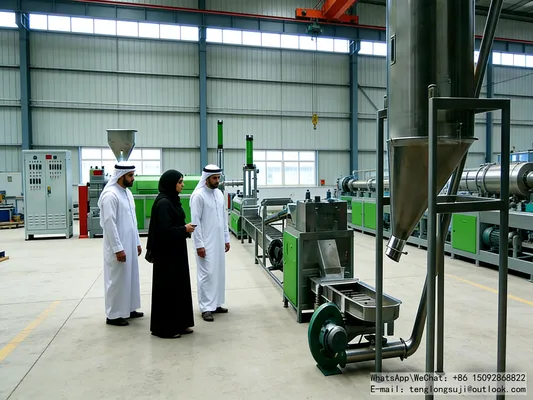
PET bottles are one of the most commonly recycled plastic products worldwide—but many recycling facilities struggle to efficiently separate PP (polypropylene) components (e.g., caps, labels) from PET waste. In 2026, advanced PP Recycling Machine has become a critical tool for PET bottle recycling—enabling facilities to recover high-purity PP from mixed PET waste streams, reduce material waste, and unlock additional revenue streams. This article explores how PP Recycling Machine enhances PET bottle recycling processes, key technical features to look for, and tips for compliance with global standards.

PP Recycling Machine
How PP Recycling Machine Improves PET Bottle Recycling (Long-tail Keyword: PP Recycling Machine for PET Bottle Waste Separation)
PET bottle recycling typically involves sorting, washing, and melting PET plastic—but PP components (caps, labels, and ring bands) are often left in the waste stream, reducing the quality of recycled PET and increasing material waste. PP Recycling Machine solves this challenge by efficiently separating PP from PET using advanced sorting and processing technologies—ensuring both materials are recovered and reused to maximize value.
The process begins with feeding mixed PET bottle waste into the PP Recycling Machine, where automated optical sorters use near-infrared (NIR) technology to identify and separate PP components from PET. The PP waste is then washed, dried, and extruded into high-purity PP pellets, while the PET is sent to a separate PET recycling line. This not only improves the quality of recycled PET (by removing PP impurities) but also allows facilities to sell recycled PP pellets—creating a new revenue stream.
Key Technical Features of PP Recycling Machine for PET Bottle Recycling
To effectively separate and process PP from PET bottle waste,PP Recycling Machine for PET bottle recycling must include the following technical features:
- Advanced Optical Sorting: NIR optical sorters with high accuracy (≥99.8%) to separate PP from PET—even in small or fragmented pieces.
- Specialized Washing System: A multi-stage washing system (including scrubbing, rinsing, and drying) to remove adhesives, dirt, and other impurities from PP caps and labels—ensuring high pellet purity.
- Adjustable Extrusion Parameters: The ability to adjust screw speed, temperature, and pressure to optimize the extrusion process for PP—resulting in consistent pellet quality (MFI: 3-8 g/10min).
- Integration with PET Recycling Lines: The PP Recycling Machineshould be compatible with existing PET recycling lines—allowing for seamless integration and minimal disruption to operations.
For example, a medium-sized PP Recycling Machine designed for PET bottle recycling (capacity: 200-300 kg/h) can process 5-10 tons of mixed PET bottle waste per day—recovering 10-15% PP (by weight) from the waste stream. This translates to an additional 500-1,500 kg of recycled PP pellets per day, generating $400-$1,800 in daily revenue.
Compliance and Environmental Benefits in 2026
Using PP Recycling Machine for PET bottle recycling helps facilities comply with global environmental regulations and sustainability goals. For example, the EU SUP Directive requires 50% of plastic packaging to be recycled by 2025—and recovering PP from PET bottle waste helps facilities meet this target by increasing overall recycling rates.
Additionally, recovering PP from PET bottle waste reduces plastic pollution and conserves natural resources. Recycling 1 ton of PP saves 11 barrels of oil and reduces CO2 emissions by 2.5 tons compared to producing virgin PP. For facilities processing 10 tons of PET bottle waste per day, using a PP Recycling Machine can reduce CO2 emissions by 25 tons per day and save 110 barrels of oil per day.
FAQ: PP Recycling Machine for PET Bottle Recycling
- Q: What is the purity of PP pellets recovered from PET bottle waste using a PP Recycling Machine? A: The purity of PP pellets is typically ≥99.5%—which meets GRS and ISCC certification requirements, making them suitable for use in packaging, automotive, and other industries.
- Q: Can a PP Recycling Machine process other types of plastic waste along with PET bottle PP? A: Yes—most PP Recycling Machine can process a variety of PP waste, including PP films, containers, and automotive parts, in addition to PET bottle PP components. This versatility makes the machine a valuable asset for recycling facilities.
- Q: How much does a PP Recycling Machine for PET bottle recycling cost in 2026? A: The cost ranges from $30,000 to $80,000—depending on capacity (200-500 kg/h) and features. Medium-sized models (200-300 kg/h) typically cost $30,000-$50,000, with an ROI of 18-24 months.
- Q: Does integrating a PP Recycling Machine into a PET recycling line require major modifications? A: No—most PP Recycling Machine are designed to be easily integrated into existing PET recycling lines, with minimal modifications. Manufacturers provide on-site installation and support to ensure seamless operation.