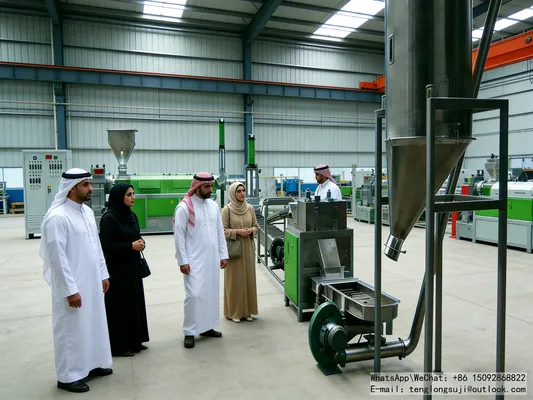
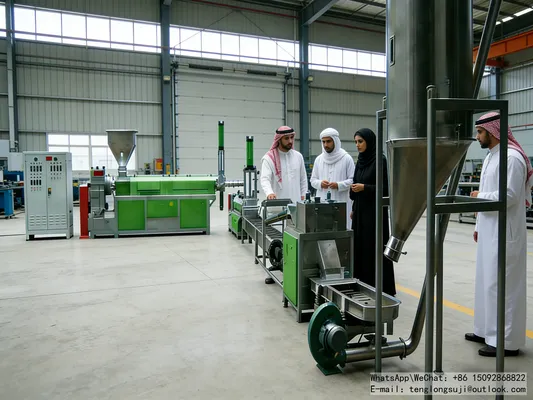
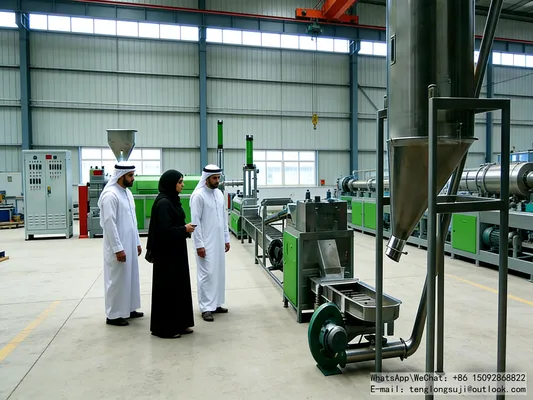
The global demand for PP Recycling Machine is growing rapidly in 2026—driven by increasing environmental regulations and the widespread adoption of circular economy practices worldwide. For manufacturers and exporters of PP Recycling Machine, meeting international standards and certifications is critical to accessing global markets, building trust with buyers, and ensuring long-term success. This article provides a comprehensive guide to PP Recycling Machine export, including key international standards, technical requirements, and 2026 market insights.
Key International Standards for PP Recycling Machine Export (Long-tail Keyword: PP Recycling Machine International Export Standards)

PP Recycling Machine
To export PP Recycling Machine successfully in 2026, manufacturers must comply with a range of international standards and certifications—including:
- GRS (Global Recycled Standard): This standard ensures PP Recycling Machinecan produce high-purity recycled PP pellets (≥99.5%) and includes traceability systems to track the source of PP waste. GRS certification is mandatory for exporting to European, North American, and Asian markets.
- ISCC (International Sustainability and Carbon Certification): ISCC focuses on sustainability and carbon footprint—requiring PP Recycling Machineto meet strict energy efficiency and emissions standards. This certification is particularly important for markets in the EU and Australia.
- REACH (Registration, Evaluation, Authorization, and Restriction of Chemicals): REACH regulates the use of harmful substances in PP Recycling Machinecomponents (e.g., plastics, metals) and requires manufacturers to provide a safety data sheet (SDS) for each machine.
- CE Certification: CE certification is mandatory for exporting PP Recycling Machineto the EU—ensuring the machine meets health, safety, and environmental protection requirements.
- UL Certification: UL certification is required for exporting to the United States and Canada—verifying that the PP Recycling Machinemeets electrical safety standards.
Technical Requirements for PP Recycling Machine Export in 2026
In addition to certifications, PP Recycling Machine exported in 2026 must meet specific technical requirements to adapt to different regional needs. Below are key technical considerations for exporters:
- Voltage and Power Supply: Different regions have varying voltage standards (e.g., 110V in the US, 220V in the EU and Asia). PP Recycling Machinemust be designed to accommodate these differences—with adjustable voltage settings or region-specific models.
- Language and Interface: The machine’s control panel should support multiple languages (e.g., English, Spanish, Mandarin, German) to facilitate operation by international buyers.
- Spare Parts and After-Sales Service: Exporters must provide a supply of spare parts (e.g., screws, filters, sensors) and after-sales service (e.g., remote troubleshooting, on-site maintenance) to support international buyers. This is a key differentiator in the competitive global market.
- Customization Options: Many international buyers require customized PP Recycling Machineto meet their specific needs (e.g., capacity, pellet size, processing of specific PP waste types). Exporters should offer flexible customization options to attract and retain buyers.
2026 Global Market Insights for PP Recycling Machine Export
According to 2026 market data, the top export markets for PP Recycling Machine are:
- Europe: The EU’s strict environmental regulations (e.g., SUP Directive) drive high demand for PP Recycling Machine, with Germany, Italy, and France being the top importers. GRS and CE certification are mandatory for entry into this market.
- Asia-Pacific: China, India, and Southeast Asian countries (e.g., Indonesia, Vietnam) are rapidly expanding their PP recycling industries—creating significant demand for PP Recycling Machine. ISCC and REACH certification are key for success in this market.
- North America: The US and Canada have growing demand for PP Recycling Machinedue to increasing plastic waste reduction goals. UL certification and compliance with local environmental regulations are essential for market entry.
The global PP Recycling Machine export market is expected to grow by 9.5% in 2026—with a focus on high-quality, energy-efficient, and certified machines. Exporters who invest in meeting international standards and offering customization and after-sales service will be well-positioned to capitalize on this growth.
FAQ: PP Recycling Machine Export in 2026
- Q: How long does it take to obtain GRS and CE certification for PP Recycling Machine? A: The certification process typically takes 4-6 weeks for CE certification and 6-8 weeks for GRS certification—depending on the machine’s complexity and the certification body.
- Q: What is the average lead time for exporting a PP Recycling Machine?A: The lead time ranges from 4-8 weeks—including manufacturing, customization, certification, and shipping. For large-scale machines (500+ kg/h), lead time may extend to 8-12 weeks.
- Q: How can I ensure my PP Recycling Machine meets regional voltage requirements?A: Work with a manufacturer that offers adjustable voltage settings or region-specific models. Most reputable manufacturers can customize the machine’s power supply to meet the needs of different markets.
- Q: What after-sales service do international buyers expect for PP Recycling Machine? A: International buyers typically expect 24/7 remote troubleshooting support, a supply of spare parts (delivered within 7-10 days), and on-site maintenance support (if needed) within 2-4 weeks of a service request.