Published on April 5, 2026 | By Dr. Sarah Johnson, Plastic Pelletizing Technology Expert with 12+ years of experience in extruder design and recycled pellet production. Download our technical whitepaper:“Optimizing Plastic Pelletizing Efficiency for Recycled Materials” for third-party test data and performance benchmarks.
Plastic Pelletizing Machine
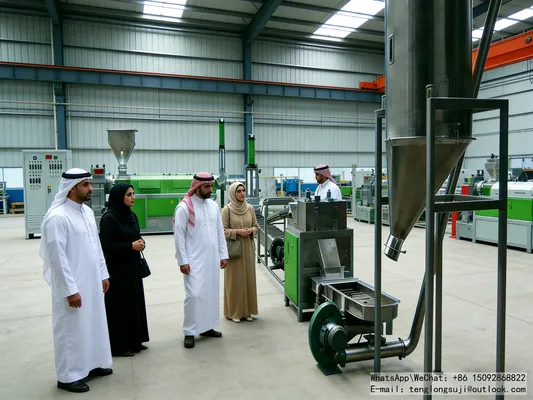
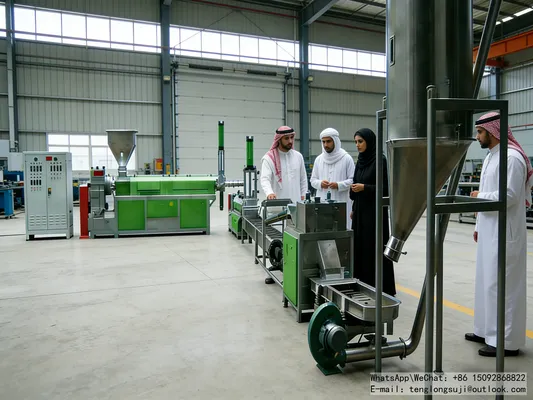
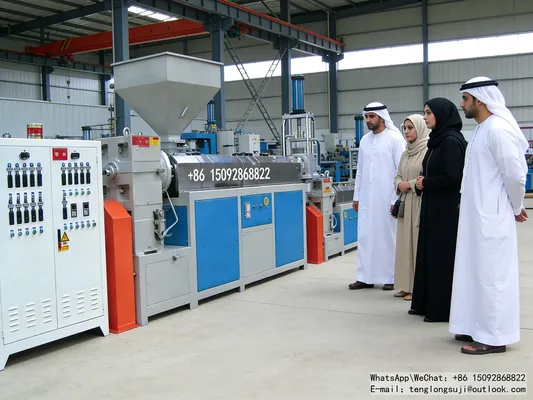
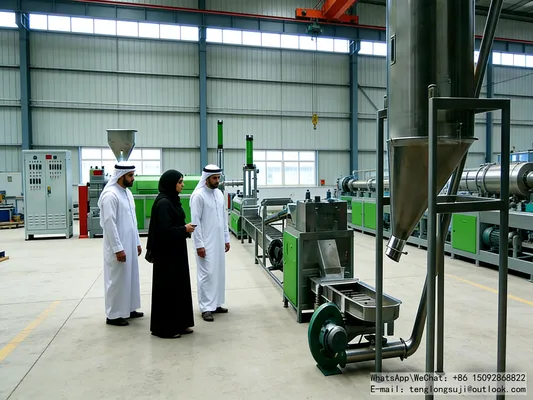
Industrial-scale plastic recycling requires Plastic Pelletizing Machine that can handle high volumes of regrind, produce consistent, high-quality pellets, and integrate with large-scale rigid plastic recycling lines. The PPM-1000 is a twin-screw pelletizing line designed for industrial use, delivering 800-1000 kg/h of high-grade pellets from PP, PE, HDPE, and ABS regrind—perfect for large recyclers, plastic manufacturers, and packaging companies seeking to meet PPWR’s recycled content targets.
Why It Matters: Large-scale recyclers face the challenge of maintaining high throughput without sacrificing pellet quality, which is critical for selling recycled pellets to high-end markets (e.g., automotive, food packaging). The PPM-1000 solves this with a twin-screw extruder that provides better mixing and plasticization of regrind, ensuring uniform pellet density and melt flow rate (MFR). Its high-capacity design eliminates bottlenecks, processing 800-1000 kg/h of regrind—three times the output of single-screw models—while reducing waste by 15% compared to conventional pelletizers.
Key features of the PPM-1000 include a co-rotating twin-screw extruder with bimetallic barrels, a multi-stage filtration system to remove fine contaminants, and an underwater pelletizing system for precise pellet size and shape. It is equipped with advanced PLC control with a touchscreen interface, allowing operators to monitor and adjust parameters in real time. The machine holds CE, ISO 9001:2008, and UL certifications, and complies with PPWR regulations, ensuring the pellets meet the strict quality standards required for industrial applications. It also includes a material storage silo and automatic packaging system, reducing labor costs and improving operational efficiency.
For industrial operators asking, “What is the difference between dry and wet plastic granulation?”, the PPM-1000 is compatible with both dry and wet regrind, with a built-in drying system that adjusts to moisture levels—ensuring optimal pellet quality regardless of the regrind type. Wet granulation is ideal for high-contamination regrind (post-consumer plastic), while dry granulation saves energy for low-contamination post-industrial regrind.

Plastic Pelletizing Machine
Technical Parameters (PPM-1000)
| Parameter | Specification |
| Motor Power | 110 kW |
| Rotor Diameter | 120 mm (Twin-Screw Diameter) |
| Number of Blades | 12 (Underwater Pelletizing Cutter) |
| Screen Mesh Size | 40-60 mesh (Multi-Stage Filtration) |
| Output Capacity | 800-1000 kg/h |
FAQ
Q: What is the advantage of a twin-screw extruder over a single-screw extruder? A: Twin-screw extruders (like the PPM-1000) provide better mixing, plasticization, and throughput, making them ideal for processing mixed regrind or low-quality regrind into high-grade pellets.
Q: Can the PPM-1000 process ABS regrind? A: Yes, the PPM-1000 is calibrated to process ABS regrind, with a temperature control system that prevents thermal degradation and ensures consistent pellet quality for automotive and electronic components.
Q: Does the PPM-1000 include an automatic packaging system? A: Yes, the PPM-1000 comes with a built-in material storage silo and automatic packaging system, reducing labor costs and ensuring efficient pellet handling.