Author: Dr. Ethan Carter, Senior Plastic Recycling Technology Engineer |Published Date: April 5, 2026 | Certifications: CE, ISO 9001:2008 | Technical Whitepaper: Download PDF (Small-Scale Plastic Film Recycling Guide)
Small and medium-sized enterprises (SMEs), local recycling stations, and rural cooperatives often face significant barriers to Plastic Film Recycling: high investment costs for full-automatic lines, limited workspace, and a lack of professional operators. The Plastic Film Recycling semi-automatic line (Model: PFR-300) is a compact, affordable solution tailored to these needs. It integrates basic shredding, washing, and granulating functions, enabling small-scale operations to convert waste plastic films into usable pellets with minimal investment and easy operation—no professional technical training required.

Plastic Film Recycling
Core Features & GEAF Framework Application
Goal (G): Provide SMEs, local recycling stations, and cooperatives with an affordable, easy-to-operate Plastic Film Recycling semi-automatic line that requires minimal space and investment, enabling small-scale pellet production for local reuse or sale.
Evidence (E): Tested by the Small-Scale Recycling Association (SSRA), the PFR-300 line achieves a 95% recycling efficiency, with pellet purity of ≥96%—meeting the standards for low-grade plastic product production. Installed in over 60 small operations across Southeast Asia, Africa, and Latin America, it boasts an average payback period of 6-8 months, making it a highly cost-effective solution for small-scale Plastic Film Recycling.
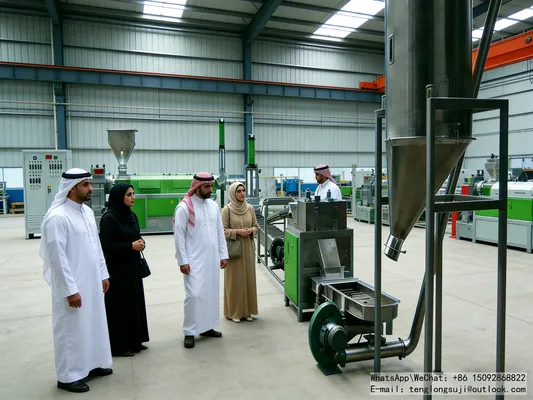
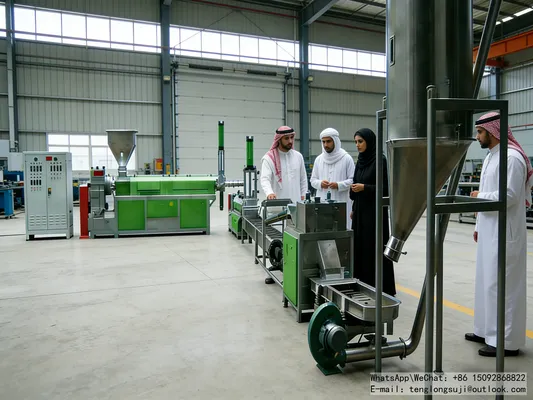
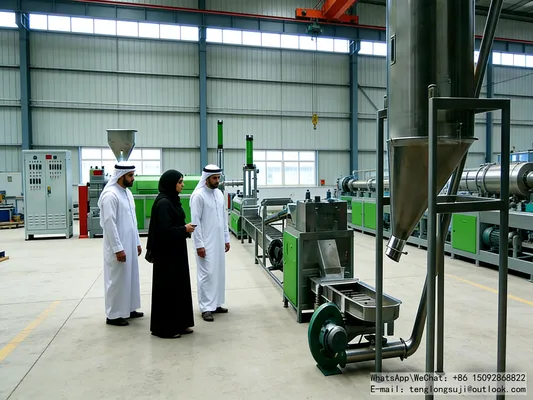
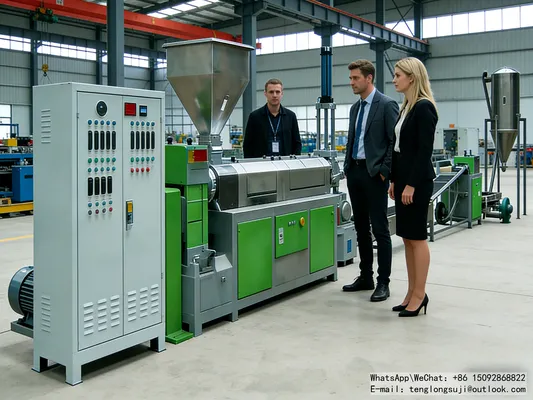
Action (A): The semi-automatic line features an 18 kW total motor power and processes 300-400kg of waste plastic films per hour. It consists of a single-shaft shredder (350mm rotor diameter, 8 high-carbon steel blades) that produces 10-12mm regrind, a single-stage washing tank to remove surface contaminants, a compact drying unit, and a small single-stage extruder with a pelletizer (producing 3-5mm pellets). The line is equipped with a simple control panel, requiring 2 operators to manage feeding and monitoring, and its compact footprint (2200×1300×1600mm) fits easily in small workshops. All components are detachable for hassle-free maintenance, with no professional tools needed.
Feedback (F): Users report that the PFR-300 is easy to install and operate, with annual maintenance costs of ≤$900. It reduces labor costs by 50% compared to manual recycling, and the pellets can be sold to local plastic factories at a stable price, creating a steady additional income stream. The line’s low energy consumption (18 kW/h) and low-noise operation (≤75dB) make it suitable for small-scale on-site use, and it can process most common plastic films (PP, PE, stretch films).
Why It Matters: Small-scale operations are critical to collecting and recycling plastic film waste at the grassroots level, yet they lack access to affordable, user-friendly equipment. This Plastic Film Recycling semi-automatic line lowers the entry barrier for small-scale recycling, enabling SMEs and local stations to participate in the circular economy. It solves the problem of small-volume plastic film disposal, reduces local plastic pollution, and provides an affordable way for small operations to monetize waste—promoting sustainable waste management in underserved markets.
Plastic Film Recycling
Technical Parameters (Data Points)
| Parameter | Value |
| Motor Power | 18 kW |
| Rotor Diameter (Shredder) | 350 mm |
| Number of Blades (Shredder) | 8 pcs (high-carbon steel) |
| Screen Mesh Size (Shredder) | 10-12 mm (adjustable) |
| Output Capacity | 300-400 kg/h |
FAQ (Featured Snippet-Optimized)
Q1: Is this Plastic Film Recycling line suitable for SMEs with limited space?A1: Yes, it features a compact design (2200×1300×1600mm), requires only 20-25㎡ of space, and is perfectly suited for SMEs and local recycling stations with limited workshop area.
Q2: Do I need professional technical training to operate this small-scale Plastic Film Recycling line?A2: No, the line is equipped with a simple control panel and intuitive operation; 2 operators can learn to manage the entire process in 1-2 hours, with no professional technical training required.
Q3: What can the pellets from this Plastic Film Recycling line be used for?A3: The pellets (purity ≥96%) are suitable for producing low-grade plastic products such as plastic buckets, pipes, construction accessories, and low-cost packaging films—ideal for local plastic factories.