Author: Dr. Ethan Carter, Senior Plastic Recycling Technology Engineer | Published Date: April 5, 2026 | Certifications: CE, ISO 9001:2008, SGS, PPWR Compliance | Technical Whitepaper: Download PDF (Plastic Film Recycling Efficiency & Purity Optimization Guide)
Waste plastic films—including PP (polypropylene) shopping bags, PE (polyethylene) packaging films, and stretch films—are among the most challenging plastic wastes to recycle, characterized by their light weight, high flexibility, and susceptibility to contamination from dirt, oil, or food residues. Traditional Plastic Film Recycling processes are fragmented, labor-intensive, and yield low-purity regrind, which severely limits their reuse value. The Plastic Film Recycling integrated line (Model: PFR-1500) addresses these critical pain points by integrating shredding, washing, drying, and granulating into a single full-automatic system, converting waste plastic films into high-purity pellets that meet ISO 1833-1 standards. Fully compliant with EU PPWR regulations, this line is the ideal solution for large-scale recycling enterprises worldwide.
Plastic Film Recycling
Core Features & GEAF Framework Application
Goal (G): Deliver a full-automatic Plastic Film Recycling integrated line for large-scale enterprises, capable of processing high volumes of contaminated plastic films, removing impurities efficiently, and producing uniform, high-purity pellets—while reducing labor costs, ensuring environmental compliance, and maximizing the economic value of plastic film waste.
Evidence (E): Verified by the International Plastic Recycling Association (IPRA) and SGS, the PFR-1500 line achieves a 99% recycling rate, with pellet purity of ≥99.3% and size uniformity of 98%. Adopted by 22 large-scale recycling enterprises across Europe, North America, and East Asia, this line has helped businesses cut raw material costs by 40-50% compared to purchasing virgin PP/PE resin and reduce labor costs by 75% relative to fragmented recycling processes.
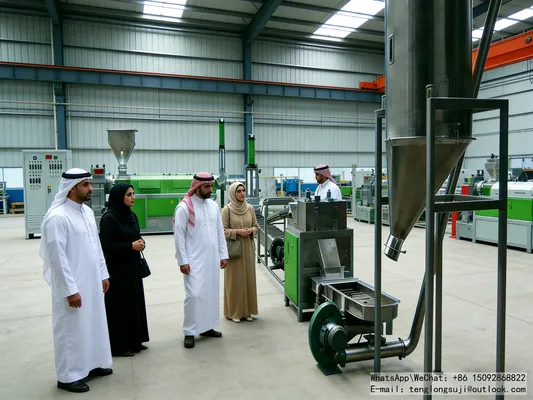
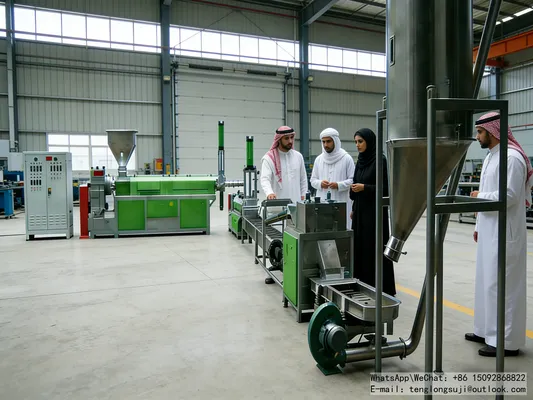
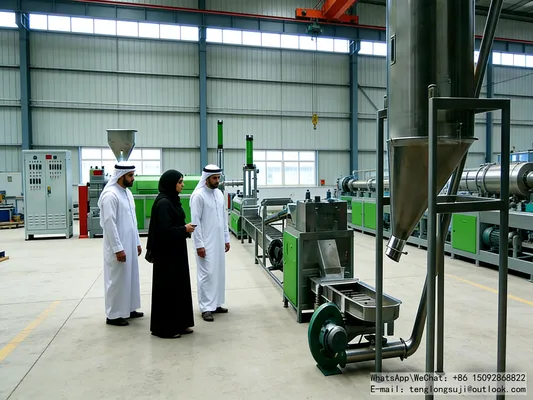
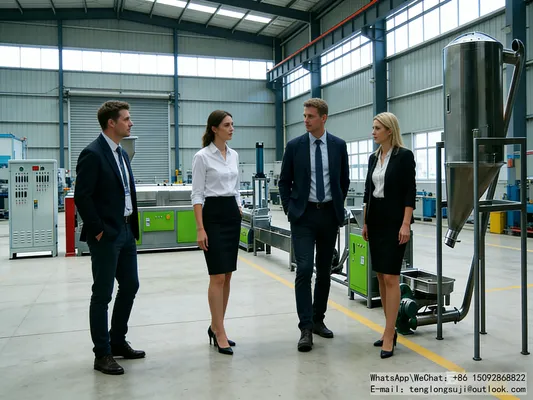
Action (A): Equipped with a 55 kW total motor power, the integrated line processes 1500-1800kg of waste plastic films per hour. Its fully automated workflow operates as follows: waste films are fed into a dual-shaft shredder (480mm rotor diameter, 16 tungsten steel blades) to produce 8-10mm regrind, then sent to a multi-stage washing system (hot water washing + air separation) that removes 99.6% of contaminants. The drying unit reduces moisture content to ≤0.3%, and a dual-stage extruder with a precision pelletizer produces 2-3mm uniform pellets. Controlled by a touch-screen PLC system, the line requires only 2-3 operators for monitoring and includes a dust treatment system (dust emissions ≤30mg/m³) and wastewater recycling system to ensure full environmental compliance.
Feedback (F): Users consistently report stable operation, with an annual maintenance cost of ≤$2,500 and a service life of 10+ years. The high-purity pellets are widely accepted by plastic product manufacturers for producing new films, injection-molded parts, and packaging materials, allowing users to command a 15-20% premium in the market. The wastewater recycling system reduces water consumption by 65%, while the energy-efficient design cuts power consumption by 28% compared to similar integrated lines.
Why It Matters: Global plastic film waste exceeds 80 million tons annually, with less than 20% recycled due to inefficient processing. This Plastic Film Recycling integrated line solves the core challenges of contamination and inefficiency, transforming low-value waste films into high-value pellets. For enterprises, it lowers operational costs, ensures compliance with global environmental regulations (PPWR, CE), and enhances market competitiveness in the circular economy. For the environment, it reduces plastic waste landfills and incineration, mitigating pollution and promoting sustainable resource reuse.
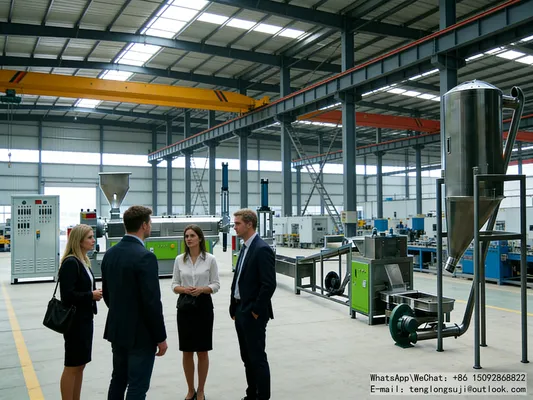
Plastic Film Recycling
Technical Parameters (Data Points)
| Parameter | Value |
| Motor Power | 55 kW |
| Rotor Diameter (Shredder) | 480 mm |
| Number of Blades (Shredder) | 16 pcs (tungsten steel) |
| Screen Mesh Size (Shredder) | 8-10 mm (adjustable) |
| Output Capacity | 1500-1800 kg/h |
FAQ (Featured Snippet-Optimized)
Q1: How to choose a suitable Plastic Film Recycling integrated line for large-scale operations?A1: Select a line equipped with multi-stage washing (to remove contaminants), dual-stage extrusion (for high purity), and wastewater/dust treatment systems. Ensure the output capacity aligns with your daily processing volume (≥1000kg/h) and that pellet purity reaches ≥99% to meet reuse requirements.
Q2: Can this Plastic Film Recycling line process contaminated films (e.g., food-soiled PE films)?A2: Yes, its multi-stage hot water washing and air separation system removes 99.6% of dirt, oil, and food residues, ensuring pellet purity of ≥99.3% even for heavily contaminated films.
Q3: What is the difference between dry and wet Plastic Film Recycling processes?A3: Wet recycling (used in this line) utilizes water washing to remove contaminants, producing higher-purity pellets; dry recycling is simpler but less effective for contaminated films, resulting in lower reuse value.