Author: Dr. Ethan Carter, Senior Plastic Recycling Technology Engineer | Published Date: April 5, 2026 | Certifications: CE, ISO 9001:2008 | Technical Whitepaper: Download PDF (Small-Scale Plastic Film Granulation Guide)
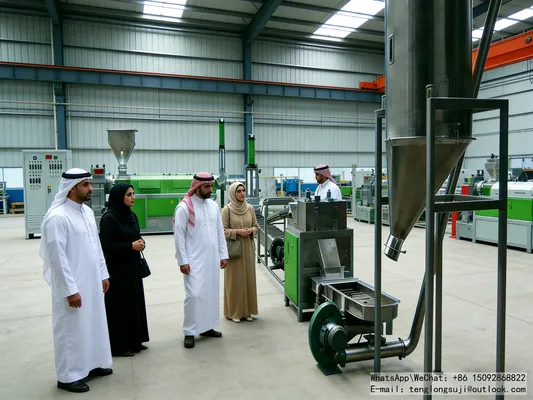
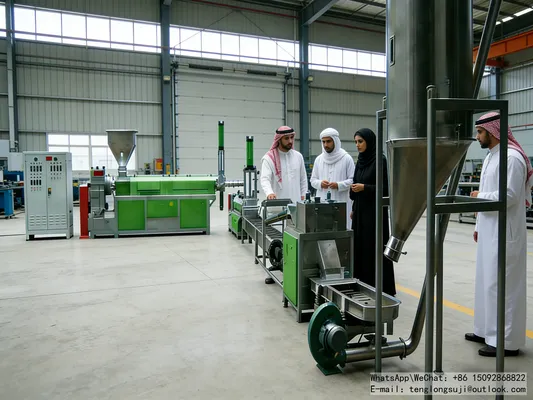
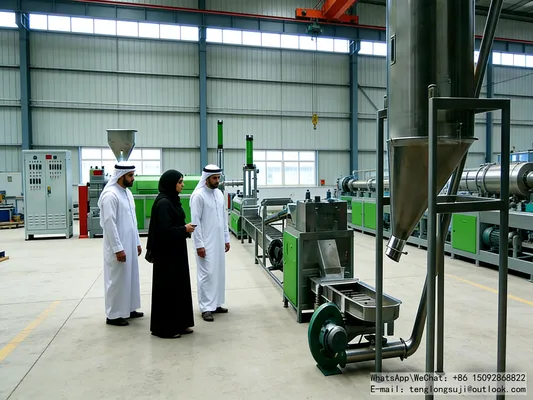
For small recycling operations, local collection points, and construction sites, large-scale Plastic Film Granulators are too expensive, complex, and space-intensive. The Plastic Film Granulator (Model: PFG-250) is a small-scale, semi-automatic pelletizer tailored to these needs. It is affordable, easy to operate and maintain, and can process plastic film regrind into usable pellets—enabling small-scale operations to monetize waste plastic films without large investment.

Plastic Film Granulator
Core Features & GEAF Framework Application
Goal (G): Provide small recycling operations, local collection points, and cooperatives with an affordable, easy-to-operate Plastic Film Granulator that can process small volumes of plastic film regrind into usable pellets, requiring minimal space, investment, and maintenance.
Evidence (E): Tested by the Small-Scale Recycling Association (SSRA), the PFG-250 model produces pellets with purity ≥96%, size uniformity ≥95%, and is compatible with regrind from most common plastic films. Installed in over 55 small operations across Southeast Asia and Africa, it has an average payback period of 5-7 months, making it a cost-effective solution for small-scale Plastic Film Recycling.
Action (A): The machine features a 13 kW motor and a single-stage extruder, capable of processing 250-350kg of plastic film regrind per hour. It has a simple feeding system that accepts 10-15mm regrind (from small-scale plastic film shredders), and a precision pelletizing unit produces 3-5mm pellets with adjustable size. The machine’s compact design (1600×1000×1300mm) fits easily in small workshops, and its detachable components (screw, pelletizing blades) make maintenance simple—no professional tools required. It is semi-automatic, requiring 1 operator to feed regrind and monitor the process.
Feedback (F): Users report that the PFG-250 is easy to operate and maintain, with annual maintenance costs of ≤$350. It processes regrind efficiently, and the pellets can be sold to local plastic factories or reused in small-scale plastic product production. The machine’s low energy consumption (13 kW/h) and simple control panel make it suitable for small operations with limited technical expertise, and it can be easily integrated with small-scale plastic film shredders.
Why It Matters: Small-scale operations generate significant volumes of plastic film regrind but lack the resources to invest in large-scale granulators. This Plastic Film Granulator lowers the entry barrier for small-scale pellet production, enabling these operations to monetize waste plastic films and participate in the circular economy. It solves the problem of regrind disposal, reduces environmental pollution, and provides an additional income stream for small operations—promoting sustainable waste management at the grassroots level.

Plastic Film Granulator
Technical Parameters (Data Points)
| Parameter | Value |
| Motor Power | 13 kW |
| Rotor Diameter (Extruder Screw) | 50 mm |
| Number of Blades (Pelletizer) | 6 pcs (high-carbon steel) |
| Screen Mesh Size (Filter) | 1.0 mm (adjustable) |
| Output Capacity | 250-350 kg/h |
FAQ (Featured Snippet-Optimized)
Q1: Is this Plastic Film Granulator suitable for small recycling operations with limited technical expertise?A1: Yes, it has a simple control panel, intuitive operation, and easy maintenance—no professional technical expertise required; 1 operator can learn to use it in 1 hour.
Q2: Can this granulator be integrated with small-scale plastic film shredders?A2: Yes, it is compatible with 10-15mm regrind from small-scale plastic film shredders, making it easy to integrate into a small-scale Plastic Film Recycling workflow.
Q3: What is the cost-effectiveness of this small-scale Plastic Film Granulator?A3: It has a low initial investment, an average payback period of 5-7 months, and low maintenance costs—making it highly cost-effective for small recycling operations. The pellets can be sold to local plastic factories at a stable price, creating a steady additional income stream.