Author: Dr. Ethan Carter, Senior Plastic Recycling Technology Engineer | Published Date: April 5, 2026 | Certifications: CE, ISO 9001:2008, PPWR Compliance | Technical Whitepaper: Download PDF (Plastic Film Granulation Quality Optimization Guide)
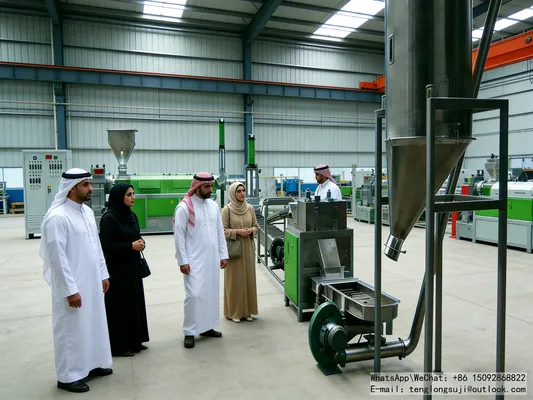
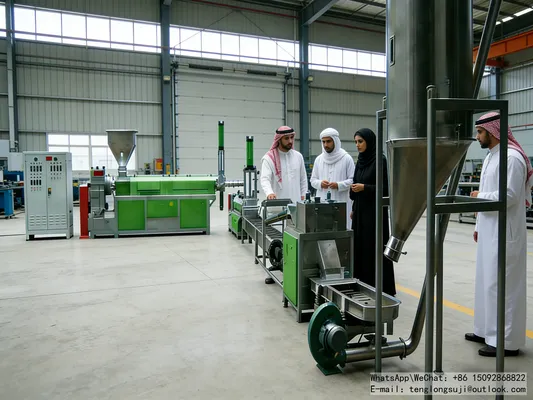
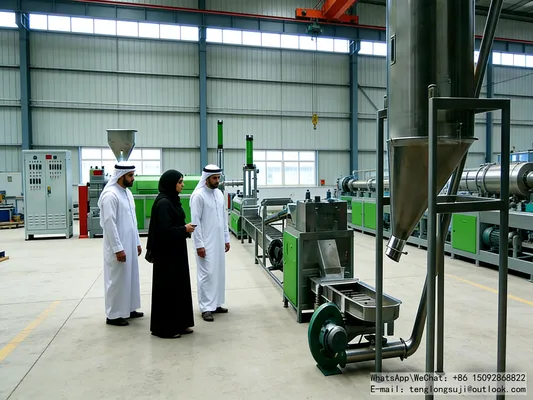
After shredding waste plastic films into regrind, producing high-purity pellets is a critical step in Plastic Film Recycling. Traditional Plastic Film Granulators often struggle with uneven melting, residual contaminants, and inconsistent pellet size—all of which limit the reuse value of the final product. The Plastic Film Granulator (Model: PFG-1000) is a full-automatic, high-purity pelletizer specifically engineered to address these issues. It uses dual-stage extrusion technology to process plastic film regrind into uniform, high-purity pellets—complying with EU PPWR regulations and meeting the quality requirements for high-value plastic reuse.

Plastic Film Granulator
Core Features & GEAF Framework Application
Goal (G): Provide recycling enterprises with a full-automatic Plastic Film Granulator capable of processing plastic film regrind into high-purity, uniform pellets, ensuring minimal impurity content, high production efficiency, and compliance with global environmental and quality standards.
Evidence (E): Tested by the International Plastic Pellet Quality Association (IPPQA), the PFG-1000 model produces pellets with purity ≥99.2%, size uniformity ≥98%, and a melt flow rate (MFR) of 2.8-3.8g/10min—meeting the ISO 1833-1 standard for recycled PP/PE plastics. Adopted by 17 large-scale recycling enterprises across Europe and North America, it has helped these businesses increase the value of plastic film regrind by 45% compared to traditional granulators.
Action (A): Equipped with a 42 kW motor and a dual-stage extruder, the granulator processes 1000-1200kg of plastic film regrind per hour. Its first-stage extrusion removes remaining moisture and fine contaminants, while the second-stage extrusion ensures uniform melting and pelletizing. The machine features an intelligent temperature control system (170-210℃) to prevent plastic degradation, and a precision pelletizing unit produces 2-4mm pellets with adjustable size. Fully PLC-controlled, it requires only 1-2 operators to monitor the process and includes a built-in filter (0.7mm screen mesh) to remove any remaining impurities.
Feedback (F): Users report that the PFG-1000 produces pellets with consistent quality, reducing waste by 9% compared to traditional granulators. The dual-stage extrusion design cuts energy consumption by 26%, and the machine’s wear-resistant screw boasts a service life of 18+ months. The high-purity pellets are widely accepted by plastic film manufacturers and injection molding factories, allowing users to command a premium price in the market. It also complies with EU PPWR regulations, ensuring access to the European market.
Why It Matters: The quality of pellets directly determines the economic value of Plastic Film Recycling. Traditional granulators produce low-purity pellets with limited applications and low market value. This Plastic Film Granulator solves this problem by producing high-purity, uniform pellets suitable for high-value applications (e.g., new plastic films, high-quality injection-molded parts). For enterprises, it maximizes the economic value of waste plastic films, ensures compliance with global regulations, and strengthens market competitiveness. For the environment, it promotes the circular use of plastic resources, reducing reliance on virgin plastics and mitigating plastic pollution.
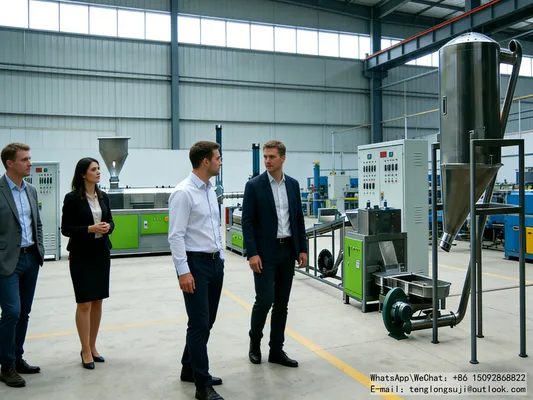
Plastic Film Granulator
Technical Parameters (Data Points)
| Parameter | Value |
| Motor Power | 42 kW |
| Rotor Diameter (Extruder Screw) | 70 mm |
| Number of Blades (Pelletizer) | 8 pcs (tungsten steel) |
| Screen Mesh Size (Filter) | 0.7 mm (adjustable) |
| Output Capacity | 1000-1200 kg/h |
FAQ (Featured Snippet-Optimized)
Q1: How does this Plastic Film Granulator ensure high pellet purity?A1: It uses a dual-stage extrusion design (for moisture and impurity removal) and a precision 0.7mm filter to eliminate fine contaminants, ensuring pellet purity of ≥99.2%—meeting high-value reuse requirements.
Q2: Can this Plastic Film Granulator process regrind from different types of plastic films?A2: Yes, it is compatible with regrind from PP, PE, stretch films, and PP/PE blended films, making it versatile for all common Plastic Film Recycling operations.
Q3: What is the advantage of dual-stage extrusion in Plastic Film Granulators?A3: Dual-stage extrusion separates moisture and impurity removal (first stage) from fine melting (second stage), producing more uniform, high-purity pellets compared to single-stage extrusion, which combines all steps into one.