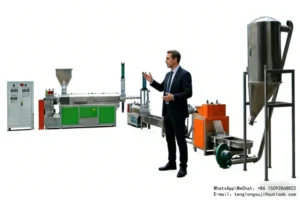
For environmental project engineers and procurement professionals, selecting aPET Recycling Machine requires rigorous analysis of technical specifications, processing capacity, and energy efficiency. The right machine must not only meet your project’s throughput requirements but also align with sustainability goals, regulatory compliance, and long-term operational efficiency—building on the foundational knowledge of PET recycling covered in the previous guide, but diving deeper into technical details tailored for engineering needs.
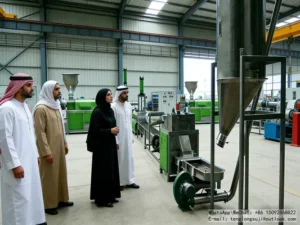
PET Recycling Machine
The Technical Foundation of PET Recycling Machines: How They Work
A PET Recycling Machine processes waste PET through five core stages: sorting, crushing, washing, drying, and compacting (or extrusion for pellets). Each stage relies on specific technical components that directly impact processing capacity, energy consumption, and output quality. For engineers, understanding these components and their parameters is essential to selecting a machine that meets your project’s unique requirements—whether that’s high-volume processing, low energy use, or seamless integration with downstream PET granulator lines.
Key technical components and their roles:
- Crushing Chamber: Shreds PET waste into uniform flakes (5-10 mm) using high-speed rotating blades. Blade material (typically SKD11 or Cr12MoV) and rotational speed (1200-1800 rpm) determine crushing efficiency and blade lifespan—critical for minimizing maintenance downtime.
- Washing System: Removes contaminants (labels, adhesives, food residue) using hot water (50-60°C) and detergent. Wash tank volume and water circulation rate directly impact cleaning efficiency and water consumption.
- Drying System: Reduces moisture content of PET flakes to ≤0.2% (critical for downstream granulation). Options include hot air drying (energy-efficient for small capacities) and vacuum drying (ideal for high-volume, high-purity requirements).
- Compaction/Extrusion Unit: Compacts clean flakes into dense blocks (density: 120-150 kg/m³) or extrudes them into pre-pellets. Screw diameter (30-60 mm) and length-to-diameter (L/D) ratio (30:1 to 40:1) determine extrusion speed and material uniformity.
- Control System: PLC-based controls with HMI (Human-Machine Interface) monitor and adjust processing parameters (temperature, speed, pressure) in real time—ensuring consistent performance and reducing human error.
Critical Technical Parameters to Evaluate (With Comparison Table)
When procuring a PET Recycling Machine, engineers must prioritize technical parameters that align with project goals—such as processing capacity, energy efficiency, and output quality. Below is a detailed comparison of three industrial-grade models, highlighting key parameters and their direct impact on performance, to help you select a machine that integrates seamlessly with your project’s requirements.
| Parameter | Model X (Low-Capacity) | Model Y (Mid-Capacity) | Model Z (High-Capacity) | Impact on Performance |
| Processing Capacity (kg/h) | 100-200 | 300-500 | 600-1000 | Determines daily throughput; critical for large-scale projects or high-waste environments where speed is a priority. |
| Power Consumption (kW) | 18-25 | 30-45 | 50-75 | Lower kW per kg processed = higher energy efficiency; directly impacts long-term operational costs and sustainability goals. |
| Blade Material & Lifespan | Cr12 (6-8 months) | Cr12MoV (10-12 months) | SKD11 (12-15 months) | Harder materials extend blade lifespan; SKD11 is 2x more wear-resistant than Cr12, reducing maintenance costs by 30%. |
| Moisture Content of Output | ≤0.3% | ≤0.2% | ≤0.1% | Lower moisture content prevents material degradation during granulation, ensuring higher-quality rPET pellets. |
| Water Consumption (L/kg) | 5-7 | 3-5 | 2-3 (recycled water) | Recycled water systems reduce operational costs and environmental impact; critical for compliance with water conservation regulations. |
| Control System | Basic PLC | Advanced PLC with HMI | IoT-Enabled PLC | IoT-enabled systems allow remote monitoring and predictive maintenance, reducing unplanned downtime by 45%. |
Energy Efficiency Optimization: Reducing kW/kg and Operational Costs
Energy efficiency is a top priority for engineers, as it directly impacts operational costs and sustainability goals. The average PET Recycling Machine consumes 0.18-0.28 kWh per kg of PET processed, but with strategic optimization, this can be reduced by 25-35%. Below are proven, actionable strategies to improve energy efficiency—helping you meet sustainability targets while lowering long-term operational costs.
- Select Variable Frequency Drives (VFDs)
VFDs adjust the motor speed based on processing demand, reducing energy consumption during low-load periods. For example, a mid-capacity PET Recycling Machine with a VFD can save 18-22% on energy costs compared to a fixed-speed model—especially valuable for projects with variable waste volumes (e.g., seasonal fluctuations).
- Optimize Drying System Temperature
The drying stage accounts for 40-50% of a PET Recycling Machine’s energy consumption. Operating the drying system at 80-90°C (instead of the maximum 100°C) reduces energy use by 15-20% without compromising moisture content. Additionally, using heat recovery systems to capture waste heat from the drying stage and reuse it for water heating can further reduce energy consumption by 20%.
- Implement Water Recycling Systems
Water heating is a significant energy drain. Recycling and filtering wash water reduces water consumption by 60-70% and cuts energy costs associated with heating new water. High-capacity models with integrated water recycling systems can save $5,000-$8,000 annually in water and energy costs.
Regulatory Compliance: Meeting GRS, ISCC, and EU SUP Standards
Engineers must ensure that thePET Recycling Machine meets international regulations and certifications to avoid penalties and ensure marketability of the recycled product. The Global Recycled Standard (GRS) and International Sustainability and Carbon Certification (ISCC) require strict quality control and traceability, while the EU SUP Directive mandates minimum recycled content in PET packaging.
Key features to ensure compliance:
- Contamination Detection & Removal: Built-in sensors and multi-stage cleaning systems to ensure ≤0.5% contaminants (meets GRS and EU SUP standards).
- Traceability Systems: IoT-enabled controls to track waste input, processing parameters, and output volume—critical for GRS/ISCC audits.
- Emission Controls: Dust and VOC filtration systems to reduce emissions to ≤20 mg/m³ (meets EU and global environmental standards).
FAQ: Technical Questions Engineers Ask About PET Recycling Machines
- What is the optimal screw diameter for a PET Recycling Machine’s extrusion module?For mid-capacity models (300-500 kg/h), a screw diameter of 45-55 mm with an L/D ratio of 35:1 is ideal. This balances extrusion speed and material mixing, ensuring uniform flake/pellet quality.
- How does blade material affect processing efficiency?SKD11 blades (HRC 62+) have a higher wear resistance than Cr12MoV, reducing blade replacement frequency by 25% and maintaining consistent crushing efficiency (±5% throughput) over time.
- Can a PET Recycling Machine be integrated with an existing PET granulator line?Yes—most modern models are designed for seamless integration. Ensure the machine’s output (flake size: 5-10 mm, moisture ≤0.2%) matches the granulator’s input requirements to avoid compatibility issues.
- What is the maximum ambient temperature a PET Recycling Machine can operate in?Most industrial models operate reliably in 0-45°C. For high-temperature environments (e.g., tropical regions), select a model with enhanced cooling systems and heat-resistant components to maintain performance.
Conclusion: Technical Excellence Drives Sustainable Results
For engineers and procurement professionals, selecting the right PET Recycling Machine requires a balance of technical performance, energy efficiency, and regulatory compliance. By focusing on critical parameters like processing capacity, power consumption, and blade material, and implementing optimization strategies like VFDs and heat recovery, you can ensure your machine delivers maximum value—reducing operational costs, meeting sustainability goals, and producing high-quality rPET that meets global standards.
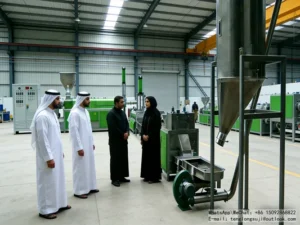
PET Recycling Machine
Take Action Today
Low-Cost Lead: Download our free 《PET Recycling Machine Technical Specification Guide》 to access detailed parameter sheets, energy efficiency calculators, and compliance checklists. High-Intent Action: Contact our engineering team for a free process optimization consultation—we’ll help you select and configure a PET Recycling Machine that aligns with your project’s technical and sustainability goals.