Background
Mr. Teera, a 45-year-old male with 15 years of experience in the plastic recycling industry, owns a 1000㎡ large-scale recycling plant in Pathum Thani’s Rangsit Industrial Estate—Thailand’s hub for automotive and electronics manufacturing. A vocational college graduate with expertise in plastic processing, he specializes in recycling mixed PP/PE waste from local auto parts and electronics factories. As Thailand tightens industrial waste regulations, manufacturers are increasingly demanding certified recycled materials, but Mr. Teera’s old granulator couldn’t handle mixed PP/PE waste consistently, leading to low product quality and lost industrial clients.
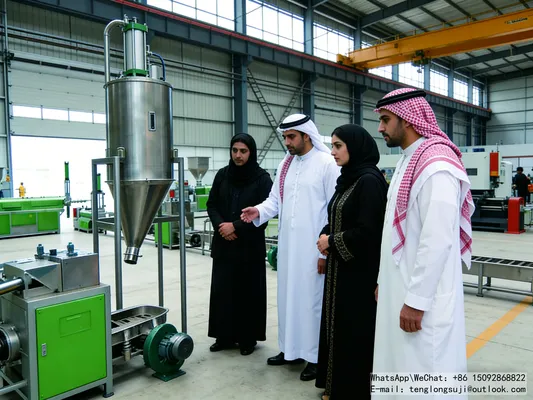
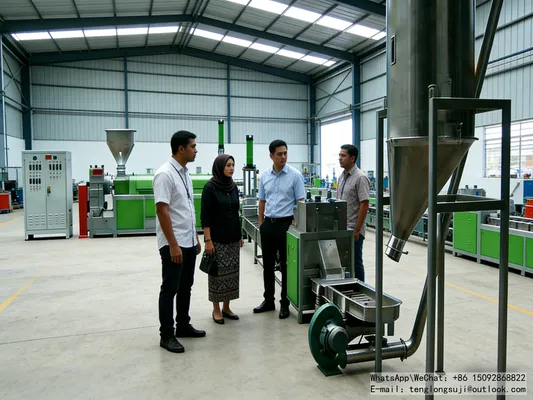
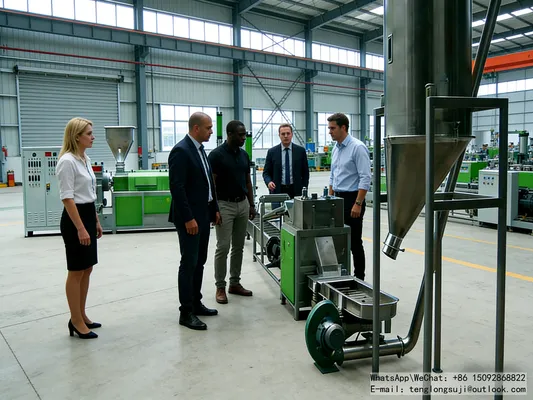
Plastic Granulator
The Challenge
- The mixed PP/PE waste had varying melt indexes, causing uneven plasticization and poor granule quality—resulting in a 17% product rejection rate from industrial clients.
- The waste contained high levels of metal contaminants (nails, screws, and metal fragments) from auto parts, which frequently damaged the granulator’s screws and barrels, leading to costly breakdowns and 8 hours of monthly downtime.
- The old granulator’s output of 400kg/h was insufficient to meet the high-volume demand from Pathum Thani’s industrial clients, who required large quantities of recycled PP/PE for auto components and electronics casings.
- High maintenance costs (120,000 THB/year) due to premature wear of screws and barrels further squeezed profit margins.
The Solution
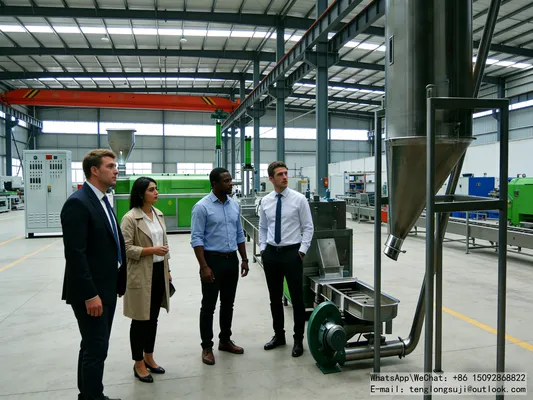
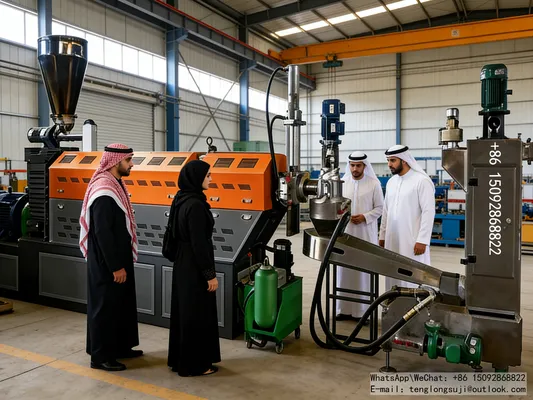
We customized the TL-G150 Heavy-Duty Plastic Granulator—Pathum Thani’s top-selling model for industrial mixed plastic recycling—to address Mr. Teera’s unique challenges:
- A multi-stage compression screw with a 38:1 L/D ratio, designed to ensure uniform plasticization of mixed PP/PE waste with varying melt indexes, producing consistent, high-quality granules.
- An in-line metal detector + hydraulic reject systemthat identifies and removes metal contaminants before they reach the screw, protecting critical components from damage.
- Bimetallic screws and barrels (62HRC hardness) that are 3x more wear-resistant than standard components, reducing premature wear and maintenance costs.
- Smart 12-zone temperature control that automatically adapts to different melt indexes, ensuring stable processing parameters.
- An automatic lubrication system that reduces maintenance requirements by 70%, minimizing downtime.
- A Pathum Thani-based on-site service team, offering emergency repairs and maintenance to ensure maximum machine uptime.
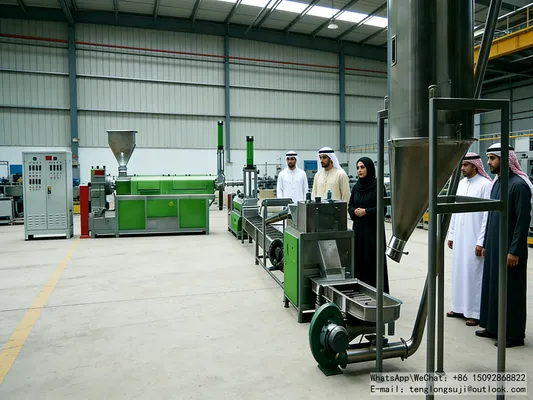
Plastic Granulator
The Results
The TL-G150 Plastic Granulator transformed Mr. Teera’s plant into a high-efficiency, profitable operation:
- Production output surged to 900kg/h—a 125% improvement—allowing him to meet the high-volume demand from Pathum Thani’s automotive and electronics factories.
- Granule uniformity reached >98%, meeting ISO 14001 environmental standards and eliminating the 17% product rejection rate.
- Maintenance costs dropped by 70%, from 120,000 THB/year to 36,000 THB/year—saving 84,000 THB annually.
- No screw or barrel damage was reported in 18 months of operation, increasing machine uptime to >99%.
- The equipment qualifies for Thailand’s green industry tax incentives, further reducing operational costs and improving profitability.
Mr. Teera’s Quote: “This Plastic Granulator dominates mixed PP/PE recycling—massive output, durable components, and reliable metal protection! It’s the backbone of my Pathum Thani plant and has helped me secure long-term contracts with 3 major auto parts manufacturers.”
FAQ
- Q: How does the machine handle mixed PP/PE waste with varying melt indexes?
A: The multi-stage compression screw and 12-zone temperature control work together to ensure uniform plasticization, producing consistent, high-quality granules regardless of melt index variations. - Q: Does the machine protect against metal contaminants in the waste?
A: Yes, the in-line metal detector identifies metal contaminants, and the hydraulic reject system removes them before they reach the screw, preventing damage to critical components.