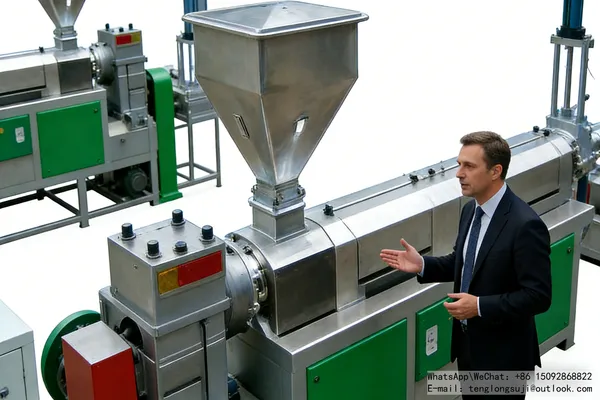
Background: Ms. Sana Mir, a 38-year-old with a bachelor’s degree in environmental science, launched her plastic recycling business in 2021 in Karachi’s Fish Harbor—one of South Asia’s largest and busiest seafood markets. Her 1,300-square-meter medium-sized factory employs 20 workers, focusing on processing seafood packaging waste (plastic bags, foam boxes, wrapping films) from local fishermen and seafood exporters. Karachi’s fishing industry generates over 12 tons of seafood packaging waste daily, much of which ends up in the Arabian Sea, causing severe marine pollution and harming aquatic life. Ms. Sana aimed to address this pressing environmental issue while building a profitable business, so she invested in an eco-friendly Plastic Recycling Machine that complies with Sindh’s strict environmental regulations—aligning with Pakistan’s “Clean Karachi” initiative to reduce marine pollution. She knew that high-quality equipment was essential to process the contaminated waste effectively.
Plastic Recycling Machine
The Challenge
Ms. Sana’s main challenges centered on environmental compliance and processing seafood-contaminated plastics. First, seafood packaging waste contains fish residue and saltwater, leading to foul odors and bacterial growth. Traditional Plastic Recycling Machine models could not effectively remove these contaminants, resulting in low-quality particles (with a qualification rate of only 63%) that were unsellable. Second, the waste plastics had high oil content (up to 9%), which caused black spots in recycled particles, significantly reducing their market value. Third, traditional equipment generated large amounts of waste gas (VOC emissions over 60 mg/m³), failing to meet Sindh’s environmental standards (VOC < 50 mg/m³) and putting her at risk of a 1 lakh PKR penalty. Additionally, she needed equipment that could process multiple plastic types (PE, PP, foam) simultaneously to maximize raw material utilization and profitability. A standard Plastic Recycling Machine would not meet her environmental and operational needs.
The Solution
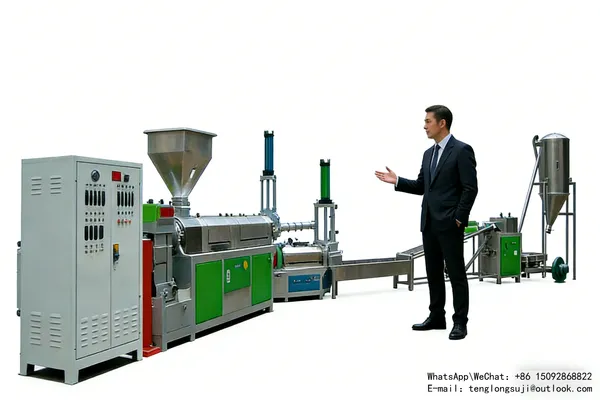
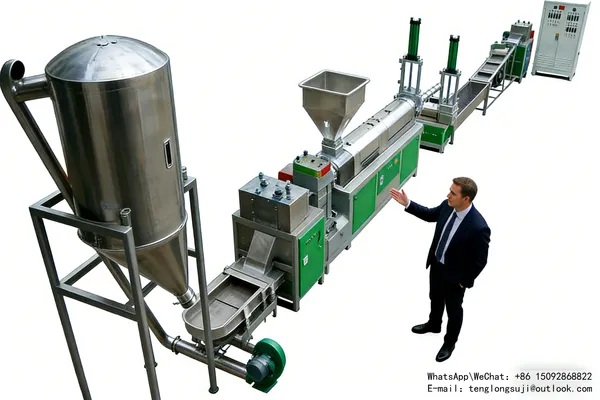
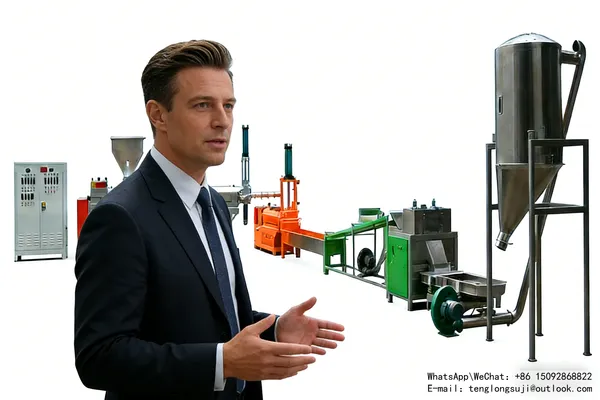
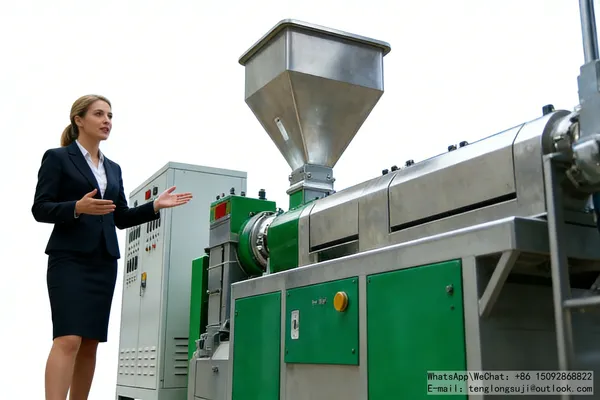
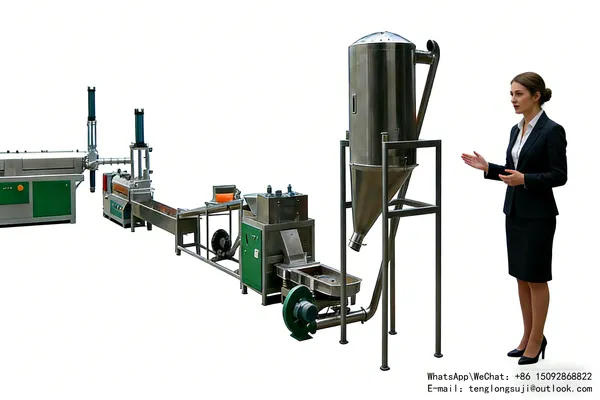
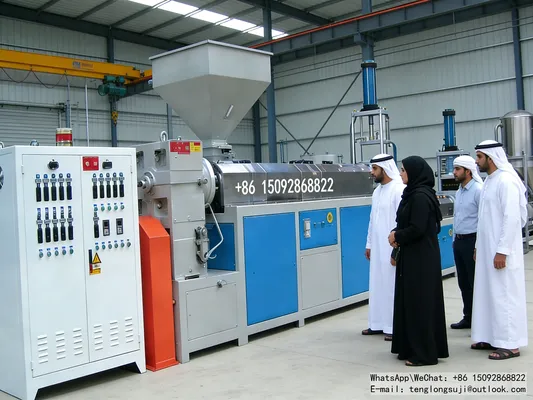
We provided Ms. Sana with a TL-850 eco-friendly Plastic Recycling Machine, customized for Karachi’s seafood packaging waste and local environmental standards—ideal for Pakistan’s coastal recycling projects. The specific configuration and solutions of this equipment are as follows:
- Multi-stage cleaning system (alkaline cleaning + high-pressure rinsing + UV sterilization), which removes 99% of fish residue, salt, and oil, eliminating odors and bacterial growth entirely.
- Waste gas purification system with activated carbon filters, reducing VOC emissions to below 38 mg/m³—fully complying with Sindh’s environmental regulations.
- Multi-functional plasticizing system, capable of processing PE, PP, and foam plastics simultaneously, improving raw material utilization by 32%.
- Hydraulic screen changer, allowing screen replacement without stopping the machine, ensuring continuous production (12 hours/day) and minimizing downtime.
- Free on-site training for 8 workers, 1 year of free maintenance, and on-site environmental compliance testing to help her avoid costly penalties.

Plastic Recycling Machine
The Results
After 5 months of operation, thePlastic Recycling Machine delivered exceptional environmental and economic results for Ms. Sana. The multi-stage cleaning system boosted the product qualification rate from 63% to 97%, with particles free of odors and black spots—suitable for low-grade packaging and construction materials. The selling price of recycled particles increased by 32% (from 40 PKR/kg to 52.8 PKR/kg), boosting her profit margins. The waste gas purification system passed local environmental inspections, eliminating penalty risks entirely. Daily processing capacity reached 13 tons, enabling Ms. Sana to process all seafood packaging waste from the fish harbor. Her monthly income increased by 90% (from 1.1 lakh PKR to 2.09 lakh PKR), and she received a 25,000 PKR monthly environmental subsidy from the Sindh government. “This equipment is eco-friendly and versatile—it solves the odor and pollution issues perfectly, allowing me to run a profitable business while protecting the ocean,” Ms. Sana said. Her factory is now recognized as a model for sustainable recycling in Karachi’s fishing industry, thanks to the high-performance Plastic Recycling Machine.
FAQ
Q1: Can this Plastic Recycling Machine process seafood-contaminated plastic waste? A1: Yes, the multi-stage cleaning and sterilization system removes all fish residue, salt, and oil, eliminating odors and bacteria completely.
Q2: Does the equipment meet Sindh’s environmental emission standards? A2: Yes, the waste gas purification system reduces VOC emissions to below 38 mg/m³, fully complying with local regulations.
If you process seafood packaging waste in Karachi, have you faced challenges with odor or pollution compliance? Share your solutions below!