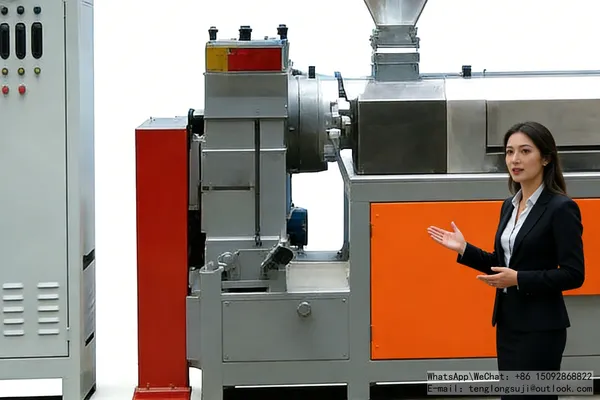
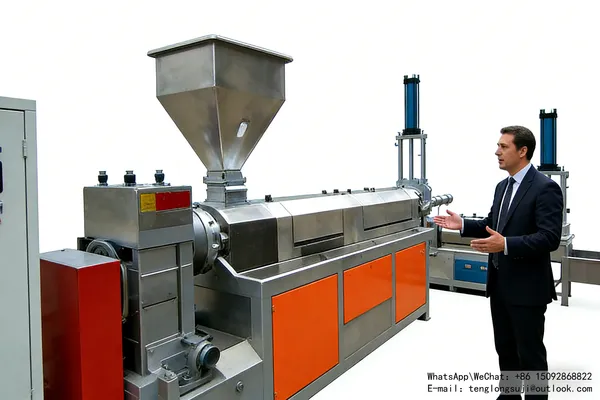
Background: Mr. Ali Khan, a 35-year-old with a high school education, launched his plastic recycling business in 2022 near Karachi Port—Pakistan’s largest seaport and a bustling international trade hub. His 700-square-meter small workshop employs 9 local workers, focusing solely on processing waste plastic bottles and containers discarded at the port. As a former port loader, Ali personally witnessed the massive volume of plastic waste (over 8 tons daily) polluting the coastal area—a problem that also presented a profitable, untapped business opportunity. Karachi’s hot, humid climate and constant saltwater exposure from the Arabian Sea made corrosion a major threat to equipment, so he set out to find a durable Plastic granulator capable of handling salt-contaminated plastics. This decision also aligned with Pakistan’s 2025 Plastic Waste Management Policy, which prioritizes reducing coastal plastic pollution. The right equipment was critical to his business’s survival, as local equipment could not withstand the harsh coastal conditions.
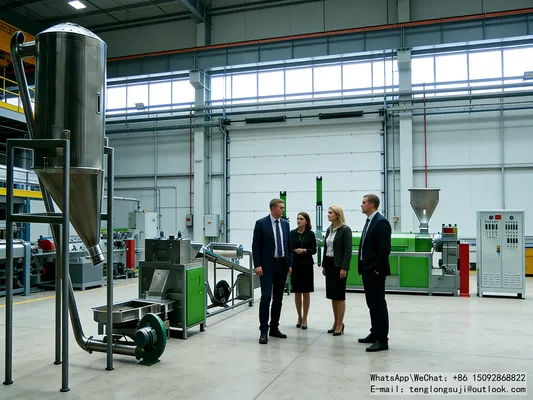
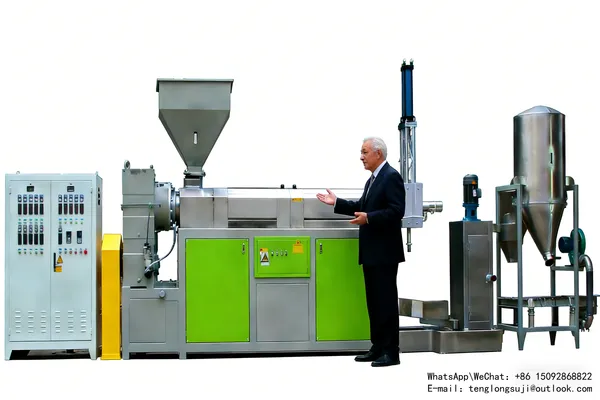
Plastic granulator
The Challenge
Mr. Ali faced three critical challenges that threatened the viability of his business. First, the waste plastic bottles from Karachi Port contained saltwater residues (with salt content up to 6%), which caused rapid corrosion of the traditional Plastic granulator he initially used. Screws and feeding hoppers needed replacement every 2 months, pushing maintenance costs up by 35%. Second, the bottles varied greatly in size—from small beverage bottles to large chemical containers—leading to uneven feeding, low processing efficiency (only 190kg/h), and costly raw material buildup. Third, Karachi’s frequent power fluctuations (ranging from 170V to 380V) caused the traditional equipment to shut down 3-4 times daily, reducing operating time to just 7 hours. Unlike local suppliers who offered no after-sales support, Ali needed reliable technical assistance to minimize downtime—each hour of inactivity cost him 5,000 PKR, a significant loss for his small workshop. He realized that a standard Plastic granulator would not solve his unique challenges, so he sought a customized solution.
The Solution
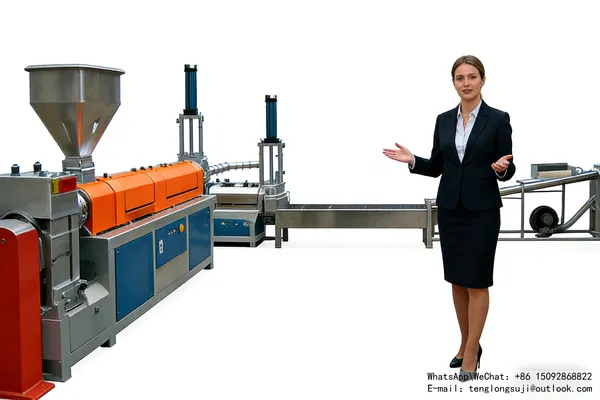
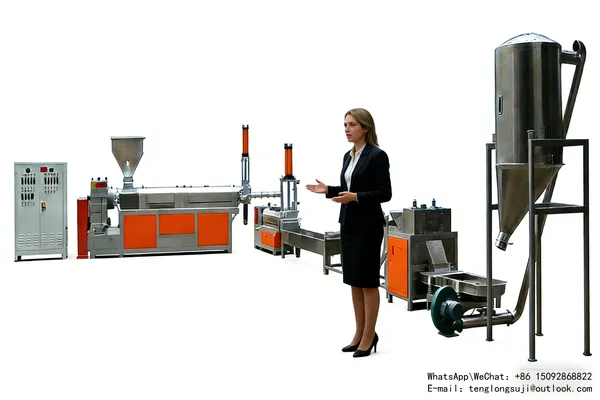
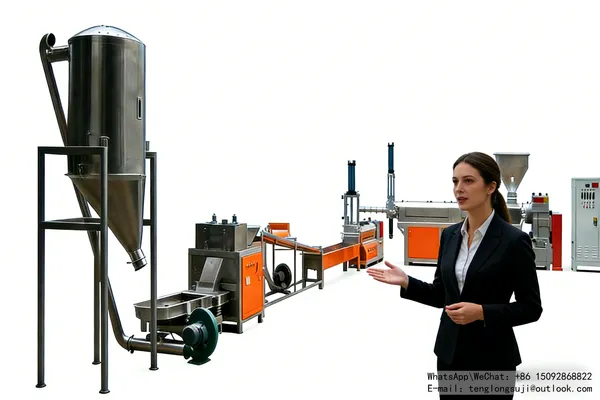
We provided Mr. Ali with a custom TL-280 corrosion-resistant Plastic granulator, specifically tailored to Karachi’s coastal environment and port waste characteristics—one of the most popular models for Pakistan’s seaport recycling businesses. The detailed configuration of this equipment includes:
- 304 stainless steel screw and feeding hopper, designed to resist saltwater corrosion, extending part service life to 9 months and drastically reducing maintenance costs.
- Adjustable feeding system with an anti-clogging design, capable of adapting to different bottle sizes and ensuring smooth feeding even when processing mixed materials.
- Built-in voltage stabilization module, supporting stable operation between 170V-400V to handle Karachi’s unpredictable power fluctuations and keep the equipment running smoothly.
- High-efficiency drying system, which reduces moisture content in salt-contaminated plastics to below 2%, eliminating air bubbles in recycled particles and improving product quality.
- 24/7 online technical support and on-site maintenance within 24 hours in Karachi, plus free training for 4 workers to ensure seamless, trouble-free operation.

Plastic Granulator
The Results
After 3 months of operation, the Plastic granulator completely transformed Mr. Ali’s business. Corrosion issues were eliminated entirely, cutting maintenance costs by 65% (saving 18,000 PKR monthly). Processing efficiency soared from 190kg/h to 420kg/h—a 121% improvement—allowing him to process 10 tons of plastic bottles daily. The voltage stabilization module reduced shutdowns to zero, extending daily operating time to 12 hours. The product qualification rate rose from 72% to 98%, with the PET particles clear and impurity-free, suitable for direct use in bottle production. Mr. Ali secured a long-term supply contract with a local plastic bottle manufacturer, increasing his monthly income by 80% (from 1.2 lakh PKR to 2.16 lakh PKR). “This equipment is durable and reliable—no corrosion, no shutdowns, and the after-sales support is unmatched. It’s the best investment I’ve ever made,” Mr. Ali said. His business also played a key role in reducing coastal plastic pollution, earning him recognition from the Karachi Port Authority. The Plastic granulator not only solved his operational challenges but also boosted his profitability.
FAQ
Q1: Can this Plastic granulator handle saltwater-contaminated plastic bottles from Karachi Port? A1: Yes, the 304 stainless steel parts are highly corrosion-resistant, effectively processing plastics with up to 8% salt content.
Q2: Is the equipment suitable for areas with frequent power fluctuations? A2: Yes, the built-in voltage stabilization module ensures stable operation between 170V-400V, perfectly adapting to Karachi’s power supply issues.
If you operate a plastic recycling workshop near Karachi Port, have you faced corrosion or power-related issues with your granulation equipment? How did you resolve them? Leave your comment below!