Background: Ms. Farah Naz, a 36-year-old with a bachelor’s degree in agriculture, launched her plastic recycling business in 2023 in Faisalabad’s agricultural belt—an area known for its rice and wheat cultivation. She invested 1 crore PKR to establish a 2,600-square-meter large-scale recycling factory, employing 36 workers. Faisalabad is a major agricultural and textile hub in Pakistan, generating massive amounts of agricultural plastic waste (mulch film, fertilizer bags) and textile plastic waste (packaging, scraps) daily. Ms. Farah noticed that local recycling capacity was insufficient, leading to plastic pollution in farmlands and industrial areas—harming soil fertility and the environment. She decided to invest in a high-capacity Plastic Recycling Machine to scale up recycling efforts—aligning with Punjab’s “Clean Agriculture” campaign and tapping into high demand from local textile and agricultural companies. A high-capacity equipment was essential to handle the large volume of mixed waste.

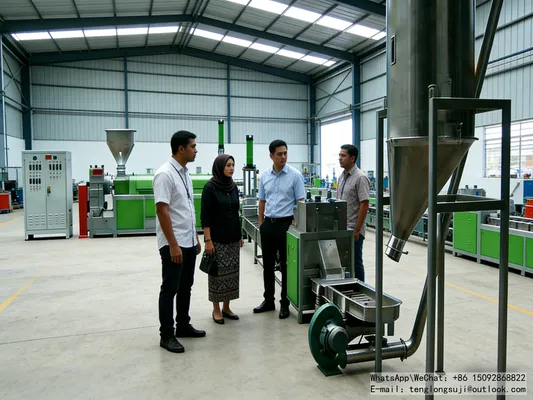
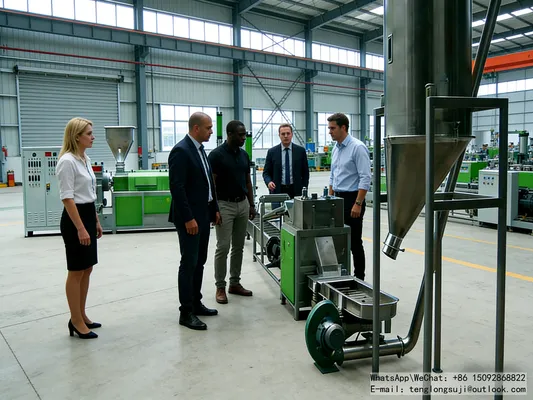
Plastic Recycling Machine
The Challenge
Ms. Farah’s main challenges were low processing capacity and poor particle quality. First, her initial small-scale equipment had a daily capacity of only 3.2 tons, unable to keep up with the 16 tons of agricultural and textile waste plastics she collected daily—resulting in raw material backlogs and lost revenue. Second, agricultural plastic film had high viscosity and uneven thickness, while textile plastic scraps had high impurity content. Traditional equipment struggled to plasticize these materials effectively, resulting in uneven particle quality that was limited to low-grade products with low profit margins. Third, the equipment required extensive manual operation, leading to high labor intensity and a 27% worker turnover rate—adding to her costs. Additionally, she needed a Plastic Recycling Machine that could handle both agricultural and textile waste plastics to maximize raw material utilization and profitability. A standard equipment could not meet her high-capacity and versatility needs.
The Solution
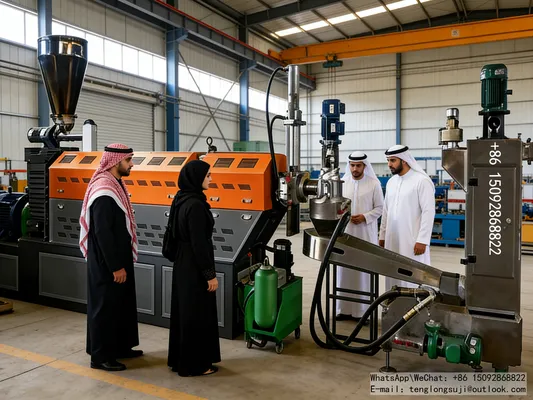
We provided Ms. Farah with a TL-1550 high-capacity Plastic Recycling Machine, customized for Faisalabad’s agricultural and textile waste plastics—one of the largest models for Pakistan’s large-scale recycling projects. The specific configuration and solutions of this equipment are as follows:
- High-power 95KW motor and large-scale screw (L/D Ratio 1:37), enabling a daily processing capacity of 19 tons to meet large-scale recycling needs and eliminate raw material backlogs.
- Dual-position vacuum exhaust system and high-temperature heating (up to 290℃), effectively plasticizing high-viscosity agricultural film and high-impurity textile scraps to improve particle quality and uniformity.
- Automatic feeding, discharging, and sorting systems, reducing manual operation by 78% and lowering labor intensity—decreasing worker turnover to just 6%.
- Modular design that allows easy switching between agricultural and textile waste processing modes, maximizing raw material utilization and flexibility.
- Professional technical guidance, free operator training, and 1 year of free maintenance, ensuring smooth operation and timely troubleshooting to minimize downtime.

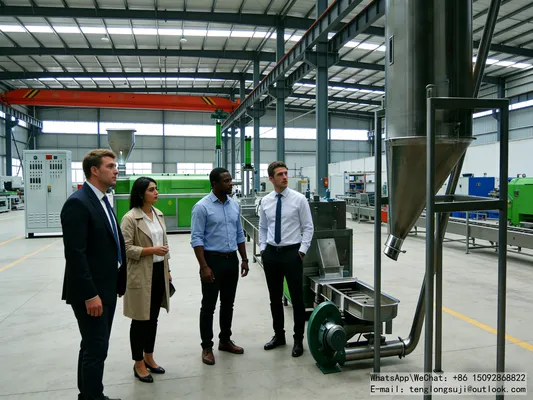
Plastic Recycling Machine
The Results
After 6 months of operation, the Plastic Recycling Machine delivered impressive results for Ms. Farah’s factory. Daily processing capacity increased from 3.2 tons to 19 tons—a 500% improvement—allowing her to process all collected raw materials and expand her business to accept more orders. The quality of recycled particles improved significantly, with a 97% qualification rate, enabling them to be used in high-grade products like textile packaging and agricultural mulch film. This led to a 42% increase in selling price (from 43 PKR/kg to 61.06 PKR/kg), boosting her profit margins. Labor costs dropped by 32% (saving 1.28 lakh PKR monthly), and worker turnover decreased to 6%, reducing hiring and training costs. Ms. Farah signed long-term supply contracts with 4 local industrial and agricultural companies, increasing her monthly income by 125% (from 2.1 lakh PKR to 4.725 lakh PKR). “This equipment is high-capacity and versatile—it handles all types of waste plastics and produces high-quality particles, exceeding my expectations,” Ms. Farah said. Her factory was recently awarded the “Best Plastic Recycling Unit” by the Punjab Pollution Control Board, recognizing her contribution to environmental sustainability, all thanks to the high-capacity Plastic Recycling Machine.
FAQ
Q1: Can this Plastic Recycling Machine process both agricultural and textile waste plastics? A1: Yes, the modular design allows easy switching between processing modes, handling both high-viscosity and high-impurity plastics effectively.
Q2: What is the daily processing capacity of the equipment? A2: The high-capacity design enables a daily processing capacity of 19 tons, meeting large-scale recycling needs in Faisalabad.
If you’re in agricultural and textile waste plastic recycling in Faisalabad, what capacity equipment do you need to meet your business needs? Share your thoughts below!