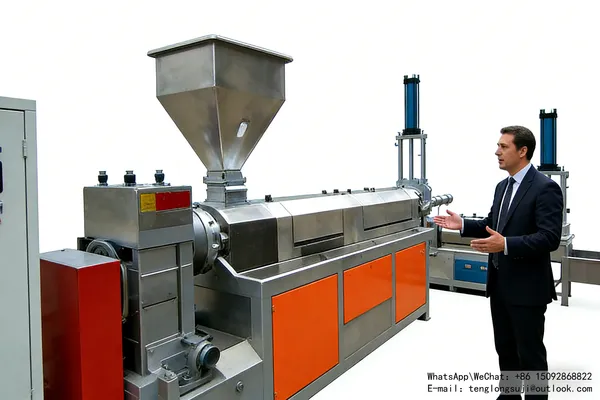
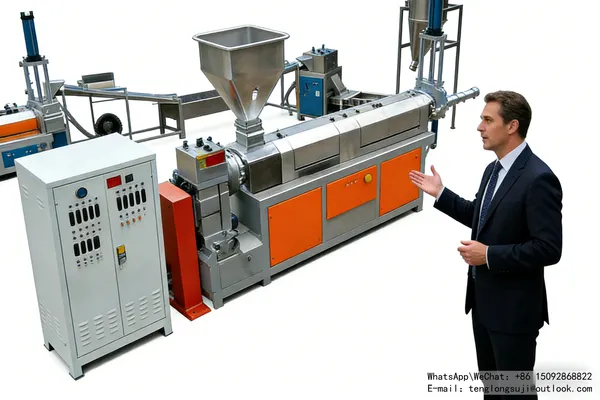
Background: U Than Htay, a 52-year-old male with a college degree in mechanical engineering, previously worked at a local plastic processing factory in Yangon. In 2022, he resigned and invested 50 million Kyats to establish a medium-sized plastic recycling factory covering 2,000 square meters, employing 30 workers. As Myanmar’s economic and transportation hub, Yangon generates massive amounts of mixed waste plastics daily, including plastic bottles, food packaging, and industrial plastic scraps. U Than Htay noticed the local plastic recycling industry was underdeveloped—most workshops relied on manual sorting and simple processing, resulting in low efficiency and severe resource waste. He decided to introduce a full-automatic Plastic Recycling Machine to achieve integrated sorting, crushing, cleaning, and granulating of mixed waste plastics.
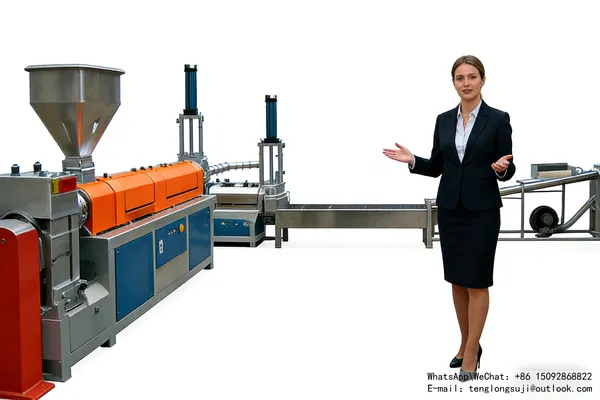
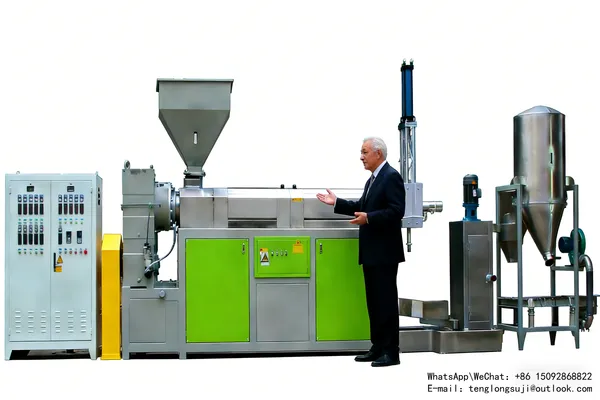
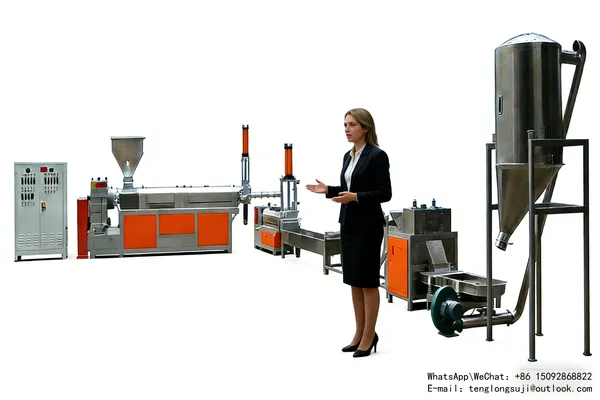
Plastic Recycling Machine
The Challenge
U Than Htay’s biggest challenge was handling mixed waste plastics. His raw materials included various plastics (PP, PE, PET) mixed with impurities like soil, paper, and metal, requiring extensive manual sorting that accounted for 40% of his total operating costs. Second, traditional manual processing was inefficient, with a daily capacity of only 3 tons, and the recycled plastic particles were of uneven quality, forcing him to sell at low prices. Third, the wastewater from the cleaning process could not be treated, putting him at risk of penalties from local environmental authorities—especially as Yangon has tightened environmental regulations in recent years to address severe plastic pollution in the Irrawaddy River. Additionally, he worried about equipment adaptability, as Yangon’s unstable voltage made many imported machines inoperable.
The Solution
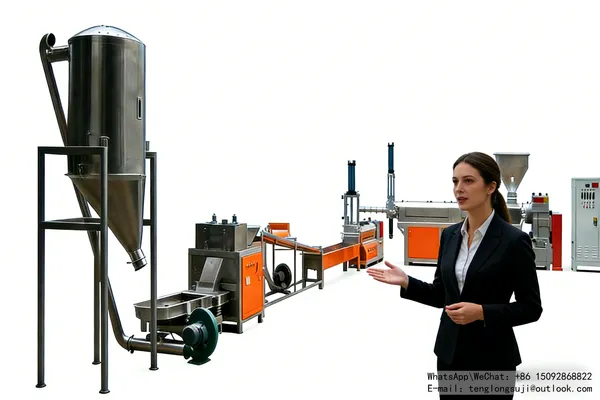
We provided U Than Htay with a TL-1000 full-automatic Plastic Recycling Machine, customized for Yangon’s mixed waste plastics and adapted to the local voltage environment. The specific configuration and solutions are as follows:
- An automatic sorting system that separates different plastics (PP, PE, PET) and removes metal, paper, and other impurities, reducing manual sorting by 80%.
- Integrated crushing, cleaning, drying, and granulating functions, enabling one-stop processing of mixed waste plastics without the need for separate equipment.
- A voltage stabilization module that operates normally between 220V-380V, adapting to Yangon’s unstable power supply.
- A wastewater treatment system that purifies cleaning wastewater, meeting local environmental discharge standards.
- Free technical training for 10 of his workers to ensure proficient operation, plus 1 year of free maintenance.
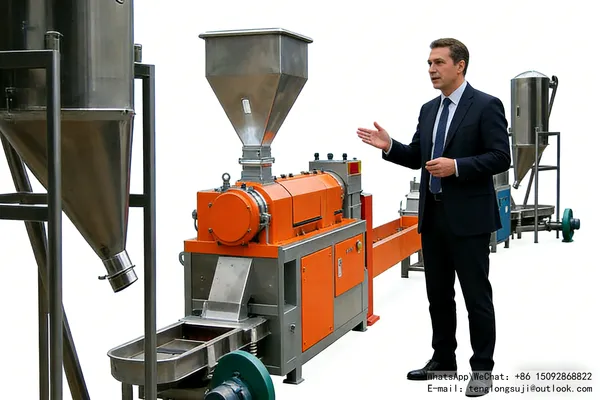
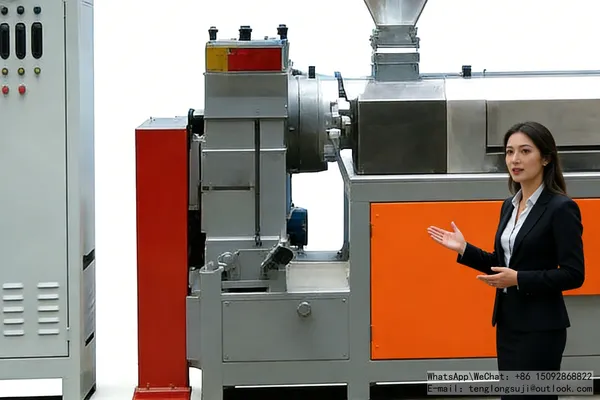
Plastic Recycling Machine
The Results
After 6 months of operation, the Plastic Recycling Machine transformed U Than Htay’s factory. Daily processing capacity increased from 3 tons to 8 tons—a 167% rise. Labor costs dropped by 40%, saving about 500,000 Kyats (around 190 US dollars) monthly. The recycled plastic particles now have uniform quality, and their selling price has increased by 30%. The wastewater treatment system passed local environmental inspections, eliminating penalty risks. Furthermore, he expanded his business to supply recycled plastic particles to neighboring countries like Thailand and Malaysia via Yangon Port, boosting his annual income by 1.2 million US dollars. “This Plastic Recycling Machine has completely changed the way I do business—it’s fully automatic, saves labor, and is environmentally friendly. It’s the best investment I’ve ever made,” U Than Htay stated.
FAQ
Q1: Can this Plastic Recycling Machine separate different types of mixed waste plastics? A1: Yes, the automatic sorting system effectively separates PP, PE, PET, and other plastics with 98% sorting accuracy.
Q2: Does the equipment require special voltage? A2: No, the built-in voltage stabilization module adapts to Yangon’s 220V-380V voltage.
If you run a mixed waste plastic recycling business in Yangon, what’s your biggest challenge? Share your experience below!