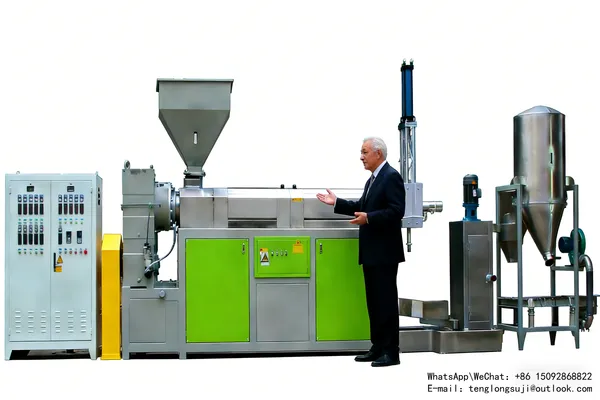
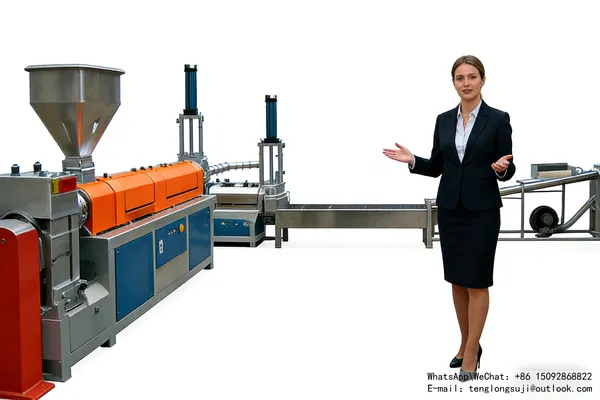
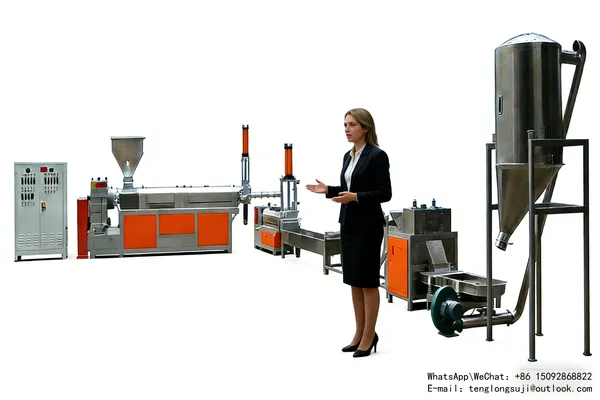
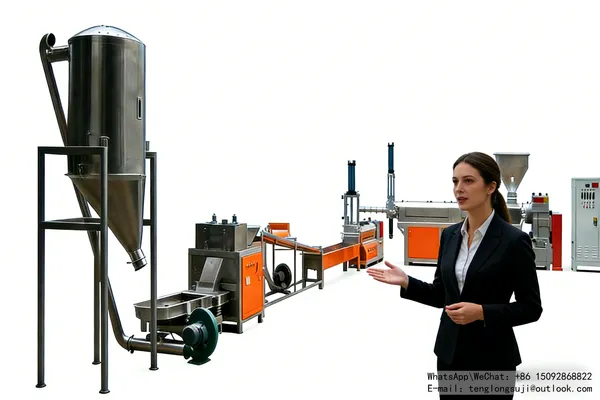
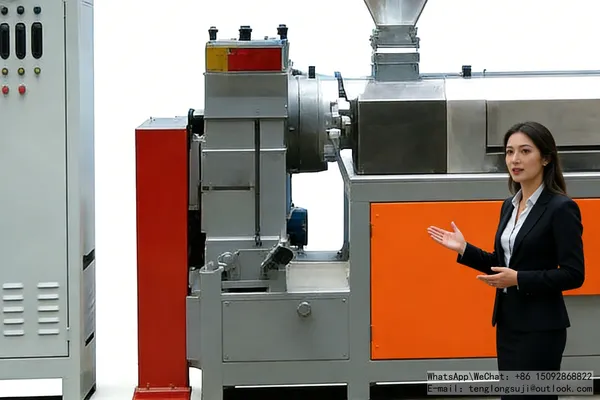
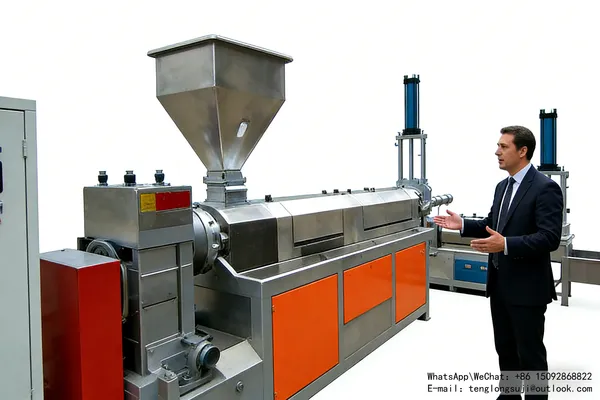
Background: Mr. Adi, a 40-year-old vocational school graduate, runs a small plastic recycling workshop in Bandung, West Java. With 5 employees, his workshop primarily processes LDPE plastic films from local textile factories and agricultural greenhouses—West Java’s textile industry accounts for 35% of Indonesia’s total textile exports, generating substantial plastic film waste. Mr. Adi started his business in 2018 to support his family and contribute to reducing plastic pollution in West Java’s rural areas. However, his old Plastic granulator was noisy and inefficient, making it difficult to expand his operations with the existing Plastic granulator.

Plastic Granulator
The Challenge
Mr. Adi faced three main obstacles. First, his old Plastic granulator lacked noise reduction features, producing 95 dB of noise during operation—exceeding West Java’s local noise limit of 75 dB. This led to complaints from nearby residents and the risk of his workshop being shut down due to the noisy equipment. Second, the equipment struggled to handle thin LDPE films; the lightweight material caused feeding difficulties, resulting in a low output of 150 kg/h. Third, the single vacuum exhaust system failed to remove ink volatiles from printed LDPE films, leading to black spots in the granules, which could only be sold at low prices (4,000 IDR/kg). Unable to afford expensive imported equipment, he needed a cost-effective small-scale Plastic granulator suitable for his workshop.
The Solution: We customized a TL-100 Plastic granulator for Mr. Adi’s small workshop, optimized for West Java’s LDPE film waste and local noise regulations: •A full-body sound insulation cover, reducing the equipment’s noise to 70 dB—complying with West Java’s local noise standards and eliminating resident complaints with its low-noise design. •An automatic feeding system with adjustable speed, solving the problem of lightweight LDPE film feeding difficulties and ensuring stable, consistent feeding. •A dual vacuum exhaust system, effectively removing ink volatiles and impurities from printed LDPE films to eliminate black spots in the granules. •A compact structure, ideal for small workshops, with a total power of 30 kW to save electricity costs for small-scale operations. •An affordable price point with a 1-year warranty, plus our after-sales team provides on-site maintenance in Bandung within 24 hours. We also provided Mr. Adi with technical guidance on raw material pre-processing, helping him improve the quality of LDPE film waste and further boost output.
The Results: After 2 months of operation, the TL-100 Plastic granulator transformed Mr. Adi’s workshop: 1. Noise was reduced to 70 dB, eliminating resident complaints and ensuring stable workshop operation with its low-noise performance. 2. Feeding efficiency improved by 80%, increasing output from 150 kg/h to 320 kg/h—doubling daily production. 3. 98% of the granules were free of black spots, meeting plastic film production standards and allowing him to raise the selling price to 6,800 IDR/kg, increasing monthly profit by 3,400,000 IDR. 4. The equipment is easy to operate and maintain, reducing maintenance costs by 40% compared to his old machine. “This equipment is quiet, efficient, and affordable—it’s perfect for small workshops like mine. I can now expand my business and hire more local workers,” said Mr. Adi.
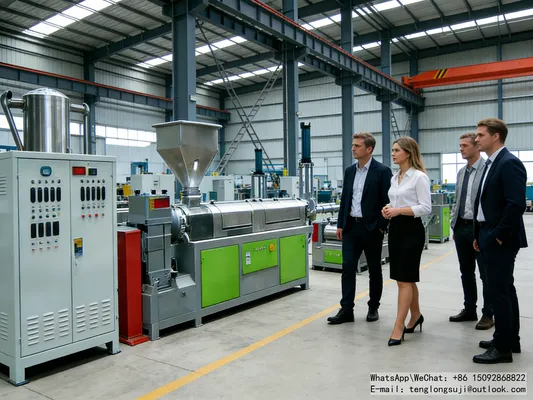
Plastic Granulator
FAQ: Q1: Is this Plastic granulator suitable for small workshops in West Java? A1: Yes, its compact design, small footprint, and low power consumption make it ideal for small-scale operations with 5-10 employees. Q2: Can it process thin LDPE films from textile factories? A2: Yes, the automatic feeding system is specifically designed for lightweight materials, ensuring smooth feeding and stable production. Q3: How often does it require maintenance? A3: Regular maintenance is needed every 3 months, and our after-sales team will remind you and provide on-site service.
If you have a small plastic recycling workshop in West Java and struggle with noisy equipment or feeding difficulties, let us know in the comments!