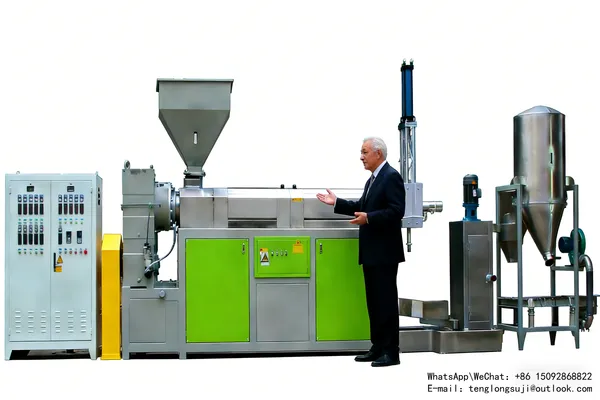
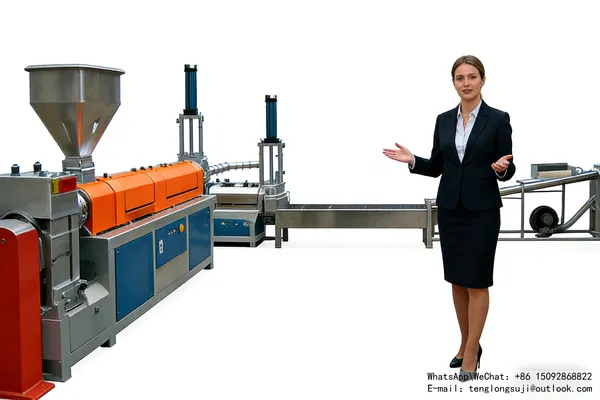
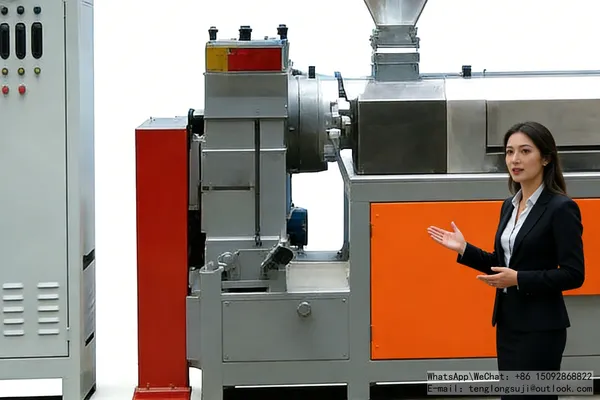
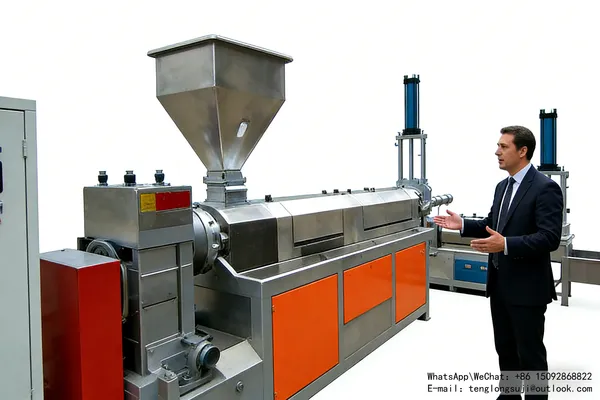
Background: Mr. Rudi, a 45-year-old high school graduate with 15 years of experience in the plastic recycling industry, operates a large-scale recycling plant in East Jakarta. His facility processes 10 tons of mixed plastic waste daily—including PET bottles, HDPE containers, and plastic films—collected from local communities and shopping malls. As Jakarta’s government tightens plastic waste management (with a target of 80% solid waste management by 2024), Mr. Rudi needed a comprehensive Plastic Recycling Machine to replace his outdated, fragmented equipment, which struggled to process mixed materials efficiently.

Plastic Recycling Machine
The Challenge: Mr. Rudi’s biggest hurdle was processing mixed plastic waste, which often contained impurities and various polymer types. His old equipment required manual sorting, which took 8 workers 6 hours a day and still resulted in 10% of the material being wasted. Second, the traditional equipment lacked an efficient cleaning system, leading to impure recycled materials that could only be sold at low prices (3,500 IDR/kg). Third, the equipment suffered frequent breakdowns, with an average of 5 downtime days per month, causing significant production losses. Additionally, Jakarta’s strict environmental regulations mandate zero wastewater discharge— a requirement his old cleaning system could not meet. He tested machines from two other suppliers but found they were not optimized for Indonesia’s mixed plastic waste and lacked reliable after-sales service.
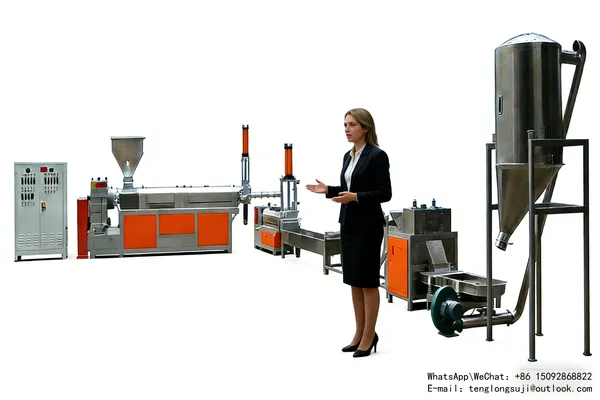
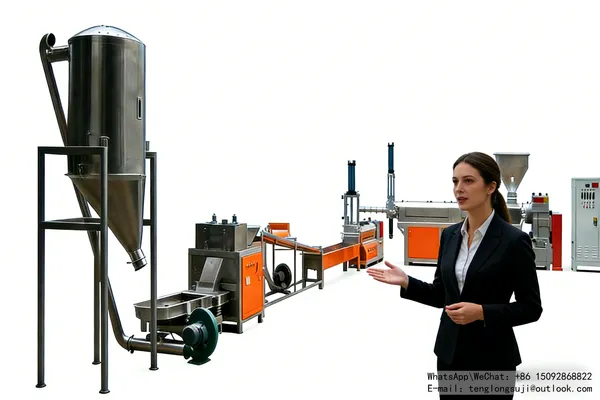
The Solution: We provided a complete TL-800 Plastic Recycling Machine, integrated with sorting, cleaning, crushing, and granulating functions, tailored to the characteristics of Jakarta’s mixed plastic waste: •An automatic sorting system with an infrared sensor, which separates PET, HDPE, and PP plastics automatically—reducing manual sorting from 8 workers to 2 and saving 75% of labor costs. •A high-pressure cleaning system with a circulating water design, achieving zero wastewater discharge and complying with Jakarta’s environmental regulations. •A heavy-duty crusher with wear-resistant blades, capable of crushing plastic waste of various sizes and reducing material waste to just 2%. •An integrated control panel, allowing one worker to operate the entire recycling process, with real-time equipment status monitoring to minimize breakdowns. •A customized storage and transportation system, adapted to Jakarta’s high waste volume and ensuring smooth material flow from collection to granulation. Our team trained 10 of Mr. Rudi’s staff on operation, established a regular maintenance schedule to prevent breakdowns, and assisted him in applying for environmental certification—helping him qualify for government subsidies for plastic recycling.

Plastic Recycling Machine
The Results: Since the Plastic Recycling Machine was put into use, Mr. Rudi’s plant has achieved impressive results: 1. Manual sorting time was reduced by 70%, and daily processing capacity increased from 10 tons to 18 tons. 2. Material waste dropped from 10% to 2%, saving 800 kg of mixed plastic waste daily. 3. Recycled material purity rose to 98%, allowing him to sell at 6,000 IDR/kg—an increase of 71.4% per kg in profit. 4. Downtime was reduced to 0.5 days per month, adding 54 production days annually. 5. The zero-wastewater system helped him secure monthly government subsidies of 15,000,000 IDR. “This equipment is reliable and efficient; it solved my biggest pain points of sorting and cleaning mixed plastic waste. Now my plant runs smoothly, and profits have increased significantly,” Mr. Rudi commented.
FAQ: Q1: Can this Plastic Recycling Machine handle mixed plastic waste with impurities? A1: Yes, it features a multi-stage cleaning and sorting system that effectively removes impurities (such as metal and paper) and separates different plastic types. Q2: How much water does the cleaning system consume? A2: It uses a circulating water system, consuming only 500 liters of water per ton of plastic with zero wastewater discharge. Q3: What is the service life of the crusher blades? A3: The wear-resistant blades have an 8-month service life, and we offer spare blades at a preferential price for long-term cooperation.
If you operate a large-scale plastic recycling plant in Jakarta and struggle with mixed plastic waste processing, leave a comment and we will help you find a solution!