Background: Ms. Priya Sharma, a 38-year-old female entrepreneur with a bachelor’s degree in environmental management, launched her plastic recycling venture in Bangalore in 2021. Her 750-square-meter small-scale workshop, staffed by 11 local workers, is strategically located near Electronic City—Bangalore’s tech hub—where massive volumes of plastic packaging waste from electronic component shipments are generated. Initially focusing solely on collecting and sorting waste plastics, Ms. Priya expanded her operations after India’s 2022 Plastic Waste Management Amendment Act tightened disposal regulations, investing in a Plastic granulator to convert waste plastic films and bags into high-quality recycled particles. With Bangalore’s tech sector booming, her raw material supply remains stable, and she is committed to supporting the city’s “Green Bangalore” initiative, leveraging the efficiency of her Plastic granulator to drive sustainable recycling.

Plastic granulator
The Challenge
Ms. Priya encountered three critical hurdles in her operations. First, the waste plastic films and bags from Electronic City had a high moisture content (up to 14%) due to Bangalore’s frequent monsoon rains, which caused air bubbles in recycled particles and resulted in a low qualification rate of just 68%. Second, the traditional Plastic granulator she initially tested had a low processing efficiency of 220kg/h, unable to keep up with her daily raw material collection of 5 tons. Third, the equipment was energy-intensive, and Bangalore’s frequent power outages forced her to rely on generators—boosting operating costs by 25%. Unlike other suppliers, Ms. Priya prioritized reliable after-sales support, as local vendors often failed to provide timely technical assistance, leading to costly production downtime. She also needed a machine that complied with Karnataka’s strict emission standards to avoid penalties.
The Solution
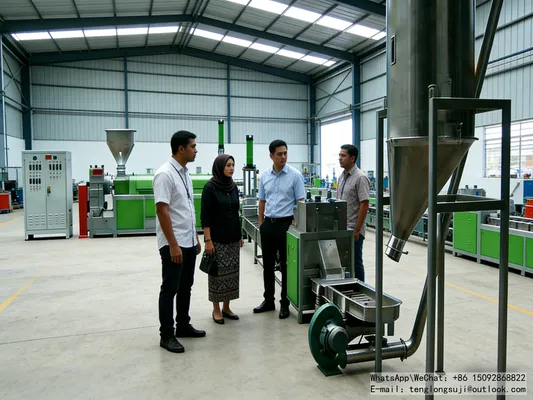
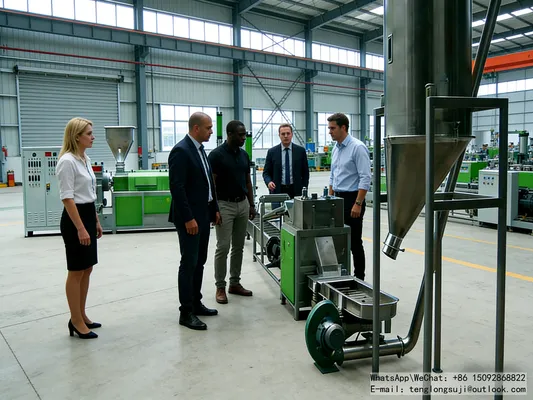
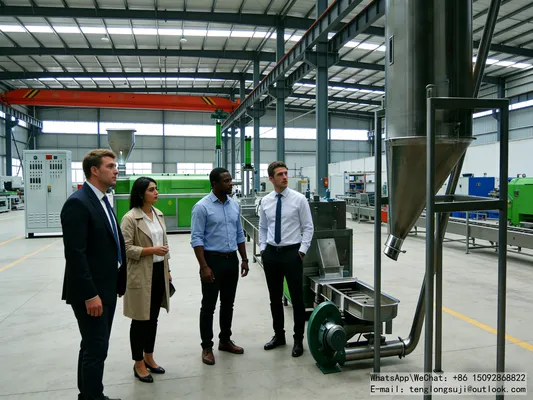
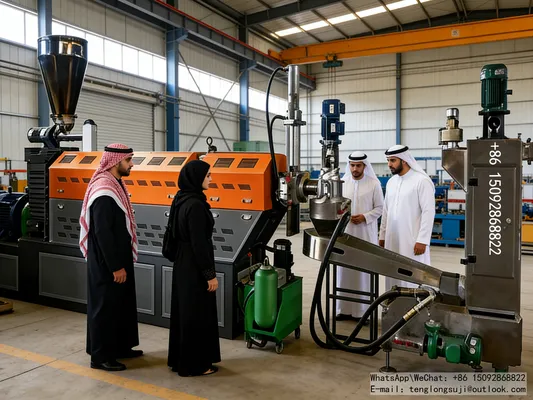
We provided Ms. Priya with a custom TL-320 high-efficiency Plastic granulator, tailored to Bangalore’s monsoon climate and the unique needs of electronic industry waste. The specific configuration includes:
- A high-efficiency drying system with a thermal sensor, reducing raw material moisture content to below 3% and completely eliminating air bubbles in recycled particles.
- A screw with a length-diameter ratio (L/D Ratio) of 1:34, enhancing plasticization and increasing production efficiency to 480kg/h.
- An energy-saving electromagnetic heating system, cutting unit energy consumption by 22% and reducing generator usage costs.
- A built-in voltage stabilization module, ensuring stable operation even during Bangalore’s power fluctuations (180V-400V).
- 24/7 online technical support and on-site maintenance within 36 hours in Bangalore, plus free training for 5 workers to ensure seamless operation.
The Results
After 4 months of operation, the Plastic granulator delivered exceptional results for Ms. Priya’s workshop. Production capacity surged from 220kg/h to 480kg/h—a 118% improvement—allowing her to process all daily collected raw materials. The product qualification rate rose to 98%, with the PP/PE particles being transparent and impurity-free, suitable for direct use in electronic packaging production. Unit energy consumption decreased by 22%, saving approximately 45,000 Indian Rupees (INR) monthly in electricity and generator costs. The equipment’s stable performance helped her secure long-term supply contracts with 2 local electronic packaging companies, boosting her monthly income by 75% (from 1.2 lakh INR to 2.1 lakh INR). “This Plastic granulator is a game-changer for my business—it’s efficient, energy-saving, and the after-sales support is unmatched. I no longer worry about power outages or product quality,” Ms. Priya said proudly. Her business was also recognized by the Karnataka government for its contribution to plastic waste reduction, qualifying for a monthly environmental subsidy of 15,000 INR, all thanks to the reliable performance of her Plastic granulator.
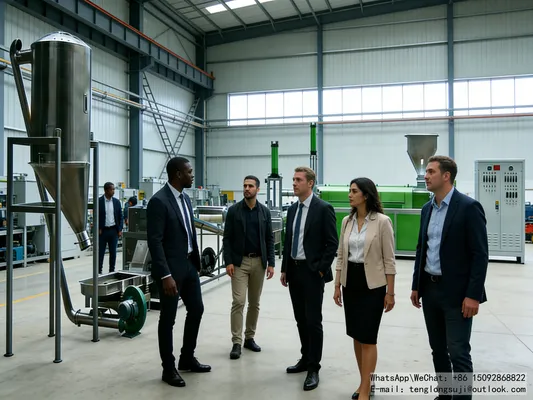
Plastic granulator
FAQ
Q1: Can this Plastic granulator handle wet plastic films from Bangalore’s monsoons? A1: Yes, the built-in high-efficiency drying system can process raw materials with up to 15% moisture content, completely eliminating air bubbles.
Q2: Is the equipment suitable for areas with frequent power outages? A2: Yes, the voltage stabilization module allows stable operation between 180V-400V, adapting to Bangalore’s power fluctuations.
If you operate a plastic recycling workshop near Bangalore’s tech hubs, have you faced issues with wet raw materials or power instability? How did you resolve them? Leave your comment below!