Background: Mr. Ravi Kumar, a 45-year-old male with a diploma in mechanical engineering, brings 12 years of plastic recycling experience to his venture. In 2023, he invested 80 lakh INR to establish a 1,800-square-meter medium-sized recycling factory in Bangalore’s Peenya Industrial Area, employing 28 workers. As Bangalore’s tech industry thrives, the city generates massive volumes of mixed electronic waste plastics—including plastic casings, keyboard keys, and packaging materials (PP, PE, PET mixed with metal and paper impurities). Mr. Ravi noticed local recycling workshops relied on manual sorting, which was inefficient and costly, so he decided to invest in a full-automatic Plastic Recycling Machine to achieve one-stop sorting, crushing, cleaning, and granulating—aligning with India’s goal of 50% plastic waste recycling by 2030, and streamlining operations with the Plastic Recycling Machine.
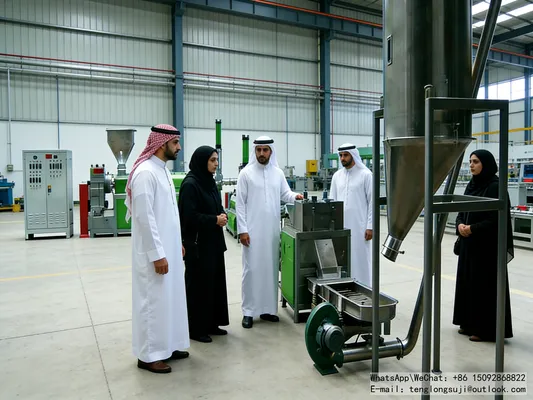
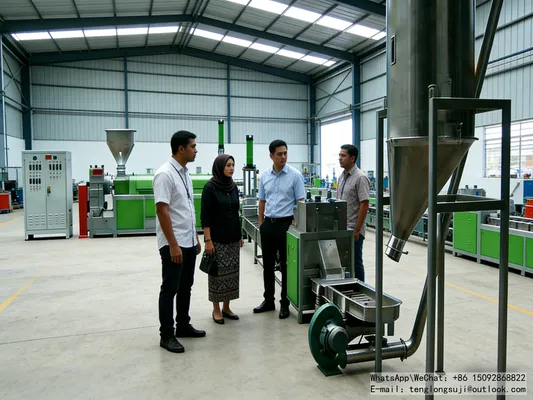
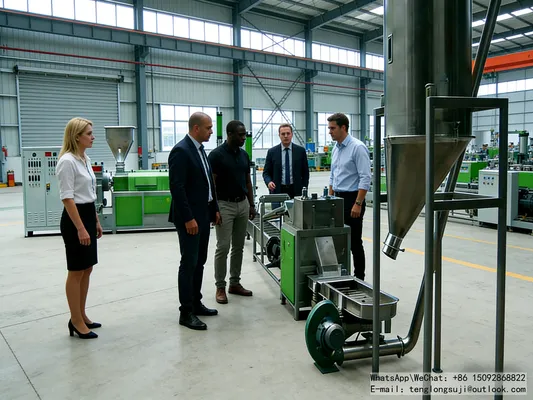
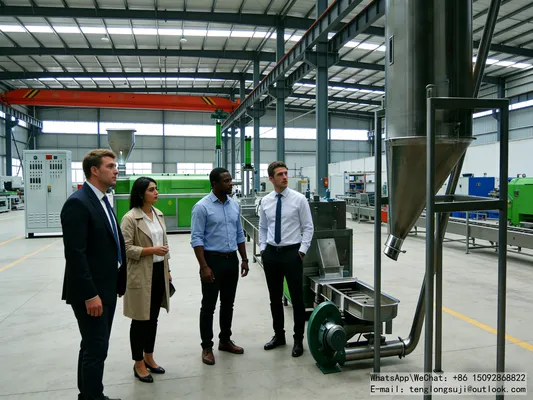
Plastic Recycling Machine
The Challenge
Mr. Ravi’s primary challenges centered on handling mixed electronic waste plastics and complying with environmental regulations. First, manual sorting of mixed plastics and impurities accounted for 45% of his labor costs, with a sorting accuracy of only 75%—leading to poor particle quality. Second, traditional manual processing had a daily capacity of just 4 tons, unable to meet his 10-ton daily raw material collection. Third, wastewater from the cleaning process contained plastic residues and ink, failing to meet Karnataka’s environmental discharge standards and putting him at risk of a 5 lakh INR penalty. Additionally, electronic waste plastics have high viscosity, and traditional equipment struggled with plasticization, resulting in uneven particles that could only be sold at low prices.
The Solution
We provided Mr. Ravi with a TL-1200 full-automatic Plastic Recycling Machine, customized for Bangalore’s mixed electronic waste plastics and local environmental standards. The specific configuration and solutions are as follows:
- An intelligent automatic sorting system with metal detectors and optical sensors, separating PP, PE, PET plastics and removing metal/paper impurities—reducing manual sorting by 85% and boosting accuracy to 99%.
- Integrated crushing, cleaning, drying, and granulating functions, enabling one-stop processing and saving 30% of workshop space.
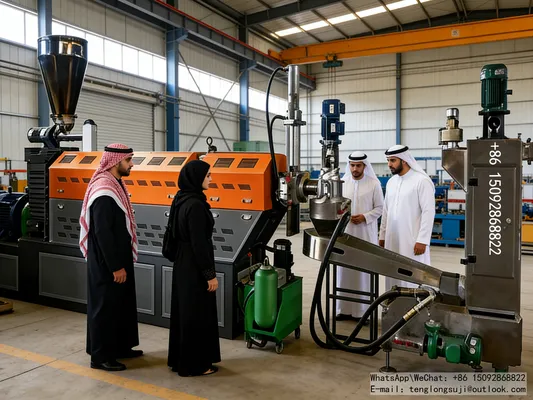
- A dual-position vacuum exhaust system, removing volatile substances from high-viscosity electronic plastic waste to improve particle plasticization and uniformity.
- A wastewater treatment system that filters and purifies cleaning wastewater, meeting Karnataka’s Class A discharge standards (BOD < 30 mg/L).
- Free technical training for 10 workers, 1 year of free maintenance, and on-site troubleshooting within 24 hours in Bangalore.

Plastic Recycling Machine
The Results
After 6 months of operation, the Plastic Recycling Machine transformed Mr. Ravi’s factory. Daily processing capacity increased from 4 tons to 11 tons—a 175% rise—allowing him to process all collected raw materials and accept additional orders. Labor costs dropped by 45%, saving 90,000 INR monthly. The recycled particles had a 97% qualification rate, with their selling price increasing by 35% (from 45 INR/kg to 61 INR/kg). The wastewater treatment system passed local environmental inspections, eliminating penalty risks. Mr. Ravi expanded his business to supply recycled particles to 3 local electronic component manufacturers, increasing his annual income by 12 lakh INR. “This Plastic Recycling Machine has revolutionized my business—it’s fully automatic, environmentally friendly, and produces high-quality particles. It’s the best investment I’ve ever made,” Mr. Ravi stated. His factory was recently certified as a “Green Recycling Unit” by the Bangalore Municipal Corporation, a testament to the efficiency of the Plastic Recycling Machine.
FAQ
Q1: Can this Plastic Recycling Machine separate mixed electronic waste plastics? A1: Yes, the intelligent sorting system separates PP, PE, PET with 99% accuracy and removes metal/paper impurities effectively.
Q2: Does the equipment meet Karnataka’s environmental standards? A2: Yes, the wastewater treatment system ensures compliance with Class A discharge standards, avoiding environmental penalties.
If you process mixed electronic waste plastics in Bangalore, what’s your biggest challenge—sorting efficiency or environmental compliance? Share your experience below!