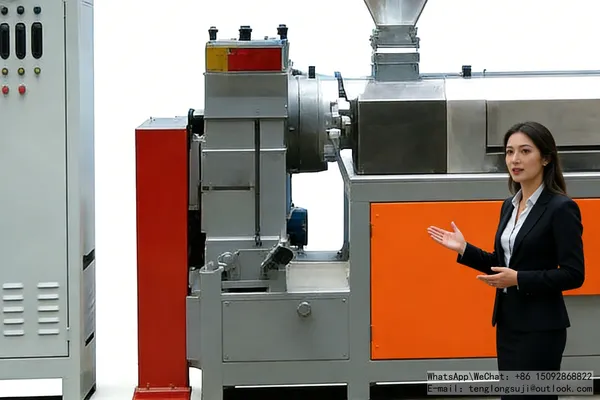
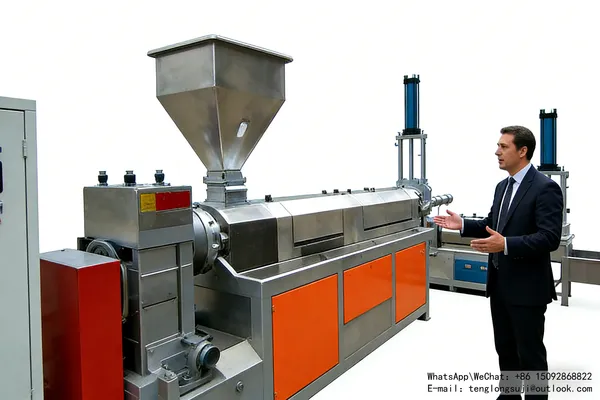
Background: Ms. Priya Shah, a college-educated textile engineer from Ahmedabad, Gujarat, started a recycling business in 2023. With Gujarat being a major textile hub and Loop Industries building a rPET factory in the state, she saw an opportunity to recycle textile plastic waste (polyester fabric scraps, plastic threads, and packaging) into recycled plastic for the textile and packaging industries. Her medium-sized factory (600 sq.m) employs 15 workers and partners with local textile mills to collect waste materials. Priya’s experience in textile manufacturing helped her understand the specific needs of textile plastic waste processing, but she struggled with outdated equipment that couldn’t handle fiber impurities.
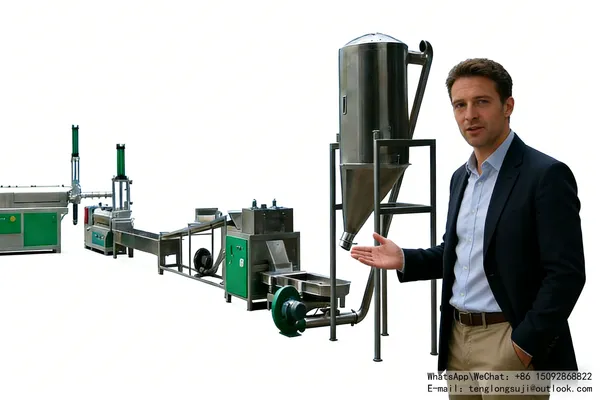
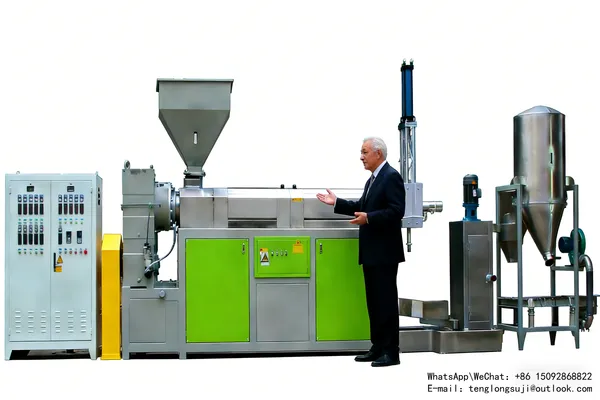
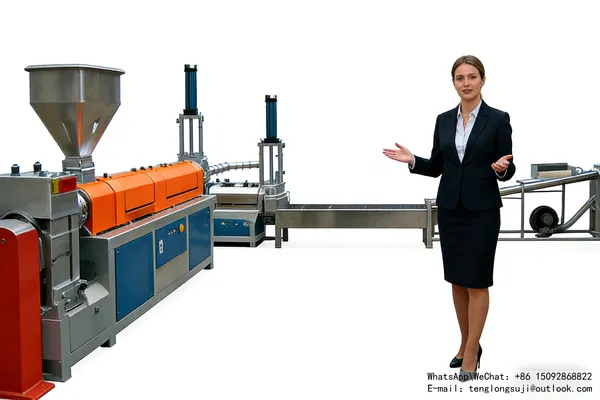
Plastic Recycling Machine
The Challenge
Priya faced two major challenges with her existing Plastic Recycling Machine: first, it could not process textile plastic waste with fiber impurities, leading to tangled screws and frequent breakdowns (3-4 times per week). Second, thePlastic Machine’s low melting efficiency resulted in uneven granulation, with 18% of the output being unfit for textile applications. Additionally, the Recycling Machine consumed high energy (15 kWh per tonne), increasing operational costs. Compared to other suppliers, our Plastic Recycling Machine offered a specialized fiber separation system and energy-efficient design, which addressed her pain points.
She also needed to align with India’s goal of increasing recycled material use in plastic packaging by 2025, ensuring her products met the required standards.
The Solution
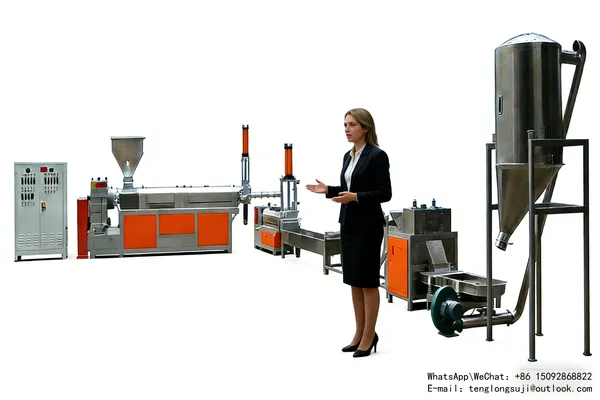
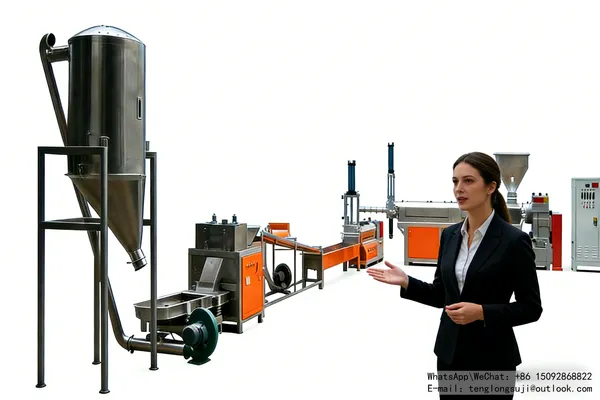
We provided an integrated Plastic Recycling Machine (Model: TL-R1800) tailored for textile plastic waste, with the following configuration:
- Specialized fiber separation system, removing 99% of fiber impurities from textile plastic waste, preventing screw tangling and breakdowns.
- Energy-efficient motor (11 kWh per tonne), reducing energy consumption by 27% compared to her old machine.
- High-efficiency melting system with dual heating zones, ensuring uniform granulation and reducing unqualified products to below 2%.
- PLC automatic control with touchscreen interface, allowing easy operation and real-time monitoring of production parameters.
- Customized after-sales service: quarterly maintenance, technical support, and training for workers to handle textile plastic waste.
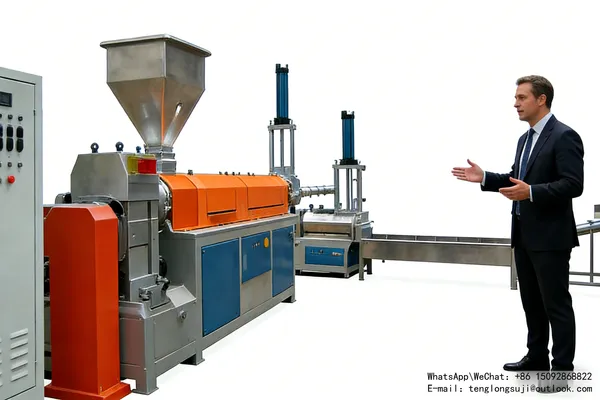
Plastic Recycling Machine
The Results
After 7 months of operation, Priya’s business thrived: the Plastic Recycling Machine reduced breakdowns from 3-4 times per week to once every 2 months, saving 15,000 INR monthly on maintenance. Energy consumption decreased by 27%, saving 22,000 INR monthly on electricity bills. Daily production capacity increased from 4 tonnes to 9 tonnes, allowing her to partner with 3 more textile mills in Gujarat. The recycled granules, produced by theRecycling Machine, are now used in textile threads and packaging materials, with a profit margin of 35%—up from 18% before. She also received a grant from the local government for promoting sustainable recycling in the textile industry with her Plastic Recycling Machine.
Customer Quote: “This Plastic Machine is perfect for textile plastic waste! It separates fibers effectively, is energy-efficient, and produces uniform granules that meet my customers’ needs. It has helped me grow my business and contribute to Gujarat’s sustainable textile industry.”
FAQ
Q1: Can this Plastic Recycling Machine process all types of textile plastic waste? A1: Yes, it can handle polyester fabric scraps, plastic threads, and textile packaging waste, making it ideal for Gujarat’s textile industry.
Q2: How much time does it take to process 1 tonne of textile plastic waste? A2: The machine processes 1 tonne of textile plastic waste in 1 hour, ensuring high efficiency for medium-sized factories.
If you’re in the textile industry in Gujarat, how do you handle plastic waste from your mills? Share your experience below!