Author: Sarah Johnson | Plastic Processing Equipment Engineer | Published: April 3, 2026 | Technical Whitepaper: Available upon Request
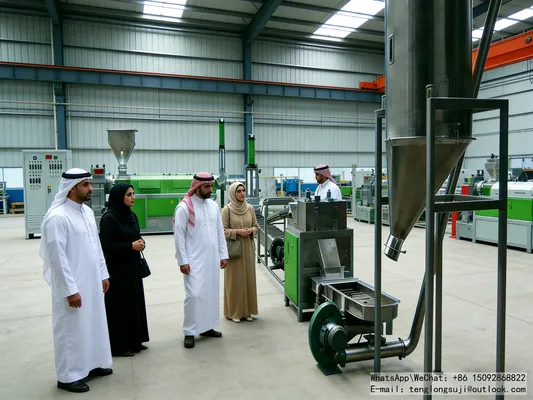
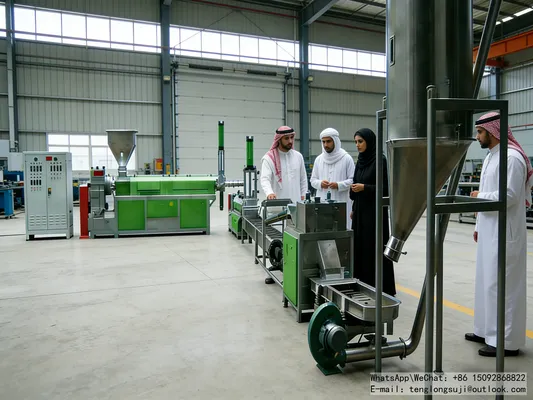
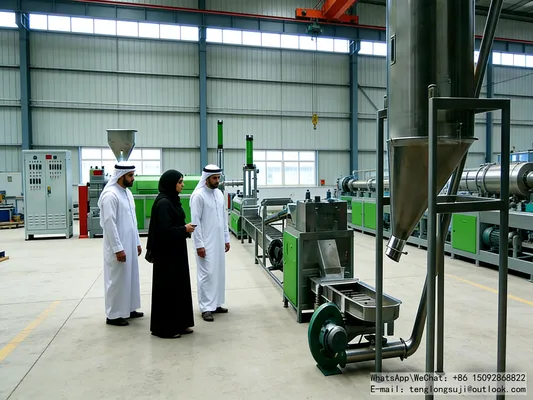
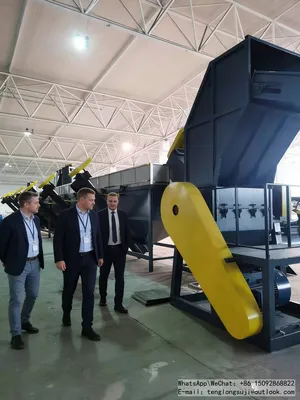
PE granulator
Designed specifically for the US market, this compact PE granulator is the perfect solution for small-scale recycling businesses, plastic product factories (for in-house scrap recycling), and laboratories. As a space-saving pelletizer, it fits seamlessly into tight workshops and lab environments while delivering reliable, consistent performance. Compliant with FDA standards (for food-grade PE recycling) and UL certified, it meets the strict safety and environmental regulations of the US market. This model specializes in processing small volumes of PE waste—including HDPE bottle scraps, LDPE film trimmings, and PE injection molding scrap—converting them into high-purity regrind that can be reused directly in production. Its precision cutting system ensures uniform granule size, making it ideal for applications requiring consistent material quality, such as food packaging and medical device components.
Why It Matters: Solve Your Small-Scale PE Recycling Pain Points
US small-scale recycling businesses and laboratories face unique challenges: limited space, strict quality requirements, and the need for compact, easy-to-operate equipment. This PE granulator delivers targeted solutions to these challenges:
- Space-Saving Design: With a compact footprint of 1200×800×1500 mm, it fits easily into small workshops and laboratories, saving 40% of floor space compared to standard granulators. Its lightweight design (500 kg) allows for easy movement, making it flexible for different workspaces.
- FDA-Compliant Quality: Constructed with food-grade stainless steel contact parts, it produces regrind suitable for food packaging and medical device applications. Tested and certified by the FDA, it ensures no contamination of recycled materials, meeting the strictest US quality standards.
- Precision & Consistency: Equipped with an adjustable screen mesh (1-5 mm) and high-speed rotor (1200 rpm), it produces uniform granules with a size deviation of ≤0.5 mm, meeting the strict quality requirements of US plastic product factories and laboratories.
- Easy Operation & Safety: Features a UL-certified electrical system, emergency stop button, and safety interlock to prevent accidents. The simple touch screen control requires no professional training, making it ideal for small teams and laboratory staff.

PE granulator
Technical Specifications (Data Points)
| Specification | Value |
| Specification | Value |
| Motor Power | 15 kW (UL certified, energy-saving) |
| Rotor Diameter | 180 mm |
| Number of Blades | 4 pcs (stainless steel, food-grade) |
| Screen Mesh Size | 1-5 mm (customizable, precision mesh) |
| Output Capacity | 50-100 kg/h |
| Voltage | 220V/1Phase or 480V/3Phase (US standard) |
| Certifications | FDA, UL, ISO 9001 |
FAQ: Answers to Your Key Questions
Q1: Is this PE granulator suitable for laboratory use?
A1: Yes. Its compact size, low noise (≤65dB), and precision control make it perfect for laboratory use. It can process small batches of PE waste (50-100 kg/h) for research and development, ensuring consistent granule quality for testing and prototype production.
Q2: Can it recycle food-grade PE waste?
A2: Yes. It is fully FDA-compliant, with food-grade stainless steel contact parts. It can safely recycle food-grade HDPE/LDPE waste (e.g., beverage bottle scraps) into regrind that meets US food packaging standards, ensuring no contamination.
Q3: How to adjust the granule size?
A3: The granule size is easily adjustable by replacing the screen mesh (1-5 mm). The package includes 3 standard meshes (2mm, 3mm, 5mm), and custom meshes are available upon request. The intuitive touch screen control also allows for easy adjustment of rotor speed to further refine granule precision.
Q4: What is the difference between this compact model and standard PE granulators?
A4: This model is smaller (1200×800×1500 mm) and lighter (500 kg), designed specifically for small-scale use. It has a lower output (50-100 kg/h) but offers higher precision, making it ideal for small businesses and laboratories, while standard models are larger, higher-capacity, and designed for industrial-scale recycling.