Author: David Chen | Senior Plastic Recycling Equipment Engineer | Release Date: April 3, 2026 | Certifications: CE, ISO 9001, REACH | Technical White Paper: Download PP Film Recycling Quality Test Report

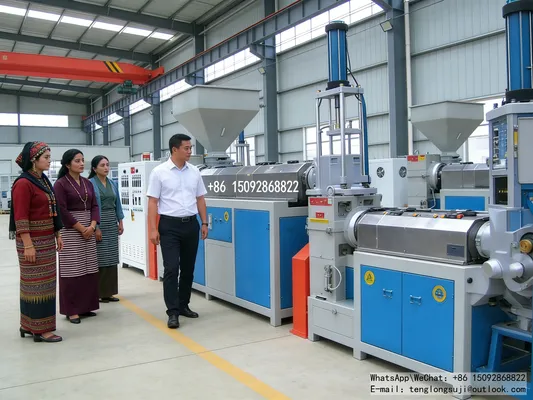
PP film recycling pelletizer
The European packaging industry generates massive volumes of PP film waste—including stretch film, greenhouse film, silage film, and packaging film—which is often difficult to recycle due to its flexibility and frequent contamination. Our automatic PP film recycling pelletizer is specifically designed to address this pain point, integrating film crushing, washing, drying, and pelletizing into a fully automated system. Optimized for processing PP film waste—even with printing ink or minor contamination—it produces high-quality pellets that meet European packaging standards (EN 13432). Fully compliant with PPWR regulations, this machine helps packaging companies achieve their circular economy goals, reduce waste disposal costs, and create additional revenue from recycled materials.
Why It Matters: Core Benefits for European Packaging Companies
European packaging companies face key challenges: high PP film waste disposal costs, strict environmental regulations, and the growing demand for sustainable practices. Our automatic PP film recycling pelletizer solves these problems, delivering significant value to your business:
- Specialized for PP Film:Equipped with a high-speed crusher and film-specific feeding system, it efficiently processes flexible PP film waste, avoiding jams and ensuring smooth, continuous operation. It can handle all types of PP film, including stretch film, greenhouse film, and printed packaging film.
- Fully Automated Washing & Drying:The integrated washing system removes printing ink, dirt, and moisture from the film, while the centrifugal dryer ensures the film is completely dry before pelletizing—improving pellet quality and reducing energy consumption during the melting process.
- High-Value Pellets:It produces uniform, clean PP pellets with a melting index of 3-6 g/10min, suitable for reprocessing into new packaging film, injection molding products, or composite materials. This allows you to reuse the pellets in your own production or sell them to other manufacturers, creating a new revenue stream.
- PPWR & REACH Compliant:It meets the EU’s PPWR requirements for real recycling effectiveness and recycled material content labeling, as well as REACH regulations for chemical safety—ensuring your recycled pellets are marketable and compliant across Europe.
PP film recycling pelletizer
Technical Parameters (Data Points)
| Parameter | Specification |
| Motor Power | 22-37 kW |
| Rotor Diameter | 160-180 mm |
| Number of Blades | 6-8 (tungsten steel) |
| Screen Mesh Size | 2-3 mm (adjustable) |
| Output Capacity | 80-150 kg/h |
| Heating Temperature | 185-225 ℃ |
| Power Supply | 380V/50Hz (European standard) |
FAQ: Answers to Your Most Common Questions
Q1: Can this machine process printed PP film?
A1: Yes. The washing system uses a combination of chemical and mechanical cleaning to remove printing ink, and the high-temperature melting process further eliminates residual ink—ensuring the pellets have a uniform color and meet European quality standards for recycled PP.
Q2: How much water does the washing system consume?
A2: The system uses 0.8-1.5 tons of water per ton of PP film, and the water can be recycled after treatment—reducing water consumption and minimizing your environmental impact while keeping operational costs low.
Q3: Can the pellets be used for food-grade packaging?
A3: Yes. If the input PP film is food-grade and the machine is properly cleaned, the recycled pellets can meet food-grade standards (EN 1090-1) and be safely used for food packaging applications.
Q4: What is the difference between this machine and a standard PP granulator?
A4: This machine is specialized for PP film, featuring a film-specific feeding system and integrated washing/drying capabilities, while standard granulators are designed for rigid PP waste. It avoids jams and ensures better pellet quality specifically for film recycling applications.