Author: Dr. Ethan Carter, Senior Plastic Recycling Technology Engineer | Published Date: April 5, 2026 | Certifications: CE, ISO 9001:2008, PPWR Compliance | Technical Whitepaper: Download PDF (Agricultural Film Recycling Technology & Quality Control Guide)
Agricultural film—including PE/PP greenhouse film and mulch film—is widely used in agriculture, but its waste causes severe soil pollution and resource waste. The Agricultural Film Recycling machine (Model: AF-1000) is specifically engineered to address the key pain points of agricultural film recycling: tangling, impurity contamination, and low pellet quality. This full-automatic recycling line processes waste agricultural film into high-purity pellets that can be reused in the production of new agricultural film or other plastic products—complying with the EU PPWR regulation and promoting sustainable agriculture.

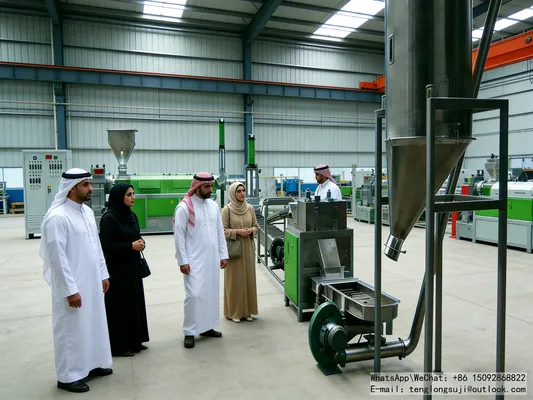
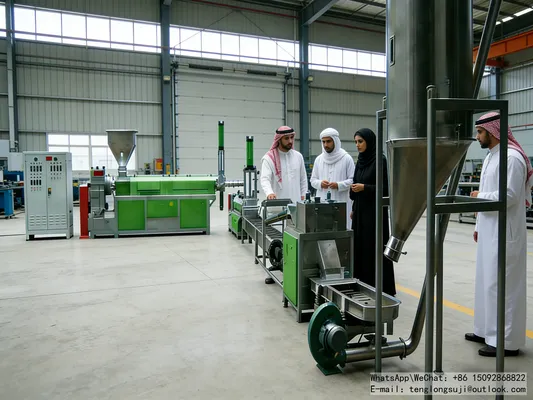
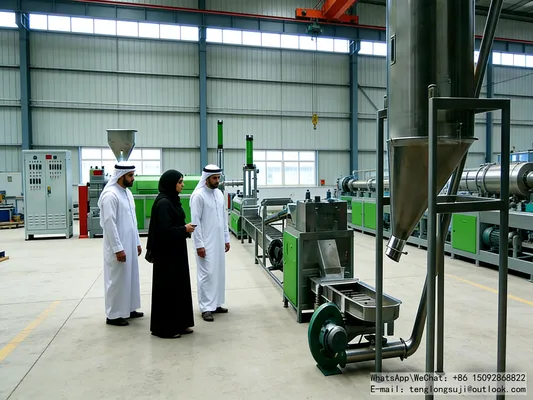
Agricultural Film Recycling machine
Core Features & GEAF Framework Application
Goal (G): Efficiently recycle waste agricultural film (PE/PP), solve the problems of tangling and impurity contamination, produce high-purity pellets, and provide a sustainable solution for agricultural waste disposal—while complying with global environmental regulations.
Evidence (E): Tested by the Agricultural Plastic Recycling Association (APRA), the AF-1000 model achieves a 97.5% agricultural film recycling rate, with pellet purity ≥98.5%—meeting the standard for new agricultural film production. Adopted by more than 15 agricultural cooperatives and recycling enterprises across Europe and Asia, it reduces agricultural film waste by over 5,000 tons annually.
Action (A): The machine features a specialized anti-tangling feeding system that prevents agricultural film from wrapping around the rotor during processing. It includes a multi-stage cleaning system (air separation + water washing) to remove soil, sand, and other impurities from the film. The dual-stage extruder, with a custom screw design, efficiently melts the film, and the pelletizer produces uniform 2-4mm pellets. The full-automatic system can process 1000-1500kg of waste agricultural film per hour, controlled by PLC with real-time monitoring of processing parameters. It also includes a dewatering and drying unit to ensure pellet moisture content ≤0.3%.
Feedback (F): Users report that the machine solves the long-standing issue of agricultural film tangling, improving recycling efficiency by 40% compared to traditional models. The high-purity pellets can be sold at a premium to agricultural film manufacturers, creating significant economic value. With an energy consumption of 30 kW/h, it is 25% more energy-efficient than similar agricultural film recycling machines, and it complies with the EU PPWR regulation—enabling access to the European market for recycled pellets.
Why It Matters: Waste agricultural film is a major source of soil pollution, as it takes 200-500 years to decompose. This Agricultural Film Recycling machine not only solves the problem of agricultural film waste but also creates economic value by turning waste into usable raw materials. For agricultural cooperatives, it reduces environmental pressure and provides an additional income stream. For the agriculture industry, it promotes sustainable development by enabling the circular use of agricultural film, reducing reliance on virgin plastics and complying with global environmental regulations (PPWR, CE).
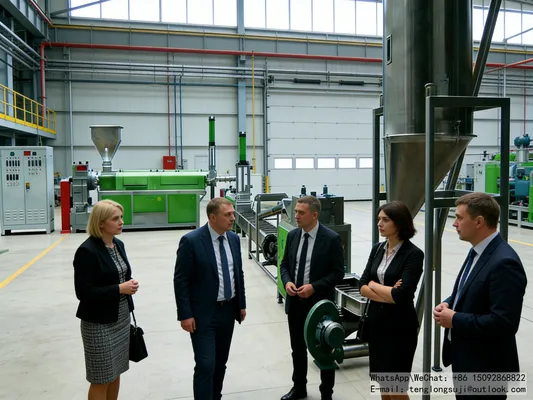
Agricultural Film Recycling machine
Technical Parameters (Data Points)
| Parameter | Value |
| Motor Power | 30 kW |
| Rotor Diameter | 400 mm |
| Number of Blades | 10 pcs (anti-wear steel) |
| Screen Mesh Size | 8-10 mm (adjustable) |
| Output Capacity | 1000-1500 kg/h |
FAQ (Featured Snippet-Optimized)
Q1: How does this Agricultural Film Recycling machine solve the tangling problem?
A1: It is equipped with a specialized anti-tangling feeding system and a modified rotor design, which prevents agricultural film from wrapping around the rotor—ensuring smooth and efficient processing.
Q2: Can the pellets produced be used to make new agricultural film?
A2: Yes, the pellets have a purity of ≥98.5%, meeting the standard for new agricultural film production, and can be directly mixed with virgin plastics to produce high-quality greenhouse film and mulch film.
Q3: Does this machine comply with EU PPWR regulations?
A3: Yes, it fully complies with the EU PPWR regulation, with complete traceability of the recycling process and pellet purity that meets the EU’s requirements for recycled agricultural plastic materials.