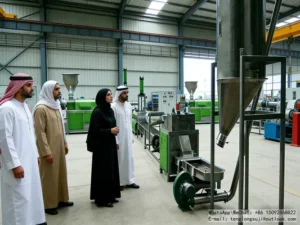
The global plastic pollution crisis continues to push governments and industries toward circular economy solutions, with PET bottle recycling emerging as a key focus in 2026. As the core equipment in plastic recycling, the Plastic Pelletizing Machine has undergone technological upgrades to meet the growing demand for high-purity, low-energy recycling. According to the 2026 Global Plastic Recycling Market Report, the demand for PET bottle recycling equipment is expected to grow by 28% year-on-year, with Plastic Pelletizing Machine accounting for 65% of the market share. This article explores how advanced pelletizing technology is optimizing PET recycling processes, complying with international regulations, and creating economic and environmental value for enterprises.
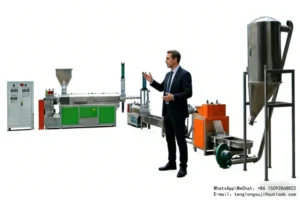
Plastic Pelletizing Machine
Key Upgrades of Plastic Pelletizing Machine for PET Bottle Recycling in 2026
PET bottle recycling requires strict control of impurity content and retention of material properties, which places high demands on the performance of Plastic Pelletizing Machine. In 2026, leading manufacturers have launched upgraded models with the following core advantages:
- High Decontamination Efficiency: Equipped with advanced centrifugal separators and pre-washing systems, the latest Plastic Pelletizing Machineachieves a decontamination efficiency of up to 99.2%, effectively removing labels, adhesives, and food residues from PET bottles, ensuring the purity of recycled pellets.
- Energy-Saving Technology: Integrated with heat recovery units, the new models reduce energy consumption by 18-22% compared to traditional equipment. For example, a medium-sized Plastic Pelletizing Machine(screw diameter 65mm) consumes only 38 kWh per ton of PET pellets, significantly lowering operational costs.
- Intelligent Control: Equipped with PLC control systems and real-time monitoring sensors, operators can adjust parameters such as melting temperature (250-270℃ for PET), screw speed (180-220 rpm), and pellet size (2-5mm) remotely, improving production stability and reducing human error.
- IV Retention Rate Optimization: The improved screw design and temperature control system ensure that the intrinsic viscosity (IV) retention rate of PET pellets reaches 92% or higher, meeting the requirements for reprocessing into food-grade packaging materials.
Compliance with International Policies: GRS and REACH Certification for Plastic Pelletizing Machine
In 2026, the EU’s updated SUP (Single-Use Plastics) Directive and GRS (Global Recycled Standard) 4.0 have raised the bar for recycled plastic products. To help enterprises meet export standards, modern Plastic Pelletizing Machine is designed to comply with these regulations:
The equipment adopts food-grade wear-resistant materials for the screw and barrel, avoiding secondary pollution during the pelletizing process. Additionally, the closed-loop production system reduces dust and exhaust emissions, meeting the REACH regulation’s requirements for harmful substance limits. Enterprises using qualified Plastic Pelletizing Machine can obtain GRS certification more easily, expanding their access to European and North American markets.
Economic Benefits: ROI Analysis of Plastic Pelletizing Machine for Small and Medium-Sized Recycling Enterprises
For small and medium-sized recycling businesses, investing in a Plastic Pelletizing Machine is a cost-effective way to improve profitability. Taking a small-scale PET bottle recycling project (daily processing capacity of 5 tons) as an example:
| Cost Item | Amount (USD/Month) |
| Equipment Investment (Amortized over 3 years) | 850 |
| Raw Material (PET Bottles) | 12,000 |
| Energy (Electricity + Water) | 1,200 |
| Labor (2 Operators) | 3,500 |
| Total Monthly Cost | 17,550 |
| Monthly Revenue (Recycled Pellets @ $1.8/kg) | 27,000 |
| Monthly Net Profit | 9,450 |
With a monthly net profit of $9,450, the investment in a small

Plastic Pelletizing Machine
can be recovered in approximately 14 months, demonstrating significant economic potential.
FAQ: Plastic Pelletizing Machine for PET Bottle Recycling
- Plastic Pelletizing MachineQ: What is the ideal screw diameter for a PET bottle recycling ?
A: For small-scale projects (2-5 tons/day), a 50-65mm screw diameter is suitable; for medium-scale (5-10 tons/day), 70-90mm; and for large-scale (10+ tons/day), 100-120mm. - Plastic Pelletizing MachineQ: How to maintain the to extend its service life?
A: Regularly clean the screw and barrel (every 8-10 hours of operation), check the lubrication system, and replace worn parts (such as the screw sleeve) every 6-8 months. Additionally, avoid processing materials with high impurity content to prevent equipment damage. - Plastic Pelletizing MachineQ: Can the process other plastics besides PET?
A: Yes, most models can be adjusted to process PP, PE, and HDPE by changing the screw design and temperature parameters. However, it is not recommended to mix different plastics in a single production batch to ensure pellet quality. - Plastic Pelletizing MachineQ: What is the melting index (MFI) range of pellets produced by a ?
A: For PET pellets, the MFI range is typically 1.5-3.0 g/10min (230℃, 2.16kg), which is suitable for reprocessing into bottles, fibers, and injection-molded products.