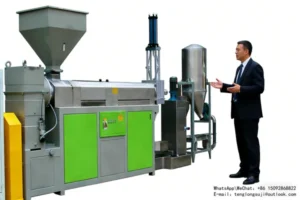
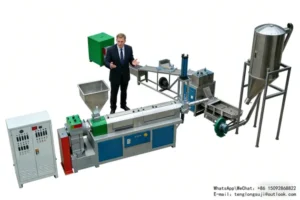
Mixed plastic waste is one of the biggest challenges in the recycling industry, accounting for 40% of all plastic waste globally. Traditional recycling equipment models struggle to process mixed plastics (e.g., PET, PP, PE, HDPE) efficiently, leading to low-quality pellets and high waste rates. However, 2026’s advanced solutions have overcome this challenge, enabling efficient processing of mixed plastic waste into high-value products. This article explores the latest technologies, benefits, and applications of advanced recycling equipment for mixed plastic waste.
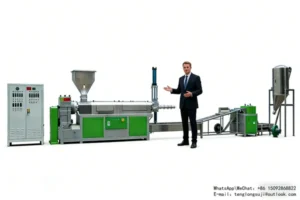
Plastic Recycling Machine
Advanced Mixed Plastic Waste Recycling Machine Technologies (Long-tail Keyword)
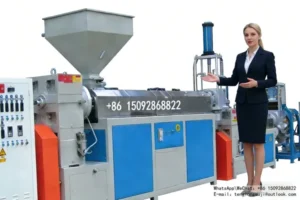
2026’s recycling equipment for mixed plastic waste integrates cutting-edge technologies to separate and process different plastic types, ensuring high pellet quality and operational efficiency. Advanced systems can now handle mixed plastics with unprecedented efficiency, turning what was once a liability into a valuable resource for recycling enterprises. Key technologies include:
- AI-Powered Sorting Systems:Use near-infrared (NIR) sensors and AI algorithms to identify and separate different plastic types with 99.5% accuracy—up from 95% in 2025 models. This ensures each plastic type is processed separately, maintaining pellet quality.
- Multi-Stage Crushing and Granulation:A two-stage crushing system breaks down mixed plastics into uniform flakes, while a dual-screw granulator processes different plastics at optimal temperatures and speeds. This reduces material degradation and improves pellet consistency.
- Chemical Compatibilization:Adds compatibilizers during granulation to improve the compatibility of mixed plastics, producing high-strength pellets suitable for automotive and construction applications. This expands the market for mixed plastic recycled products.
These technologies enable recycling equipment to process mixed plastic waste with a yield rate of 85-90%, compared to 60-70% for traditional models. Additionally, the pellets produced meet ISCC and REACH standards, making them suitable for high-value applications.
2026 Recycling Equipment for Mixed Plastics: Technical Specifications
| Model | Capacity (kg/h) | Sorting Accuracy | Yield Rate | Motor Power (kW) | Applicable Plastics |
| MR-500 | 300-500 | 99.5% | 85% | 37/45 | PET, PP, PE, HDPE |
| MR-1000 | 800-1000 | 99.8% | 90% | 90/110 | PET, PP, PE, HDPE, PVC |
Environmental and Economic Benefits of Mixed Plastic Recycling Equipment
Processing mixed plastic waste with advanced recycling equipment offers significant environmental and economic benefits:
- Environmental Impact:Reduces plastic waste sent to landfills and incineration by 85-90%, cutting carbon emissions by 65% compared to producing virgin plastics. This aligns with global net-zero goals and the EU’s circular economy initiative.
- Economic Benefits:Mixed plastic waste is cheaper than sorted waste (up to 30% lower cost), reducing feedstock costs for recycling enterprises. Additionally, the high-strength pellets produced can be sold at $0.80-$1.00 per kg, creating a new revenue stream.
- Policy Compliance:Meets the EU’s PPWR regulations, which require increased recycling of mixed plastics to meet 2030 targets. This enables enterprises to access EU grants and incentives for circular economy projects.
Applications of Recycled Mixed Plastics from 2026 Recycling Equipment
The pellets produced by advanced recycling equipment for mixed plastics have a wide range of high-value applications, perfectly aligning with 2026’s circular economy trends and industry demand, including:
- Automotive Industry:Used in the production of bumpers, dashboards, and interior components, as the high-strength pellets meet automotive industry standards.
- Construction Industry:Used to make plastic lumber, pipes, and insulation materials, offering a durable and sustainable alternative to traditional materials.
- Packaging Industry:Used in the production of non-food contact packaging, such as shipping boxes, plastic bags, and cosmetic packaging. The high-strength and cost-effective nature of these pellets makes them an ideal alternative to virgin plastics, helping packaging companies meet sustainability goals while reducing production costs.
- Textile Industry:Processed into recycled plastic fibers, which are blended with cotton or polyester to produce eco-friendly fabrics for clothing, carpets, and upholstery. This application is growing rapidly in 2026, driven by consumer demand for sustainable fashion and the textile industry’s carbon reduction commitments.
- Consumer Goods:Used to manufacture a wide range of consumer products, including toys, garden tools, and household appliances. The pellets’ durability and versatility make them suitable for injection molding and extrusion processes, enabling manufacturers to create high-quality, sustainable products at a lower cost.
How to Choose the Right Advanced Recycling Equipment for Mixed Plastic Waste
Selecting the optimal recycling equipment for mixed plastic waste requires a targeted approach, as not all advanced models are suited for every enterprise’s needs. In 2026, recycling businesses should focus on three core considerations to ensure the equipment aligns with their operational scale, budget, and market goals:
- Sorting System Compatibility:Prioritize models with AI-powered NIR sorting systems that can handle the specific mix of plastics in your feedstock. For example, if your waste stream includes PVC (a common contaminant), choose a machine with dedicated PVC detection and separation capabilities to avoid damaging the granulation system and ensure compliance with REACH standards.
- Scalability:Opt for modular recycling equipment designs that allow for future expansion. Small-to-medium enterprises (SMREs) can start with a MR-500 model (300-500 kg/h capacity) and add additional sorting or granulation modules as their waste input grows, avoiding the need for a full machine replacement.
Case Study: Large-Scale Mixed Plastic Recycling Success in 2026
A leading recycling enterprise in Germany invested in a MR-1000 advanced recycling equipment in 2026, focusing on processing mixed household plastic waste (PET, PP, PE, HDPE, and PVC). With a daily processing capacity of 24 tons, the equipment achieves a 99.8% sorting accuracy and 90% yield rate, producing high-strength pellets sold to automotive and construction manufacturers at $0.95 per kg. The enterprise made an initial investment of $380,000 for the complete MR-1000 line, including sorting, crushing, granulation, and decontamination modules—accounting for installation and operator training costs.
In terms of operational performance, the MR-1000 operates 21 hours per day (accounting for 12.5% downtime for daily maintenance and system calibration), processing 504 tons of mixed plastic waste monthly. This generates 453.6 tons of high-quality pellets, translating to monthly revenue of $430,920. Operational costs—including labor (6 operators per shift, 3 shifts), energy, water, compatibilizer materials, and spare parts—total approximately $182,400 per month. After accounting for EU circular economy grants of €35,000 (approximately $38,000) annually, the enterprise achieves a monthly net profit of $248,520, with a payback period of 1.6 months.
Notably, the enterprise also benefits from reduced landfill fees (saving approximately $12,000 per month by diverting mixed plastic waste from landfills) and carbon credits generated by reducing plastic incineration—adding an additional $8,500 in monthly revenue. This case demonstrates that advanced mixed plastic recycling equipment, when paired with optimized operations and policy incentives, can turn a historically challenging waste stream into a stable, high-return business segment.
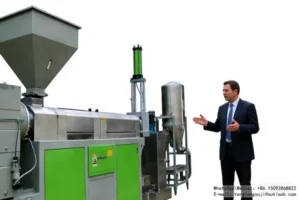
Plastic Recycling Machine
FAQ: Advanced Recycling Equipment for Mixed Plastic Waste
- Q: What is the difference between single-material and mixed plastic recycling models?A: Single-material machines are optimized for a single plastic type (e.g., PET), offering higher yield rates but limited versatility. Mixed plastic machines integrate advanced sorting and multi-stage granulation to handle multiple plastic types, balancing versatility with quality and efficiency—critical for enterprises processing diverse waste streams.
- Q: Can advanced models process contaminated mixed plastics?A: Yes, 2026 models include integrated washing and decontamination systems that remove dirt, food residues, and other contaminants, ensuring the final pellets meet ISCC and REACH standards. However, excessive contamination (e.g., >10% non-plastic materials) may reduce yield rates and require additional pre-processing steps.
- Q: What is the expected service life of advanced mixed plastic recycling equipment?A: With proper maintenance (e.g., regular blade replacement, system calibration, and compatibilizer system cleaning), 2026 models have a service life of 8-12 years—2-3 years longer than traditional mixed plastic machines—due to their durable construction and modular design, which allows for component upgrades without full machine replacement.