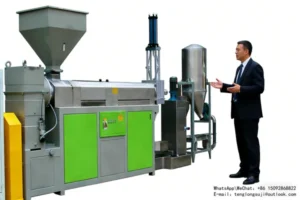
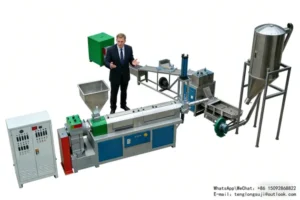
April 7, 2026 – The global PE Recycling Machine market is experiencing a technological transformation, with manufacturers introducing advanced features that enhance efficiency, cut operational costs, and improve product quality. As recycling businesses strive to meet growing demand for rPE and comply with strict environmental regulations, the adoption of intelligent, energy-savingPE Recycling Machine has become a critical competitive advantage. With the market projected to grow at a CAGR of 6.6% from 2026 to 2033, technological innovation is the primary driver of growth for both equipment manufacturers and recycling operators. This article highlights the top technological advantages of PE Recycling Machine in 2026, including energy efficiency, high purity, intelligence, and easy maintenance.
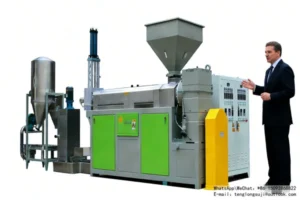
PE Recycling Machine
Energy Efficiency: Reducing Operational Costs with Heat Recovery
One of the most significant advancements in 2026 PE Recycling Machine is the integration of Heat recovery device (Heat Recovery Unit), which captures heat generated during the extrusion and melting process and reuses it to preheat raw materials. This technology reduces energy consumption by 15-20% compared to traditional machines, translating to substantial cost savings for recycling businesses. For instance, a medium-sized PE Recycling Machine equipped with a heat recovery system can save up to USD 12,000 annually in energy costs, based on 2026 energy prices.
Additionally, modern PE Recycling Machine features variable-frequency drives (VFDs) that adjust motor speed based on the volume of input waste, further optimizing energy use. These drives minimize energy waste during low-load operation, making the PE Recycling Machine more efficient for small to medium-sized recycling facilities.
High Purity: Advanced Decontamination for Premium rPE
The rising demand for high-purity rPE (used in food packaging, automotive parts, and construction materials) has driven the development of PE Recycling Machine with advanced decontamination systems. 2026 models feature multi-stage washing processes—including cold washing, hot washing, and centrifugal separation—to achieve a Decontamination Efficiency of ≥99%. This ensures that rPE pellets meet the strict purity standards set by GRS and ISCC certifications, making them suitable for high-value applications.
Key components contributing to high purity include interchangeable screens (for removing small contaminants) and Centrifugal Separator that separate heavy impurities (such as metal and glass) from PE waste. These features not only enhance product quality but also reduce the risk of equipment damage caused by foreign objects.
Intelligent Operation: IoT Integration and Automated Control
2026 PE Recycling Machine is increasingly equipped with IoT (Internet of Things) technology and PLC (Programmable Logic Controller) systems, enabling remote monitoring and automated operation. Operators can track key parameters—such as melting temperature, extrusion speed, and 熔融指数 (MFI)—in real time via a mobile app or cloud platform, allowing for quick adjustments to optimize performance.
Automated systems also reduce the need for manual labor, with features like automatic feeding, self-cleaning screens, and fault diagnosis. For example, if the machine detects a blockage in the extrusion system, it automatically shuts down and alerts the operator, minimizing downtime and preventing equipment damage. This level of intelligence is particularly beneficial for large-scale recycling facilities, where efficiency and uptime are critical to profitability.
Easy Maintenance: Durable Design for Long-Term Reliability
Manufacturers are now prioritizing easy maintenance in PE Recycling Machine design, reducing downtime and maintenance costs for operators. 2026 models feature modular designs, allowing operators to replace individual components (such as blades, screens, and motors) without disassembling the entire machine. Blades are constructed from hardened steel (SKD-11 or D2 material) for enhanced durability, reducing the frequency of replacements.
Additionally, many machines come with built-in maintenance reminders and self-diagnostic tools, which alert operators to potential issues (such as worn blades or low lubricant levels) before they escalate. This proactive maintenance approach extends the machine’s lifespan by 20-30% compared to traditional models.
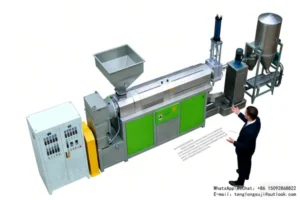
PE Recycling Machine
FAQ: Technological Advantages of 2026 PE Recycling Machine
- Q: How much energy can a heat recovery system save on a PE Recycling Machine?
A: Heat recovery systems reduce energy consumption by 15-20%, translating to annual savings of USD 8,000-12,000 for medium-sized machines. - Q: Can intelligent PE Recycling Machines be operated remotely?
A: Yes, most 2026 models feature IoT integration, allowing operators to monitor and control the machine remotely via a mobile app or cloud platform. - Q: How often do PE Recycling Machine blades need to be replaced?
A: With hardened steel blades, replacements are typically needed every 6-12 months, depending on usage. Modular design makes blade replacement quick and easy. - Q: What is the typical MFI range for rPE produced by 2026 PE Recycling Machines?
A: Most machines produce rPE with an MFI of 0.5-5 g/10min, which is suitable for a wide range of applications, from packaging to automotive parts.