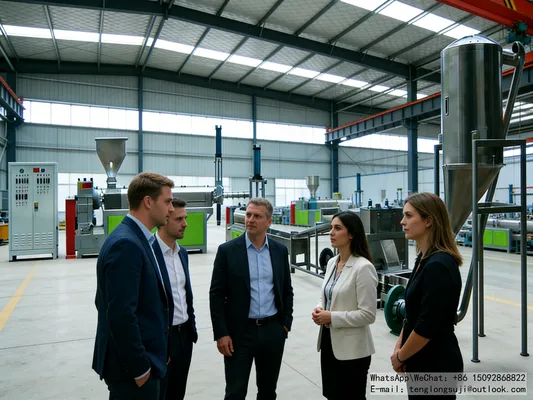
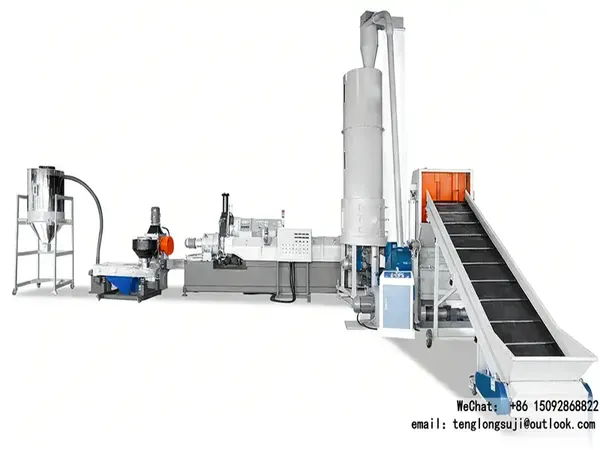
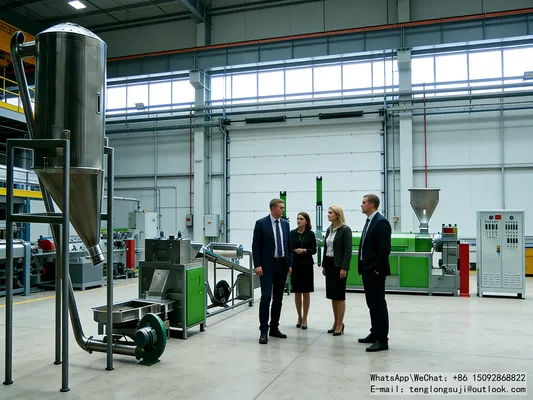
The 4/2026Plastic granulator generation of plastic granulation equipment has undergone significant upgrades, directly addressing the core pain points of traditional models—excessive energy consumption, inconsistent pellet quality, and difficulties in meeting GRS and ISCC certification requirements. One of the most notable innovations is the integration of electromagnetic heating technology, which replaces traditional ceramic heaters to reduce energy consumption by 30-50% while cutting heat-up times by 40%. This not only lowers operational costs but also aligns with global carbon reduction goals, as the unit carbon footprint of granulated products is 65% lower than that of virgin plastics. High-quality 2026 models also feature enhanced material handling capabilities, minimizing material degradation during the granulation process to ensure consistent output quality.
Plastic granulator
Another critical improvement is the enhanced Intrinsic Viscosity (IV) retention rate, which now reaches 92-95% for PET recycling—essential for producing high-purity rPET that meets FDA/EFSA food contact standards. Advanced models are also equipped with a hydraulic-assisted opening mechanism, enabling safe and quick access to the cutting chamber for easy cleaning and knife replacement. This reduces downtime by up to 25% compared to traditional models, directly boosting productivity.
2026 Plastic Granulator Technical Parameters Comparison
| Model | Screw Diameter (mm) | Capacity (kg/h) | Motor Power (kW) | Energy Saving Rate | IV Retention Rate | Applicable Material |
| SG-300 (Small) | 30 | 50-100 | 7.5 | 30% | 92% | PET Bottles, PP Films |
| SG-600 (Medium) | 60 | 200-300 | 22/30 | 40% | 94% | PET, PP, PE, HDPE |
| SG-1000 (Large) | 100 | 600-800 | 55/75 | 50% | 95% | Bulk PET, Rigid Plastics |
How to Optimize Equipment to Meet 2026 EU Compliance
To meet the EU’s 2026 recycling targets and REACH certification requirements, recycling enterprises must optimize their granulation operations. Key actionable steps include:
- Integrate a high-efficiency centrifugal separator to remove impurities, ensuring a decontamination efficiency of ≥99%—a critical requirement for GRS certification.
- Adopt a water ring pelletizer attachment for adjustable, uniform pellet size (1-5mm), which meets the EU’s end-of-waste criteria for recycled plastics.
- Implement AI-driven temperature control to maintain a stable Melt Flow Index (MFI) of 0.5-5 g/10min, which is essential for consistent pellet quality and compliance with PPWR regulations.
Economic Benefits of Investing in 2026 Granulation Equipment
According to 2026 market data, a medium-sized plastic granulator (SG-600) can process 200-300 kg of PET bottle waste per hour, producing high-purity rPET pellets sold at $1,200 per ton. With an initial investment of $80,000, the payback period is as short as 1 month, with first-year EBITDA projected at $12.5 million for full-scale operations. Additionally, energy savings from electromagnetic heating can reduce annual electricity costs by $15,000-$25,000, further enhancing profitability for recycling enterprises.
FAQ: Common Questions About 2026 Granulation Equipment
- Q: What is the difference between a water ring and underwater pelletizer?A: Water ring pelletizers are ideal for PET and PP recycling, offering lower energy consumption, while underwater models are better suited for high-temperature materials and produce smoother pellets—making them ideal for food-grade applications.
- Q: Can granulation equipment handle mixed plastic waste?A: Yes, 2026 models equipped with multi-stage sorting and crushing systems can process mixed PET/PP/PE waste. However, pre-sorting is recommended to maintain pellet quality and ensure compliance with GRS standards.
- Q: How to maintain granulation equipment to extend its service life?A: Regularly inspect and replace hardened D2/SKD11 steel blades (every 6-8 months), clean the heating chamber weekly, and calibrate temperature controls monthly. These steps ensure optimal performance and an 8-10 year service life.