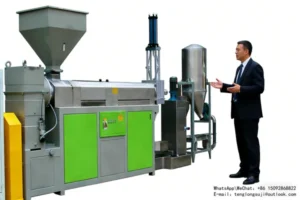
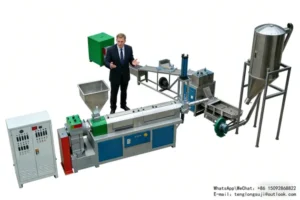
April 7, 2026 – For plastic recycling businesses, investing in a PE Granulator is not just a capital expenditure—it’s a strategic decision that directly impacts profitability. With the global demand for rPE rising and raw material costs increasing, PE Granulator offers significant economic benefits, including cost savings on raw materials, increased revenue from rPE sales, and a favorable return on investment (ROI). In 2026, the global plastic recycling machine market is valued at USD 4.07 billion, with PE Granulator being one of the most profitable segments due to its high efficiency and versatile applications. This article provides a detailed economic benefit analysis of PE Granulator, including ROI calculations, cost savings, and strategies to maximize profitability.
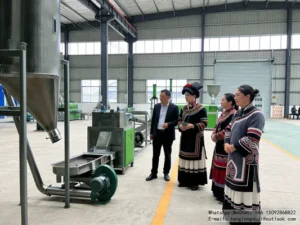
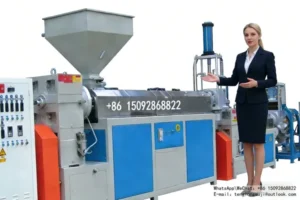
PE Granulator
Return on Investment (ROI) Calculation for PE Granulator
The ROI of a PE Granulator depends on several factors, including the machine’s cost, processing capacity, operational costs, and the price of rPE pellets. Below is a realistic ROI calculation for a medium-sized PE Granulator (200-500 kg/h) in 2026:
Cost/Income Item Amount (USD/Year) PE Granulator Cost (Medium-Sized) USD 70,000 (one-time investment) Annual Operational Costs (Energy, Labor, Maintenance) USD 35,000 Annual Processing Capacity (250 kg/h, 8 hours/day, 250 days/year) 500,000 kg rPE Pellet Price (2026 Average) USD 1.20/kg Annual Revenue from rPE Sales USD 600,000 Annual Net Profit USD 565,000 ROI (Annual Net Profit / Machine Cost) 807% (Payback Period: ~1.5 months)
Note: This calculation assumes a processing efficiency of 95% (5% waste) and a raw material cost of USD 0.30/kg (post-consumer PE waste). Smaller machines (50-200 kg/h) have a lower upfront cost (USD 10,000-30,000) and a payback period of 2-3 months, while large machines (500+ kg/h) have a payback period of 1 month or less due to higher throughput.
Cost Savings: Reducing Raw Material and Operational Costs
One of the primary economic benefits of a PE Granulator is the reduction in raw material costs for plastic manufacturers. Instead of purchasing virgin PE resin (which costs USD 1.80-2.20/kg in 2026), manufacturers can use rPE pellets produced by a PE Granulator for USD 1.00-1.30/kg, resulting in a cost savings of 30-50% per kg.
Additionally, PE Granulator reduces operational costs through:
Energy Savings: Modern PE Granulator with heat recovery systems and variable-frequency drives reduce energy consumption by 15-20%, saving USD 5,000-10,000 annually.
Labor Savings: Automated PE Granulator reduce the need for manual labor, with one operator able to manage 2-3 machines, saving USD 15,000-20,000 annually in labor costs.
Waste Reduction: Advanced decontamination and granulation systems reduce waste to ≤5%, maximizing the use of raw materials and increasing revenue.
Maximizing Profitability with PE Granulator
To maximize the economic benefits of a PE Granulator, consider these strategies:
Focus on High-Value rPE: Produce high-purity rPE pellets (≥98% purity) that meet GRS or ISCC certifications, as these command a premium price (USD 1.30-1.50/kg) compared to low-purity rPE (USD 0.80-1.00/kg).
Optimize Processing Capacity: Operate the PE Granulator at full capacity during peak hours to maximize throughput and revenue. Consider adding a second PE Granulator if demand exceeds current capacity.
Reduce Maintenance Costs: Follow a regular maintenance schedule to extend the PE Granulator’s lifespan and reduce downtime. Modular PE Granulator with easy-to-replace components can reduce maintenance costs by 20-30%.
Diversify End Markets: Sell rPE pellets to multiple industries (e.g., packaging, automotive, construction) to reduce reliance on a single market and stabilize revenue.
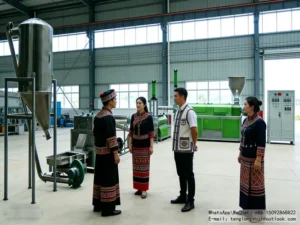
PE Granulator
FAQ: PE Granulator Economic Benefits
- Q: What is the average payback period for a PE Granulator?
A: The payback period varies by machine size: small machines (50-200 kg/h) have a payback period of 2-3 months, medium machines (200-500 kg/h) 1-2 months, and large machines (500+ kg/h) less than 1 month. - Q: How much can a business save by using rPE pellets instead of virgin PE?
A: Businesses can save 30-50% per kg, which translates to USD 30,000-50,000 annually for a medium-sized facility processing 500,000 kg of PE waste. - Q: Does the price of rPE pellets fluctuate, and how does this affect ROI?
A: The price of rPE pellets fluctuates slightly (±10%) based on market demand, but it remains consistently lower than virgin PE. To mitigate risk, businesses can sign long-term contracts with buyers to lock in prices. - Q: Are there any hidden costs associated with PE Granulator ownership?
A: Hidden costs include spare parts (e.g., blades, screens), training for operators, and waste disposal fees. These costs typically account for 5-10% of annual operational costs and should be included in ROI calculations.