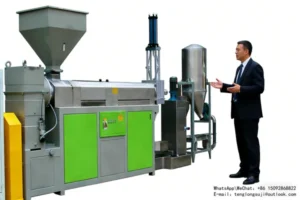
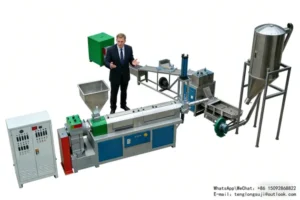
April 7, 2026 – Selecting the right PE Granulator is critical to the success of any plastic recycling business, as it directly impacts productivity, product quality, and operational costs. With the global PE Granulator market expanding rapidly—driven by the growing demand for rPE—buyers are faced with a wide range of options, from small manual machines to large fully automated systems. In 2026, plastic recycling machine prices range from USD 10,000 for basic models to over USD 250,000 for high-capacity systems, making it essential to choose aPE Granulator that aligns with your business needs. ThisPE Granulator buying guide outlines key factors to consider, including capacity, type, technology, and compliance, to help you make an informed decision.
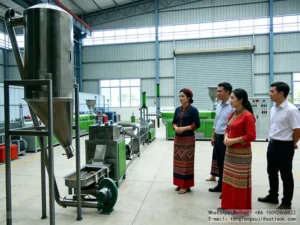
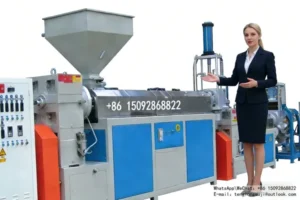
PE Granulator
Assess Your Capacity Needs: Small, Medium, or Large PE Granulator?
The first step in choosing a PE Granulator is to determine your daily processing capacity, as this will dictate the machine’s size and design. Here’s a breakdown of 2026 PE Granulator capacity categories and their ideal use cases: Capacity Category Processing Capacity Ideal Use Case Price Range (2026) Small 50-200 kg/h Small recycling workshops, pilot projects, or businesses with limited space USD 10,000-30,000 Medium 200-500 kg/h Medium-sized recycling facilities handling post-consumer PE waste (e.g., plastic bags, bottles) USD 40,000-100,000 Large 500+ kg/h Large-scale recycling plants supplying rPE to packaging or automotive industries USD 120,000-250,000+
It’s important to choose a PE Granulator with a capacity slightly higher than your current needs to accommodate future growth. Overloading a machine can reduce its lifespan and increase maintenance costs.
Choose the Right PE Granulator Type for Your Material
2026 PE Granulator models are available in three main types, each designed for specific PE materials and applications:
Low-Speed PE Granulator: Ideal for processing soft PE materials (e.g., PE film, plastic bags). Features quiet operation (≤75 dB) and a gentle cutting action that minimizes material degradation. Suitable for small to medium-sized facilities prioritizing noise reduction.
High-Speed PE Granulator: Designed for high-volume processing of rigid PE materials (e.g., HDPE bottles, plastic containers). Equipped with sharp, hardened steel blades and a powerful motor for fast, efficient granulation. Ideal for large-scale facilities with high throughput requirements.Water Ring PE Granulator: Uses a water-cooled system to produce uniform, high-quality rPE pellets with a smooth surface. Suitable for applications requiring premium rPE (e.g., food packaging, medical devices). Features a Water Ring Pelletizer that cools the pellets immediately after extrusion, improving their quality and consistency.
Key Technology Features to Prioritize
When selecting a PE Granulator, look for these advanced technology features to improve efficiency and product quality:
Adjustable Rotor Speed: Allows you to customize the granulation process based on the type of PE material, ensuring optimal particle size (typically 2-5 mm for rPE pellets).
Interchangeable Screens: Enables quick changes to particle size, increasing the PE Granulator’s versatility for different applications.
PLC Control System: Provides automated operation and real-time monitoring of key parameters (e.g., motor speed, temperature), reducing manual labor and improving consistency.
Energy-Saving Design: Look for PE Granulator with a minimum 15% energy savings compared to traditional models, including features like heat recovery systems and variable-frequency drives.
Compliance and Certification Considerations
If you plan to sell rPE pellets to international markets, your PE Granulator must meet industry certifications such as GRS, ISCC, and REACH. Ensure the machine is designed to produce rPE with high purity (≥98% decontamination efficiency) and features traceability systems to verify recycled content. Additionally, check that the machine complies with local safety standards (e.g., OSHA in the US, CE in the EU) to avoid legal issues.
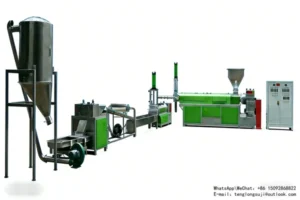
PE Granulator
FAQ: Buying a PE Granulator in 2026
- Q: What is the average lifespan of a PE Granulator?
A: With proper maintenance, a high-quality PE Granulator can last 8-10 years. Medium and large models typically have a longer lifespan than small, basic machines. - Q: Should I choose a manual or automated PE Granulator?
A: Automated machines are recommended for medium to large facilities, as they reduce labor costs and improve consistency. Manual machines are suitable for small workshops with limited budget and low throughput. - Q: How do I determine the right particle size for my PE Granulator?
A: The ideal particle size depends on your end application. For packaging, 2-3 mm pellets are typically used; for automotive parts, 3-5 mm pellets are preferred. Choose a machine with interchangeable screens to adjust particle size. - Q: Are there financing options available for PE Granulator purchases?
A: Yes, many OEMs and financial institutions offer financing plans for 2026 PE Granulators, with terms ranging from 1-5 years. Some governments also offer loans or grants for businesses investing in recycling equipment.