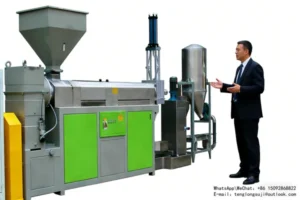
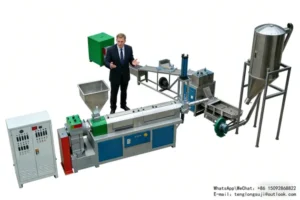
April 7, 2026 – The PE Granulator is a versatile piece of equipment that plays a critical role in the recycling of polyethylene (PE) and other plastic materials, including PET, PP, and HDPE. While PE Granulator is primarily designed for PE waste, modern models are increasingly capable of processing multiple plastic types, making them a valuable asset for recycling businesses. With the EU mandating that PET beverage bottles contain at least 25% recycled content in 2025 and 30% by 2030, the demand for PE Granulator in PET bottle recycling has surged. This article explores the wide application scope of PE Granulator, with a focus on PET bottle recycling and other key uses.
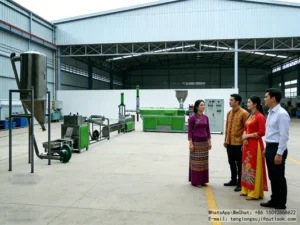
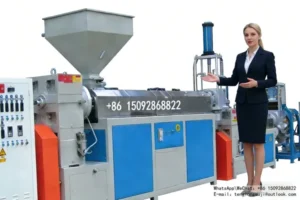
PE Granulator
PE Granulator in PET Bottle Recycling: A Growing Application
PET (polyethylene terephthalate) bottles are one of the most commonly recycled plastic products, and PE Granulator has become an essential tool in their recycling process. While PET is not a PE material, modern PE Granulator models are designed to handle PET bottles (after proper sorting and washing) by adjusting the granulation parameters to accommodate the material’s properties.
The process of using a PE Granulator for PET bottle recycling involves:
Sorting: Separating PET bottles from other plastic types (e.g., PE, PP) using automated sorting systems or manual labor.
Washing: Removing labels, caps, and contaminants (e.g., food residues) using a washing line with high-speed friction washers and centrifugal separators.
Granulation: Feeding the cleaned PET bottles into a PE Granulator with adjustable rotor speed (typically 500-1500 rpm) and a fine screen (1-2 mm) to produce uniform PET flakes or pellets.
Drying: Removing moisture from the PET pellets using a heat dryer, ensuring the pellets meet the moisture content requirement (≤1%) for further processing.
A medium-sized PE Granulator can process 200-500 kg of PET bottles per hour, making it suitable for medium-sized recycling facilities. The resulting PET pellets can be used to produce new bottles (瓶到瓶回收, bottle-to-bottle recycling), textile fibers, or packaging materials, meeting the EU’s recycled content targets.
PE Granulator for PE, PP, and HDPE Recycling
While PET bottle recycling is a growing application, the primary use of PE Granulator remains the recycling of PE materials, including LDPE (low-density polyethylene) and HDPE (high-density polyethylene). These materials are widely used in packaging, construction, and consumer goods, generating a large volume of waste that can be recycled into high-value rPE.
Key applications of PE Granulator in PE recycling include:
PE Film Recycling: Processing PE film (e.g., grocery bags, agricultural film) into pellets for use in new film production or injection molding.
HDPE Bottle Recycling: Granulating HDPE bottles (e.g., milk jugs, detergent bottles) into pellets for use in pipes, containers, and automotive parts.
PE Foam Recycling: Processing PE foam (e.g., packaging foam, insulation) into pellets for use in cushioning materials or composite products.
Modern PE Granulator models can also process PP (polypropylene) materials, such as plastic containers and automotive parts, by adjusting the cutting blades and screen size. This versatility allows recycling businesses to handle multiple plastic types with a single machine, reducing equipment costs.
Industrial and Commercial Applications of PE Granulator
Beyond post-consumer waste recycling, PE Granulator is also used in industrial and commercial settings to recycle post-industrial PE waste. Post-industrial waste (e.g., production scrap, defective products) is cleaner and more homogeneous than post-consumer waste, making it easier to process with a PE Granulator. Key industrial applications include:
Plastic Manufacturing: Recycling production scrap (e.g., PE film scrap, injection molding waste) back into raw materials for reuse in the manufacturing process.
Automotive Industry: Granulating PE components (e.g., interior trim, packaging) into pellets for use in new automotive parts, reducing material costs.
Construction Industry: Recycling PE construction waste (e.g., insulation, piping) into pellets for use in new construction materials, such as composite decking or roofing.
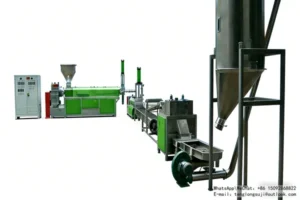
PE Granulator
FAQ: PE Granulator Applications
- Q: Can a PE Granulator process both PET and PE materials?
A: Yes, modern PE Granulator models can process PET bottles (after proper sorting and washing) by adjusting the rotor speed and screen size. However, it’s recommended to use separate machines for PE and PET to avoid cross-contamination. - Q: What is the typical output quality of PET pellets from a PE Granulator?
A: With proper washing and granulation, PE Granulators can produce PET pellets with a purity of ≥98% and a moisture content of ≤1%, meeting the standards for bottle-to-bottle recycling. - Q: Can a PE Granulator process thick HDPE materials, such as large plastic barrels?
A: Yes, high-speed PE Granulators with powerful motors and hardened steel blades can process thick HDPE materials, including large barrels and containers. - Q: What is the difference between a PE Granulator and a PET Granulator?
A: PE Granulators are designed for softer, more flexible materials (PE), while PET Granulators have sharper blades and higher rotor speeds to handle the harder, more brittle PET material. However, many modern PE Granulators can be adjusted to process PET.