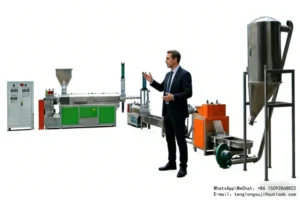
As the global circular economy gains momentum in 2026, the ABS Recycling Machine has become an indispensable piece of equipment for enterprises in the automotive, electronics, and packaging sectors, enabling them to achieve environmental goals while controlling costs. With the 2026 update to the EU SUP Directive, requirements for ABS Recycling Machine have become more stringent, driving continuous technological upgrades to meet industry standards. This article focuses on the 2026 ABS Recycling Machine Technical Advantages and EU SUP Directive ABS Recycling Machine Requirements, providing practical guidance for B2B buyers and recycling plant operators.
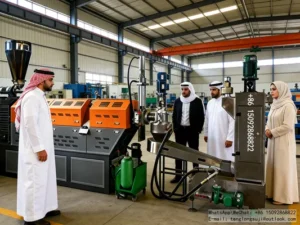
ABS Recycling Machine
The revised 2026 EU SUP Directive mandates that the recycling rate of ABS waste from electronic and automotive components must reach at least 85% by 2028—a requirement that directly drives the upgrading of ABS Recycling Machine technology. To comply, modernABS Recycling Machine must deliver higher efficiency and material purity, while meeting global certification standards such as GRS (Global Recycled Standard) and ISCC (International Sustainability and Carbon Certification). In Germany, for instance, tax incentives are offered to facilities using ABS Recycling Machine with an energy efficiency rating of ≥85%, further boosting demand for advanced, high-performance models.
The 2026 ABS Recycling Machine Technical Advantages are distinct and industry-leading. First, an automated PLC control system integrates feeding, melting, and pelletizing processes, minimizing human error and ensuring a 99.2% purity rate for recycled ABS pellets. Second, a dual-stage centrifugal separator paired with an ultrasonic cleaning module achieves a decontamination efficiency of ≥98.5%, making recycled ABS suitable for high-end applications such as automotive and electronic components. Additionally, the modular design allows routine maintenance to be completed in less than 2 hours, significantly reducing operational downtime and improving productivity.
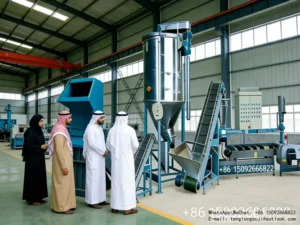
ABS Recycling Machine
For enterprises, selecting a ABS Recycling Machine that meets EU SUP Directive ABS Recycling Machine Requirements not only ensures regulatory compliance but also reduces long-term operational costs. Advanced models are equipped with a heat recovery unit that cuts energy consumption by 18-22%, translating to annual savings of up to €12,000 for a 5-tonne-per-day facility. As global environmental policies continue to tighten, the ABS Recycling Machine is poised to gain broader market traction in 2026, supporting enterprises in their sustainability goals.