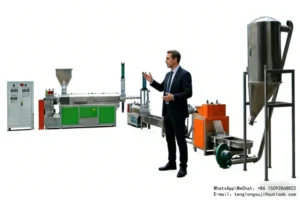
Against the backdrop of global energy conservation and emission reduction goals, ABS Granulator models with energy-saving features and policy support have become the top choice for enterprises in 2026. This article focuses on ABS Granulator Energy-Saving Tips and ABS Granulator Government Subsidy Policies, helping enterprises reduce operational costs and investment pressure while adopting sustainable recycling practices.

ABS Granulator
Mastering ABS Granulator Energy-Saving Tips is key to reducing operational costs. First, select a ABS Granulator equipped with a heat recovery unit, which can capture and reuse 70% of the heat generated during granulation—cutting energy consumption by 18-22%. Second, optimize granulation parameters: for PET bottle caps, set the rotational speed to 1,200-1,500 RPM and the screen size to 3-5mm to balance efficiency and energy savings.
In 2026, governments worldwide have introduced ABS Granulator Government Subsidy Policies to encourage enterprises to invest in sustainable recycling equipment. In the United States, the EPA’s Small Business Recycling Grant program provides up to $50,000 for SMBs purchasing ABS Granulator, with additional 30% tax credits for energy-efficient models. In India, the government offers a 25% subsidy on ABS Granulator purchases, along with low-interest loans (4-5% annual rate) to ease financial pressure.
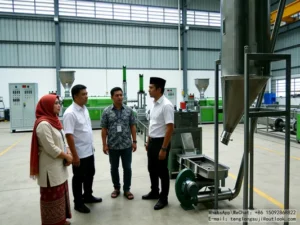
ABS Granulator Energy-Saving Tips
Enterprises can further reduce costs by sourcing low-cost mixed plastic waste and outsourcing non-core maintenance tasks. The combination of ABS Granulator Energy-Saving Tips and ABS Granulator Government Subsidy Policies significantly lowers investment and operational burdens, enhancing the ABS Granulator’s market competitiveness. With ongoing policy support and technological advancements, the ABS Granulator will play an increasingly critical role in the global circular economy in 2026.