As the global circular economy initiative accelerates in 2026, the plastic recycling industry is undergoing a profound technological transformation—with the PP granulator emerging as the core equipment driving the high-value recycling of polypropylene waste. Against the backdrop of tightening environmental policies (such as the EU SUP Directive) and growing demand for low-carbon production, traditional PP granulators are being gradually replaced by intelligent, energy-saving models, reshaping the efficiency and sustainability of the entire PP recycling chain. This article explores the key technological trends of PP granulators in 2026 and how they help enterprises achieve cost reduction, efficiency improvement, and compliance with international standards.

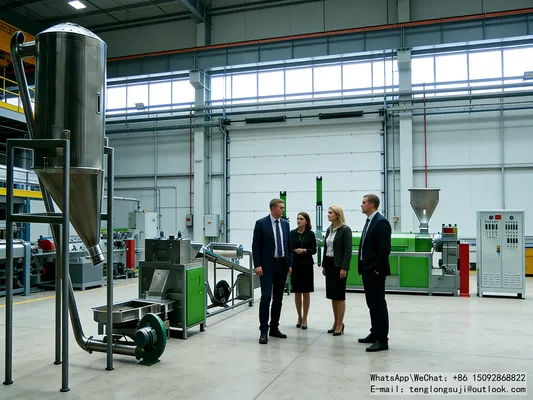
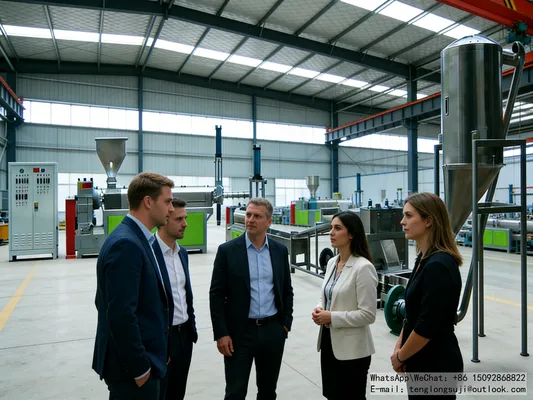
PP granulator
How Intelligent PP Granulators Optimize Production Efficiency in 2026
Intelligence has become the core competitiveness of PP granulator products in 2026, with IoT, digital twin, and AI technologies deeply integrated into the entire production process. Unlike traditional manual operation models, modern intelligent PP granulators are equipped with real-time monitoring systems that track key parameters—including screw speed, melting temperature, melt flow rate (MFI), and energy consumption—ensuring stable and consistent product quality.
For instance, the latest intelligent PP granulator launched by leading manufacturers in 2026 features a predictive maintenance system based on AI algorithms. By analyzing historical operation data, the system can predict potential equipment failures 72 hours in advance, reducing unplanned downtime by 70% and boosting overall equipment efficiency (OEE) to over 94%. Additionally, the integration of digital twin technology allows enterprises to simulate PP granulator operations in a virtual environment, optimize process parameters, and cut the trial-and-error cost of new product production by 35%.
Another highlight of the intelligent upgrade is the automatic material sorting and feeding system. Equipped with a near-infrared (NIR) sorting module, the PP granulator can accurately identify and separate impurities (such as PVC, PET, and metal) from waste PP materials, achieving a sorting accuracy of up to 98.5%. This not only enhances the purity of recycled PP pellets but also reduces wear on the screw and barrel, extending the equipment’s service life by 25%.

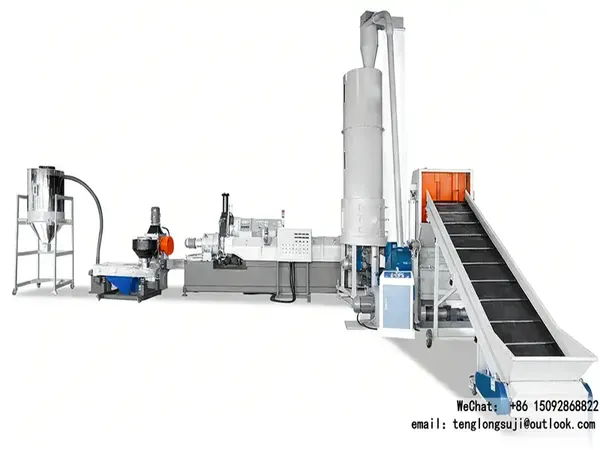
PP granulator
Energy-Saving Technology Breakthroughs: Reducing Costs and Carbon Emissions
Against the global “dual carbon” goal, energy efficiency has become a key indicator for evaluating PP granulator performance in 2026. The latest PP granulators on the market have achieved an energy-saving rate of ≥18% compared to traditional models, thanks to advanced energy-saving technologies such as heat recovery units and variable frequency control systems.
The heat recovery unit recycles waste heat generated during extrusion and granulation, which is then used to preheat feedstock and heat production workshops. This increases overall thermal efficiency to 88% and saves 0.15 tons of standard coal per ton of recycled PP pellets produced. The variable frequency control system adjusts motor speed based on actual production load, avoiding energy waste from idling and reducing the PP granulator’s unit energy consumption to 280–320 kWh/ton.
From an economic perspective, the PP granulator’s energy-saving performance directly translates to cost savings for enterprises. Take a medium-sized PP recycling plant with a daily output of 10 tons as an example: using an energy-saving PP granulator can save approximately 8,000 kWh of electricity per month, reducing monthly energy costs by nearly $1,000. Simultaneously, lower energy consumption helps enterprises reduce carbon emissions—each ton of recycled PP produced by an energy-saving PP granulator cuts CO₂ equivalent emissions by about 1.8 tons, meeting the carbon reduction requirements of international buyers.
Policy Compliance: Adapting to GRS and ISCC Certification Requirements
In 2026, international certification standards such as GRS (Global Recycling Standard) and ISCC (International Sustainability and Carbon Certification) have become critical thresholds for enterprises entering the global PP recycling market. The PP granulator, as the core equipment in the recycling process, plays a pivotal role in helping enterprises meet these certification requirements.
To comply with GRS certification, the PP granulator must be equipped with a comprehensive production traceability system that records raw material sources, production process parameters, and product quality inspection results in real time. The latest 2026 PP granulators feature a blockchain-based traceability module, ensuring all production data is tamper-proof and traceable—meeting the full-chain traceability requirements of GRS certification. Additionally, the high-purity PP pellets produced by the PP granulator (via advanced decontamination technology) have a recycled content of over 50%, satisfying GRS certification labeling requirements.
FAQ: Key Questions About 2026 PP Granulator
- Q: What is the energy-saving effect of the 2026 intelligent PP granulator? A: The latest PP granulator achieves an energy-saving rate of ≥18% compared to traditional models, with unit energy consumption reduced to 280–320 kWh/ton, significantly lowering enterprise operating costs.
- Q: Can the 2026 PP granulator help enterprises obtain GRS certification? A: Yes. The PP granulator is equipped with a blockchain traceability system and advanced decontamination technology, meeting the full-chain traceability and recycled content requirements of GRS certification.
- Q: What is the service life of the 2026 intelligent PP granulator? A: With wear-resistant materials and predictive maintenance systems, the 2026 PP granulator has a service life of 8–10 years—25% longer than traditional models.
- Q: How does the intelligent PP granulator improve product quality? A: The intelligent PP granulator’s real-time monitoring system tracks key parameters such as MFI and melting temperature, ensuring the melt index fluctuation of recycled PP pellets is controlled within ±0.3g/10min, with product performance close to that of virgin PP.